
Circuit en groupe sur la route du Pamir, de Osh à Douchanbé Highlights
Embark on an unforgettable 10-day journey through the breathtaking landscapes of the Pamirs, starting in Osh, the cultural heart of southern Kyrgyzstan. Travel along high mountain passes and alpine valleys to the serene “Edelweiss Meadow” Yurt Camp, where you’ll experience traditional nomadic hospitality amidst wildflower-filled meadows. Continue to the stunning Karakul Lake, a crystal-clear high-altitude lake framed by snow-capped peaks, before venturing to Murghab and the remote villages of Langar and Ishkashim, where ancient traditions and warm local communities offer a glimpse into life along the Silk Road.
Cross into Tajikistan’s Pamir Mountains and journey through Khorog, the regional capital, with its vibrant bazaar and riverside landscapes. Traverse the scenic valleys of Kalai-Khumb before concluding your adventure in Dushanbe, the modern capital of Tajikistan, where history, culture, and stunning architecture provide a fitting finale. This tour offers a rare combination of dramatic mountain scenery, nomadic culture, and Silk Road heritage, making it a once-in-a-lifetime exploration of Central Asia’s highlands.
Difficulty: Moderate
Itinéraire de la visite
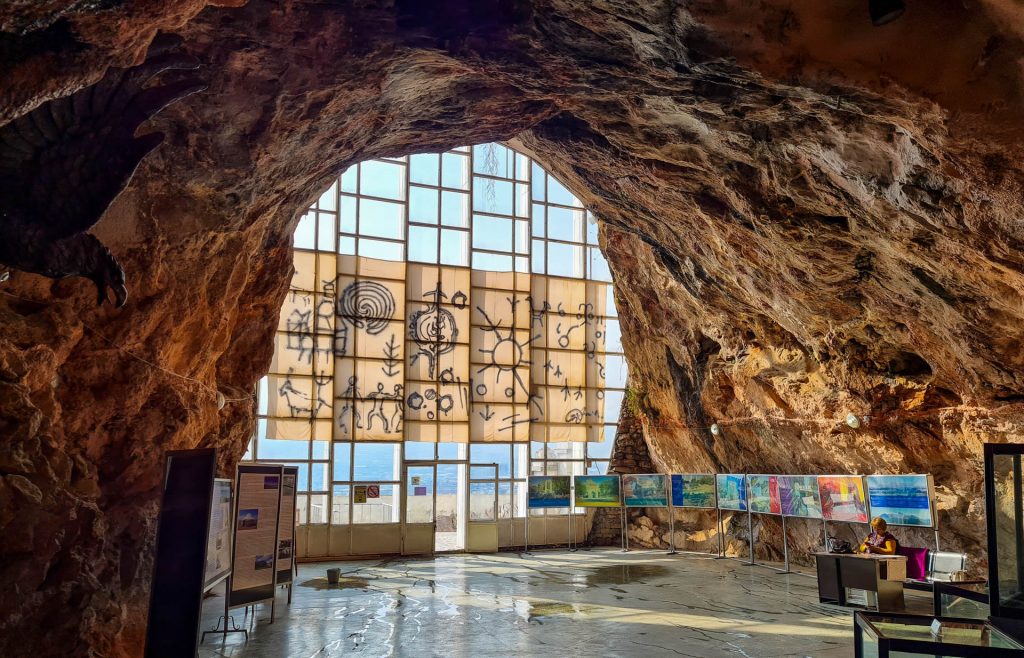
Early arrival in Osh. Meeting at the airport, group transfer for breakfast. Osh, known as the “southern capital”, is the second-largest city in Kyrgyzstan, located at an altitude of 963 meters above sea level, on the southeastern edge of the fertile Ferghana Valley, right at the foot of the Pamir-Alai mountains. Sightseeing in Osh: the sacred two-peaked Suleiman Mountain and the namesake local history museum, located inside a cave on the mountain. The historical and archaeological complex “Suleiman-Too” is the only UNESCO World Heritage Site in Kyrgyzstan. We will climb the stairway trail to the viewing platform at 1,092 meters, offering breathtaking panoramic views of the entire city of Osh. At the top, you’ll see a massive Kyrgyzstan flag and the historic Babur’s House (15th–16th centuries), the former residence of Tamerlane’s grandson. Adding to the mountain’s charm is its unique location right in the heart of the city. A visit to the bustling shopping street lined with hundreds of small shops and street food stalls. Check-in at the hotel after 14:00 PM. Free time. Overnight at the hotel.
Osh
Au cours de la nuit : Osh (Hôtel)
Repas : Petit déjeuner, Lunch, Dinner
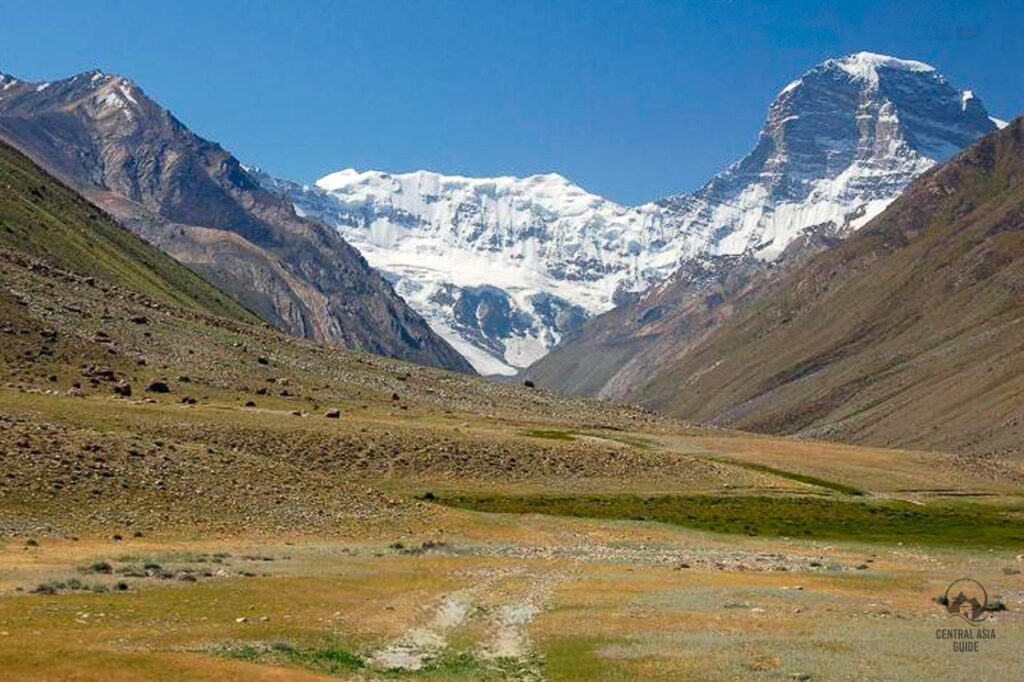
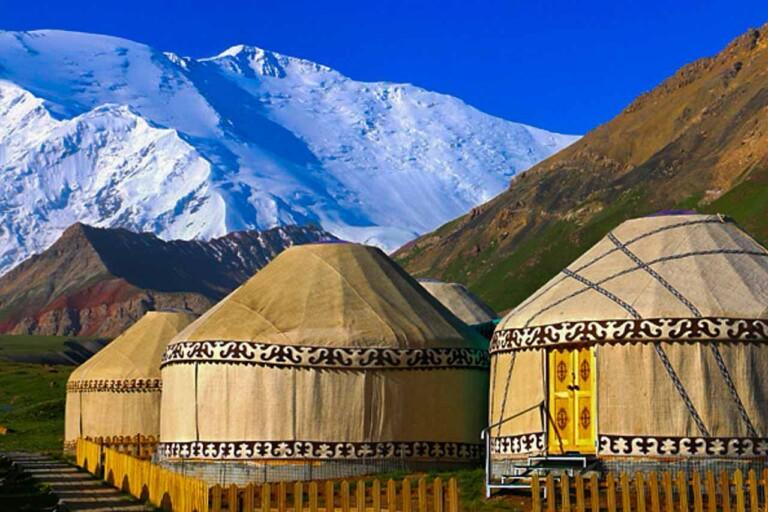
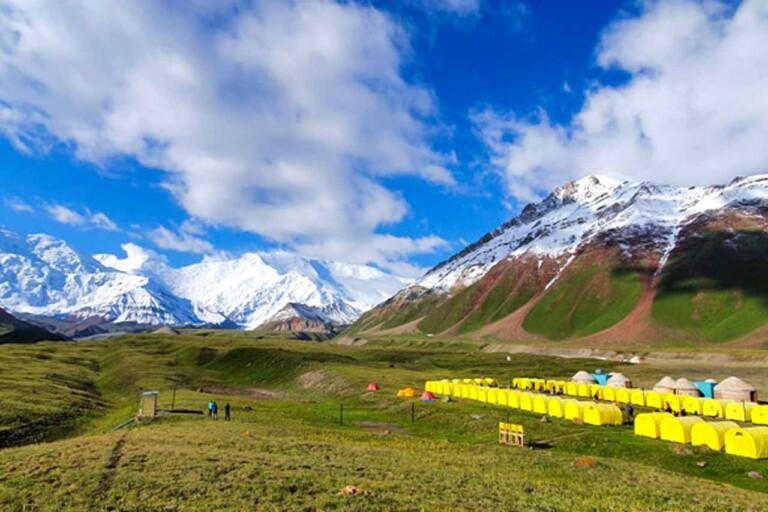
Transfer along the Pamir Highway. The drive promises to be incredibly scenic, so grab a window seat: we’ll see red mountains and rivers, the vastness of the Alay Valley, and the dizzying serpentine road of the Taldyk Pass (3600 m), and finally, the snowy northern face of the seven-thousander, Lenin Peak (7134 m). Upon arrival at the yurt camp, situated in the Edelweiss Meadow (3600 m) with the best views of Lenin Peak, we’ll check-in and enjoy lunch. Afterward, we’ll take a walk to the Lukovaya (Leek) Meadow (3800 m) – a protected meadow that was once place for climbing camps but is now inhabited only by marmots and wild green onions. During the height of the swift Pamir summer, the meadow turns into a vibrant green carpet with a riot of colors, and by the end of August, it becomes a silent realm painted in ochre hues. We’ll follow a beautiful route along the edge of the Achik-Tash Canyon, where we’ll see whimsical pillar-like rocks, a conical pyramid, the confluence of two rivers, and colorful mountains. We’ll hear the rush of water and the resonant silence of the stones. Walking time: 2 hrs; altitude difference: +250 m, -250 m. Overnight at “Edelweiss Meadow” yurt camp (3600 m).
Pic Lénine, Edelweiss Meadow
- Osh → Edelweiss Meadow
Au cours de la nuit : Edelweiss Meadow (Yurt camp)
Repas : Petit déjeuner, Lunch, Dinner

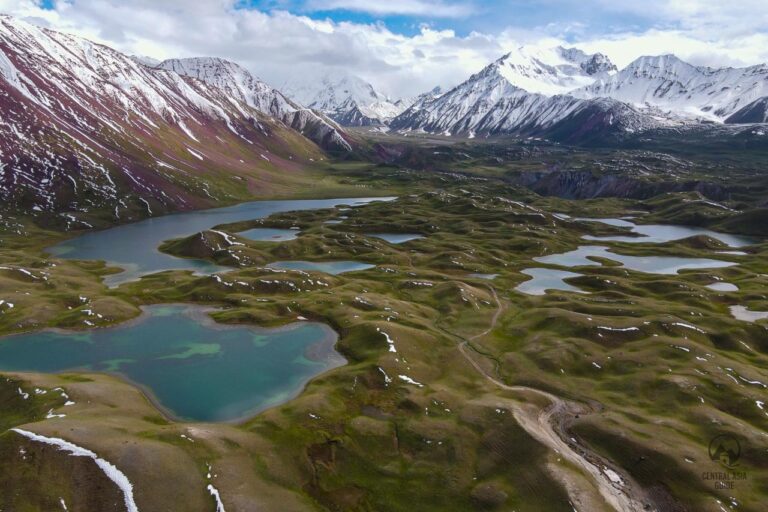
Travel time: 5–6 hrs; altitude difference: -260 m, +260 m. We’ll start this morning with an easy hiking along the picturesque “fjords” of the Achik-Tash Valley, dotted with a variety of beautiful, colorful lakes. Some of them even join together, changing shapes every year. Their sparkling turquoise surface reflects the impressive peaks of the Pamirs, and herds of yaks often graze along the shores. Next, we’ll head to the large, pristine Tulpar-Kol Lake. We’ll descend to the river and cross a bridge to the other side, where the sacred lake lies. The locals believe one shouldn’t take water, bathe, and feed cattle or fish. According to shepherds, it’s best to come to the lake with a clear mind. You can pray on the shore, dip sick parts of your body or sprinkle them with water, and you’ll definitely receive healing. We’ll walk around the lake, taking in its winding shapes from different view points, and learn about the daily life and traditions of the nomadic Kyrgyz whose yurts are nearby. Along the way, we may encounter donkeys, horses, and untouched meadows filled with delicate blooming edelweiss, vibrant buttercups, and alpine forget-me-nots. Return to the yurt camp. Overnight at “Edelweiss Meadow” yurt camp (3600 m).
Lac Tulpar-Kol
Au cours de la nuit : Edelweiss Meadow (Yurt camp)
Repas : Petit déjeuner, Lunch, Dinner
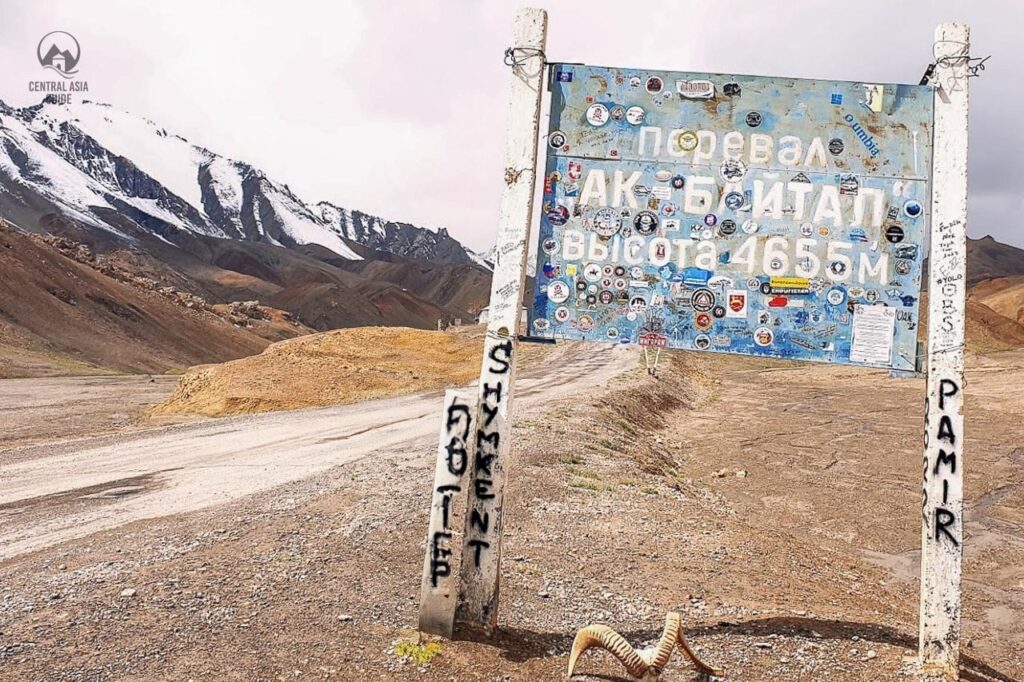
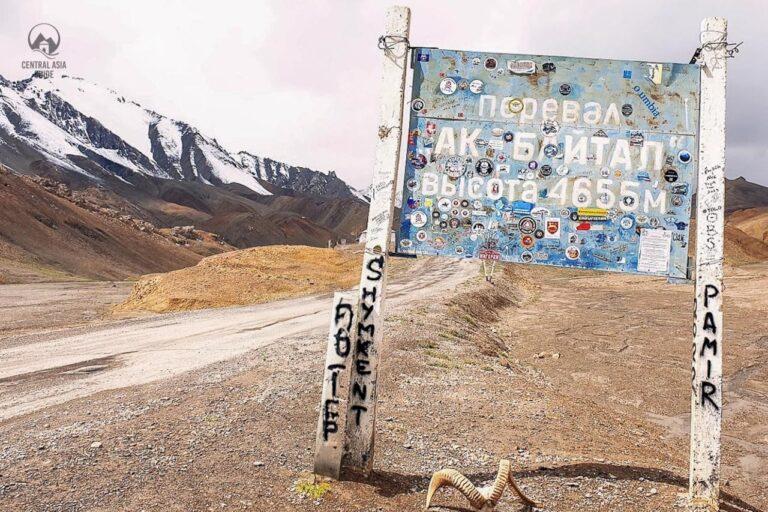
After breakfast at the yurt camp, we will set out for the “Kyzyl-Art” Kyrgyz-Tajik land border. The journey includes an ascent to the Kyzyl-Art Pass (4280 m) through the Trans Alay Range. Following border formalities, we continue to the picturesque high-altitude Karakul Lake (3914 m). Karakul, meaning “Black Lake” in Turkic, is an endorheic glacial-tectonic lake formed approximately 25 million years ago by a meteorite impact. Situated 100 meters higher than Lake Titicaca in the Andes, Karakul is surrounded by barren rocky ridges, with its western edges descending directly into the lake and the eastern ridges standing several kilometers away. The crater has a diameter of 45 km, and the lake covers an area of 380 sq. km (excluding islands) with a maximum depth of around 240 meters. After a roadside lunch, the journey continues to Murghab via the Ak-Baital Pass (4655 m), one of the highest drivable pass in the world. Murghab, the highest settlement in Tajikistan and all of Central Asia, is located on the Murghab Plateau. Founded in the late 19th century as the Pamir Post of the Russian Empire, Murghab is home to a bazaar and craft shops where you can purchase unique handmade items crafted by Pamiri artisans: handwoven carpets, traditional hats (kalpaks), bags, embroidered textiles, and other souvenirs. Accommodation at a local hotel and dinner. Overnight at the hotel.
Lac Karakul, Murghab
- Edelweiss Meadow → Murghab (240 km)
Au cours de la nuit : Murghab (Hôtel)
Repas : Petit déjeuner, Lunch, Dinner

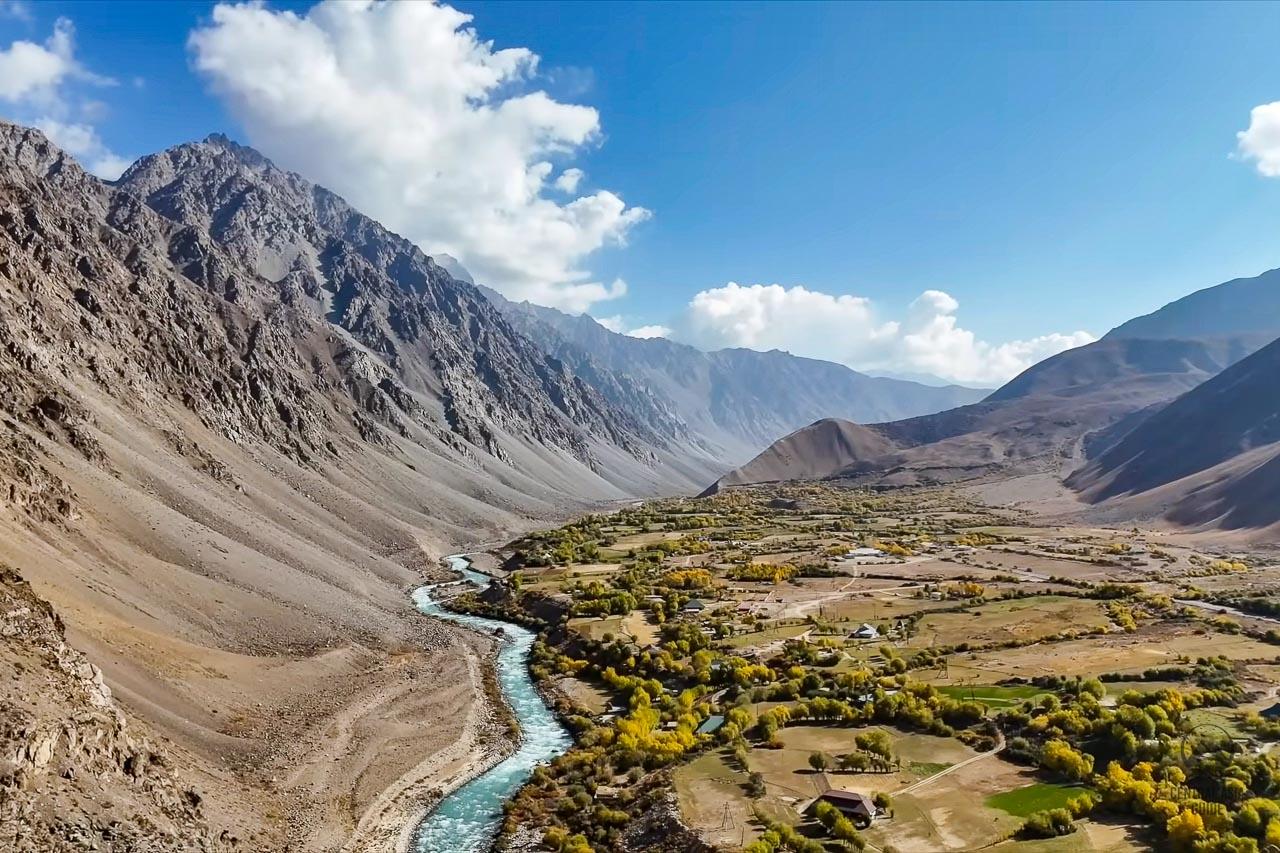
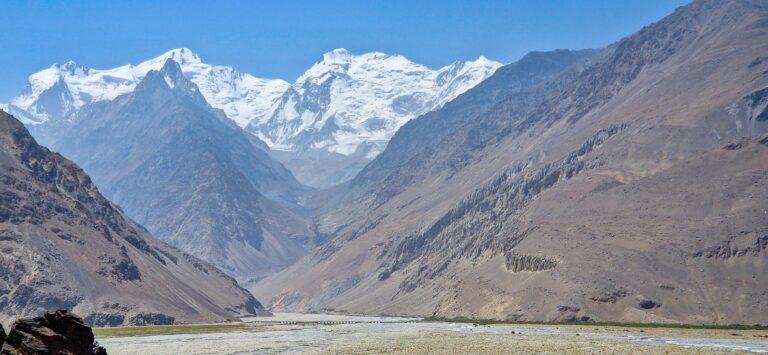
Transfer to Langar, a high-altitude village in the Wakhan Valley of the Southern Pamirs. The journey takes you through the Wakhan Corridor, a remote and rarely visited region that is part of the historical and cultural Gorno-Badakhshan (“Mountain Badakhshan”) autonomous region. This narrow strip of land, bordered by the Pamir ranges to the north and the Hindu Kush mountains to the south, connects Afghanistan and China along the upper reaches of the Panj and Wakhan rivers. Prepare for dizzying switchbacks and steep slopes as the road winds along high terraces. On clear days, you’ll enjoy breathtaking views of the snow-capped seven-thousanders of the Hindu Kush, the highest peaks of Afghanistan. Arriving in Langar, situated at an altitude of 3000 meters and surrounded by towering peaks of the Pamirs and Hindu Kush, you’ll experience the unique lifestyle and traditions of the local Wakhi people. Langar is famous for its ancient petroglyphs – over 6,000 rock carvings depicting scenes of hunting, caravans, and horsemen have been discovered here. The village also features a small local museum and the Shrine of Shoh Kambari Oftob, the man who brought Ismailism to the region. This mausoleum is a sacred site where traditional mountain rituals are still performed. The Aryan peoples inhabiting the Wakhan Valley are extraordinarily fascinating. Their culture reflects a vivid and unique blend of various religions, traditions, and philosophies, all while maintaining a deep sense of unity and harmony with the surrounding majestic mountains. The history of the Wakhan bears the footprints of Alexander the Great and his army, who propagated Greco-Buddhism here; Tibetan Buddhists, who founded massive monasteries; Arabs, who brought Islam; and Mongol conquerors, whose assistance was sought by Sunni and Ismaili factions in their struggles against each other. Dinner and overnight stay in a traditional guesthouse.
Langar
- Murghab → Langar (250 km)
Au cours de la nuit : Langar (Guesthouse)
Repas : Petit déjeuner, Lunch, Dinner
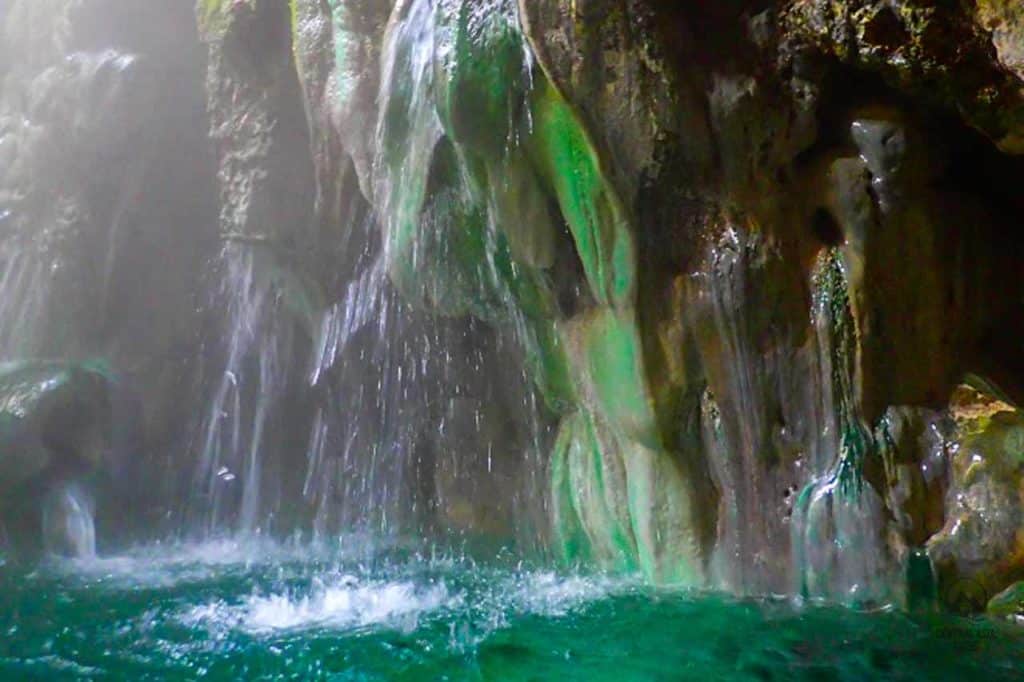
Transfer to the village of Ishkashim, with a stop at Jamg along the way. Sightseeing in Jamg: visit the tomb and reconstructed house-museum of the renowned scholar, inventor, poet, and musician Sufi Mubarak Kadam. You’ll also see a stone with a hole that was used as a sundial over 700 years ago. We will also stop at the Bibi Fatima hot springs, famous for their legendary healing properties. The name of the springs is associated with Fatima, the wife of the Prophet Muhammad. The water, which maintains a constant temperature of +40°C throughout the year, contains radon and other minerals, giving it unique therapeutic qualities. The springs emerge from the rock in two places, referred to by locals as “Fatima’s sleeves.” There is a small infrastructure around the springs, including a pool, changing rooms, and relaxation areas. You can also descend a staircase to enjoy a refreshing shower under a small natural waterfall. Lunch will be provided as boxed meals en route. Arrival in Ishkashim. Dinner and overnight stay in a traditional guesthouse.
Sources d’eau chaude de Bibi Fatima, Iskashim
- Langar → Iskashim (140 km)
Au cours de la nuit : Iskashim (Guesthouse)
Repas : Petit déjeuner, Lunch, Dinner
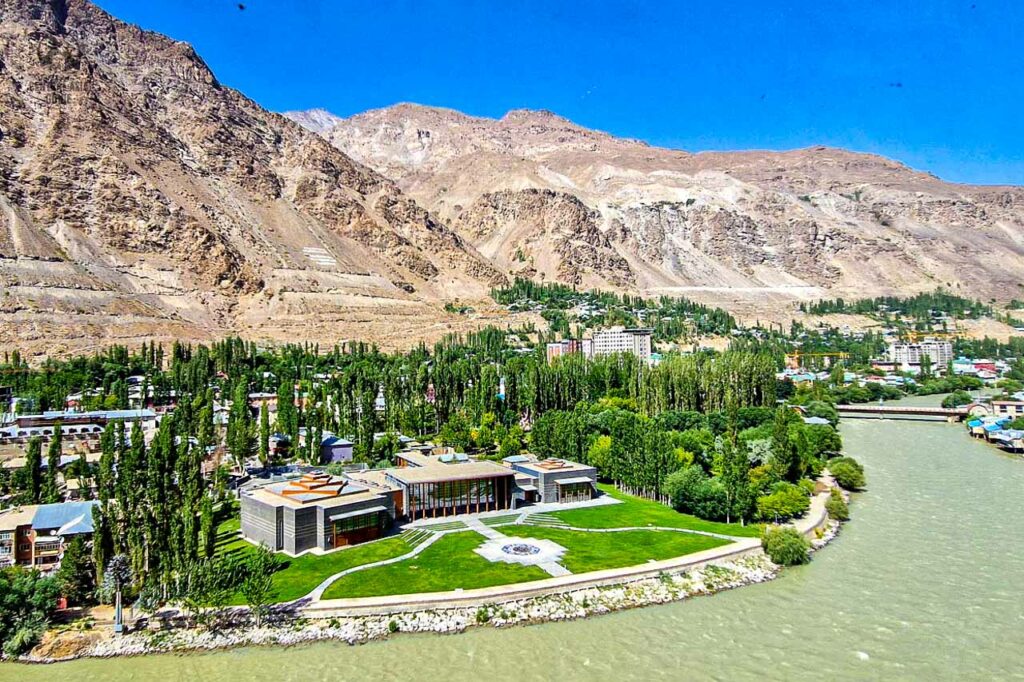
Transfer to Khorog, the administrative center of Gorno-Badakhshan, a charming green town surrounded by towering poplar trees and traditional Pamiri houses on its outskirts. Nestled in a deep gorge at 2200 meters above sea level, near the confluence of the Gunt and Panj Rivers, Khorog is protected from strong winds and harsh winters, enjoying warm, dry summers. The town is famous for its lush gardens filled with apple, apricot, and mulberry trees. Upon arrival in Khorog, check-in at the hotel. Sightseeing in Khorog: visit the Pamir Botanical Garden, the second highest botanical garden in the world (after Nepal’s), featuring a unique collection of flora from across the globe. The garden is located on river terraces above the eastern part of Khorog at an altitude of 2320 meters, offering stunning views. Next, explore the History and Ethnography Museum, showcasing fascinating exhibits on the region’s history, art, and crafts. A standout artifact is the first piano brought to the Pamirs, carried by ten soldiers on foot from Osh in 1914 for the daughter of a local ruler. The soldiers followed much the same route we have traveled over the past few days, but without the convenience of modern transport. Finally, stop by the local bazar, where you can purchase fresh produce, fruits, and local specialties. Dinner and overnight at the hotel.
Khorog
- Iskashim → Khorog (120 km)
Au cours de la nuit : Khorog (Hôtel)
Repas : Petit déjeuner, Lunch, Dinner
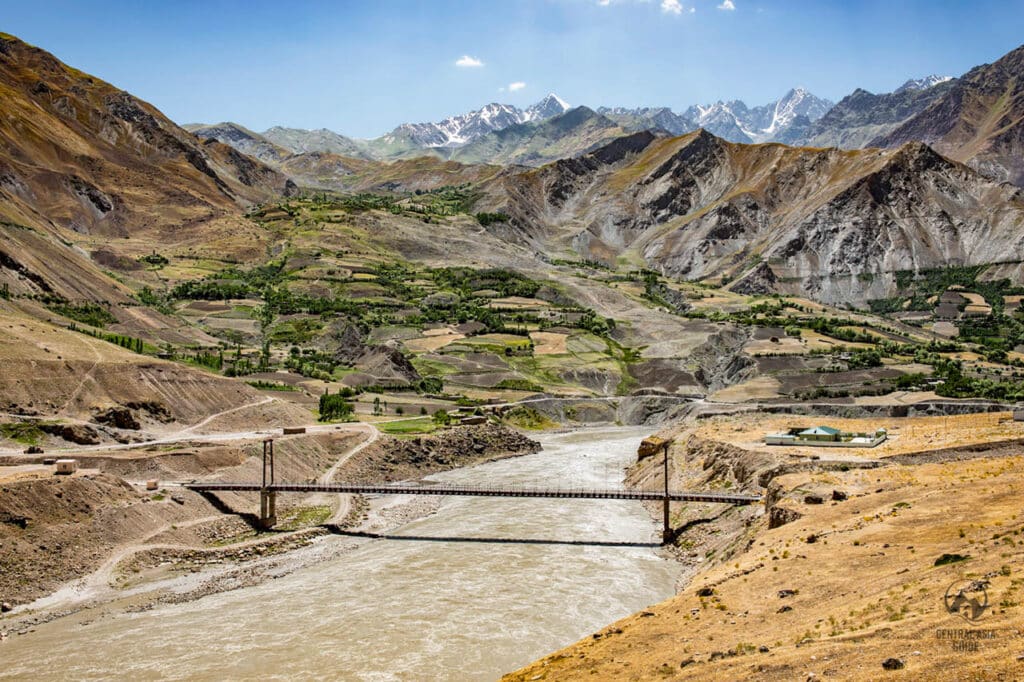
Transfer to the village of Kalai-Khumb with a stop at the ancient site of Karon, located at an altitude of around 2000 meters in the Darvaz District of Gorno-Badakhshan, Tajikistan. This archaeological treasure is an ancient monument of architecture and culture, with excavations that began in 2013. Lunch en route. Arrival in Kalai-Khumb, a small town near the Afghan border, situated at the confluence of the Khumbob and Panj Rivers. This settlement, located at an altitude of 1200 meters, has a population of around 2,000 people. Its name translates from Tajik as “Fortress at the Bottom of a Jug.” Kalaikhumb was founded in the 15th century as a fortress along the Khumbob River and served as the capital of the independent Tajik principality of Darvaz (meaning “gateway”) until the mid-19th century. The Darvaz District is known for its fertile land and agricultural production. Locally grown crops include grains, melons (watermelons and cantaloupes), vegetables, and fruits. In Kalaikhumb, you’ll have the opportunity to taste the region’s finest pomegranates, figs, persimmons, pistachios, and almonds, freshly harvested from the surrounding areas. Dinner and overnight at the hotel.
- Khorog → Kalai Khum (265 km)
Au cours de la nuit : Kalai Khum (Hôtel)
Repas : Petit déjeuner, Lunch, Dinner
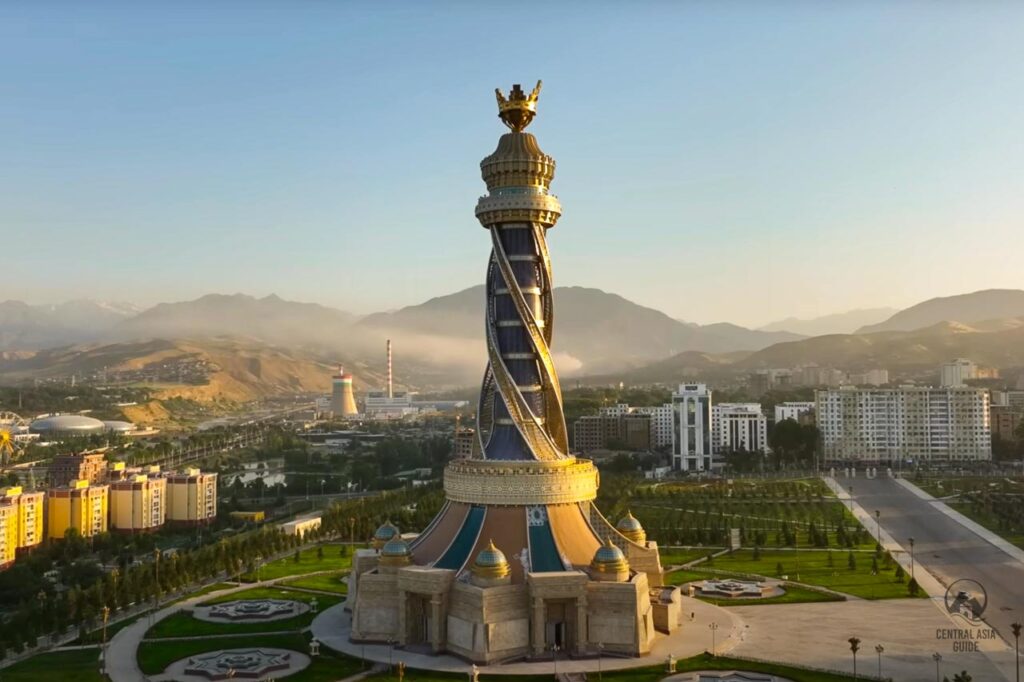
Transfer to Dushanbe, the capital of Tajikistan, with stops at the Mausoleum of Mir Sayyid Ali Hamadani and Hulbuk Fortress along the way. Lunch in the city of Kulob. Arrival in Dushanbe, a vibrant and sunny city with a well-developed infrastructure, known for its numerous streets, avenues, and squares named after poets and writers. The name “Dushanbe” translates from Tajik as “Monday,” as the city grew around a crossroads where a major market was held on Mondays. Sightseeing in Dushanbe: National Museum of Antiquities of Tajikistan, home to a unique collection of ancient artifacts, including the centerpiece, the colossal statue “Buddha in Nirvana,” measuring 12.9 meters in length and weighing 5.5 tons (6th–8th centuries); Independence Square and Rudaki Avenue; Monument to Ismail Samani, the founder of the Samanid dynasty. Dinner at a local restaurant. Overnight at the hotel.
Forteresse Hulbuk, Douchanbé, National Museum of Antiquities (Dushanbe)
- Kalai Khum → Douchanbé (350 km)
Au cours de la nuit : Douchanbé (Hôtel)
Repas : Petit déjeuner, Lunch, Dinner

Transfer to the airport. The end of the program.
Repas : Petit déjeuner

Argent et coûts

Sécurité

Entrée et sortie

Meilleure période pour partir

Santé
Argent et coûts
Argent et coûts
La monnaie officielle du Tadjikistan est le somoni (TJS), bien que les dollars soient acceptés dans certains endroits. Cependant, le somoni est la monnaie principale pour les transactions quotidiennes.
Les retraits d’argent dans les distributeurs automatiques de billets peuvent poser des problèmes, il est donc recommandé d’avoir de l’argent liquide sur soi pour éviter tout désagrément financier. Les distributeurs automatiques de billets sont accessibles dans des villes telles que Douchanbé, Panjakent, Khujand, Khorog, Isfara, Istaravshan, Kurgan-Tube, et même dans des villes plus petites, à l’exception de Murghab.
La banque Eskhata à Douchanbé est considérée comme une option fiable pour obtenir des dollars américains, avec une limite de retrait généreuse en somonis. Toutefois, sachez que les guichets automatiques peuvent être moins disponibles le week-end. Il peut être difficile de trouver un distributeur acceptant les cartes Mastercard.
Les dollars américains et les euros sont largement reconnus au Tadjikistan. Dans les zones rurales dépourvues de services officiels de change, les gens peuvent préférer les dollars aux euros. Il est essentiel de noter que l’échange de devises sur le marché noir est illégal.
Sécurité
Sécurité
Bien que la situation générale en matière de sécurité soit généralement stable et que Douchanbé soit considérée comme relativement sûre, des incidents occasionnels de vols et de délits mineurs peuvent se produire. Les personnes disposant de ressources financières, y compris les étrangers, peuvent être des cibles potentielles. Voici quelques recommandations supplémentaires pour le Tadjikistan :
- Ayez toujours sur vous une copie de la page photo de votre passeport, car les autorités peuvent vous demander une pièce d’identité.
- Faites preuve de prudence en évitant les manifestations ou les grands rassemblements, et restez vigilant dans les espaces publics.
- Pour votre sécurité, ne laissez pas vos boissons sans surveillance, refusez les boissons offertes par des inconnus et faites attention à votre consommation d’alcool.
- Si vous êtes suivi ou harcelé à l’aéroport, signalez rapidement l’incident à votre agent de voyage ou au bureau du consulat à l’aéroport.
- Respectez à tout moment les traditions, les coutumes, les lois et les religions locales.
- Il est interdit de fumer en marchant dans les rues.
- La possession et la consommation de drogues sont strictement illégales.
- Les femmes voyageant seules au Tadjikistan peuvent faire l’objet d’une attention non désirée, de harcèlement ou de difficultés liées à leur sexe.
- Photographier quoi que ce soit en rapport avec l’armée ou les services de sécurité peut entraîner des complications avec les autorités locales.
- Les relations sexuelles entre personnes du même sexe ne sont pas illégales selon la législation tadjike. Toutefois, les opinions conservatrices locales et les niveaux de tolérance peuvent varier, en particulier en dehors des grandes villes.
- Les transports au Tadjikistan sont souvent assurés par des véhicules mal entretenus et les normes de conduite sont rudimentaires. Les stations-service en dehors des villes sont rares et les services d’urgence ne sont pas toujours disponibles. Assurez-vous d’avoir toutes les fournitures nécessaires pour votre voyage et anticipez les retards éventuels.
- Les routes en dehors des grandes villes sont en mauvais état et ne sont accessibles qu’aux véhicules à quatre roues motrices. Les conditions sont particulièrement dangereuses au printemps en raison du risque d’avalanches et de glissements de terrain.
- Le Tadjikistan connaît souvent des pénuries d’énergie et d’eau, ainsi que des coupures de courant fréquentes, surtout en hiver et au printemps, principalement en dehors de Douchanbé.
- Évitez de vous rendre dans la zone frontalière avec l’Afghanistan en raison de l’instabilité de la situation sécuritaire.
- Malgré un accord de cessez-le-feu, la situation sécuritaire reste instable à la suite d’affrontements militaires dans la région de Sughd (nord du Tadjikistan), à la frontière avec le Kirghizistan, en septembre 2022. La ville de Khujand peut toujours être visitée en toute sécurité.
- Le Tadjikistan est sujet aux tremblements de terre, aux avalanches, aux glissements de terrain et aux inondations.
Entrée et sortie
Entrée et sortie
À partir de 2022, les visiteurs de 52 pays pourront se rendre au Tadjikistan sans visa. Pour obtenir des informations complètes sur les visas, veuillez consulter ce lien. Il est essentiel de quitter le Tadjikistan avant l’expiration de votre visa ou de votre autorisation d’entrée sans visa afin d’éviter les pénalités et la nécessité d’un visa de sortie.
Pour ceux qui prévoient d’explorer la région autonome de Gorno-Badakhshan (GBAO), il est obligatoire d’obtenir une autorisation. N’oubliez pas que les frontières du Tadjikistan peuvent être fermées de manière inattendue. Déclarez les sommes importantes importées à votre arrivée et présentez le formulaire de déclaration douanière à votre départ.
Meilleure période pour partir
Meilleure période pour partir
La période idéale pour explorer le Tadjikistan est le printemps et l’automne, plus précisément les mois d’avril, de mai, de juin, de septembre et d’octobre. Les étés au Tadjikistan se caractérisent par une chaleur sèche et intense, avec des températures pouvant atteindre 40°C dans les basses terres. Les hivers peuvent être extrêmement froids, atteignant -20°C dans les zones montagneuses, et les fortes chutes de neige dans la région occidentale peuvent perturber les itinéraires d’hiver et fermer les cols de montagne de haute altitude.
Le mois de septembre est peut-être la période la plus favorable pour un voyage au Tadjikistan, car la chaleur diminue dans les plaines et presque tous les cols, à l’exception des plus hauts, restent accessibles. Les marchés s’animent avec une abondance de délicieux produits frais, et le paysage se transforme en un automne doré époustouflant. La meilleure période pour visiter le Pamir est le mois d’août.
Santé
Santé
Avant d’entreprendre votre voyage, vérifiez que la destination choisie peut vous offrir l’assistance médicale dont vous pourriez avoir besoin. Assurez-vous de posséder une assurance voyage appropriée couvrant à la fois le traitement sur place et l’évacuation médicale imprévue. Si vous êtes dirigé vers un établissement médical pour y être soigné, contactez rapidement votre assureur.
Le Tadjikistan possède des installations médicales limitées et fait face à des pénuries de médicaments essentiels. Les établissements médicaux situés en dehors de Douchanbé ont tendance à être rudimentaires, certaines régions n’ayant pratiquement aucune infrastructure médicale.
Certains médicaments contenant de la codéine sont strictement interdits au Tadjikistan. Si vous avez l’intention d’apporter des médicaments, assurez-vous de leur légalité et renseignez-vous sur les réglementations en vigueur. Déclarez tous les médicaments et autres objets interdits à votre arrivée.
Les tiques sont présentes dans les forêts et les zones rurales du printemps à l’automne. L’élimination inappropriée de l’uranium et des pesticides dans le nord de la région de Sughd présente des risques potentiels pour la santé. Il est conseillé de se faire vacciner au minimum contre l’hépatite A, l’hépatite B et le tétanos avant votre voyage.
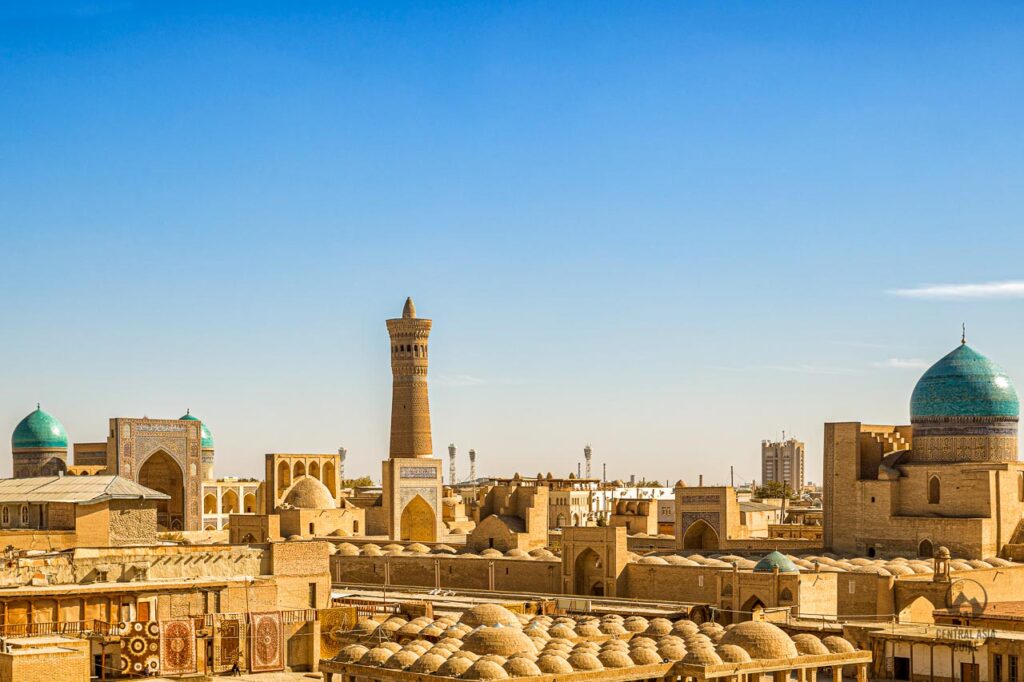

Le meilleur de la tournée des cinq Stan
Le meilleur de la tournée des cinq Stan – 22 Days | Kazakhstan, Kirghizistan, Ouzbékistan, Tadjikistan & Turkménistan…
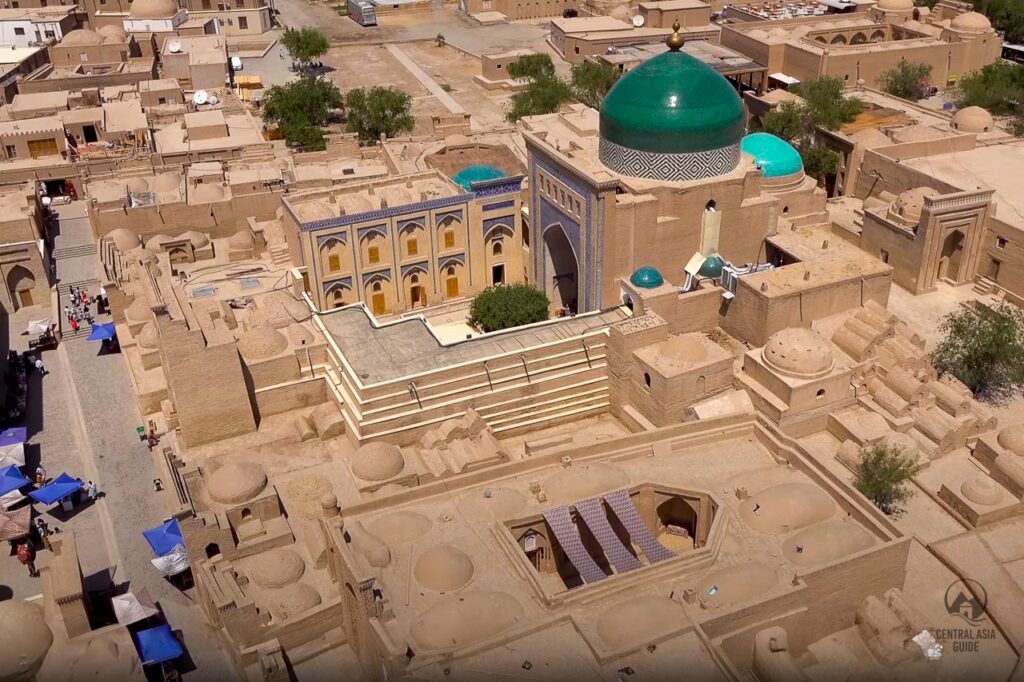
Circuit « Four Stan » à travers l’Asie centrale
Circuit « Four Stan » à travers l’Asie centrale – 18 Days | Kazakhstan, Kyrgyzstan, Uzbekistan & Tajikistan…
Circuit des cinq Stans d’Asie centrale
Circuit des cinq Stans d’Asie centrale – 15 or 17 Days | Kazakhstan, Kirghizistan, Ouzbékistan, Tadjikistan &…