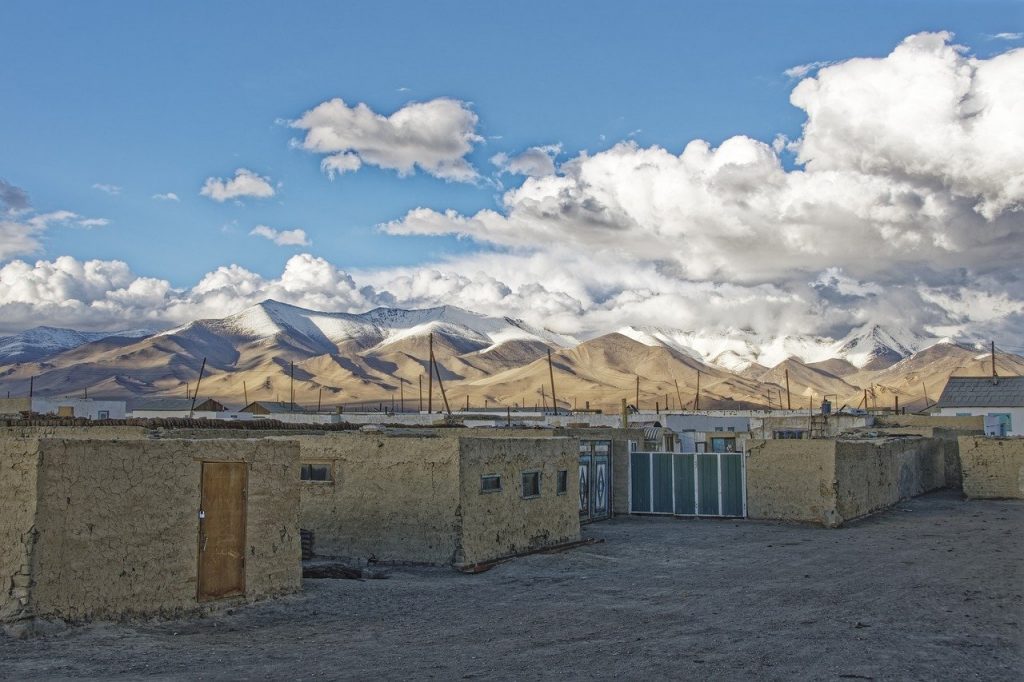
Lake Karakul
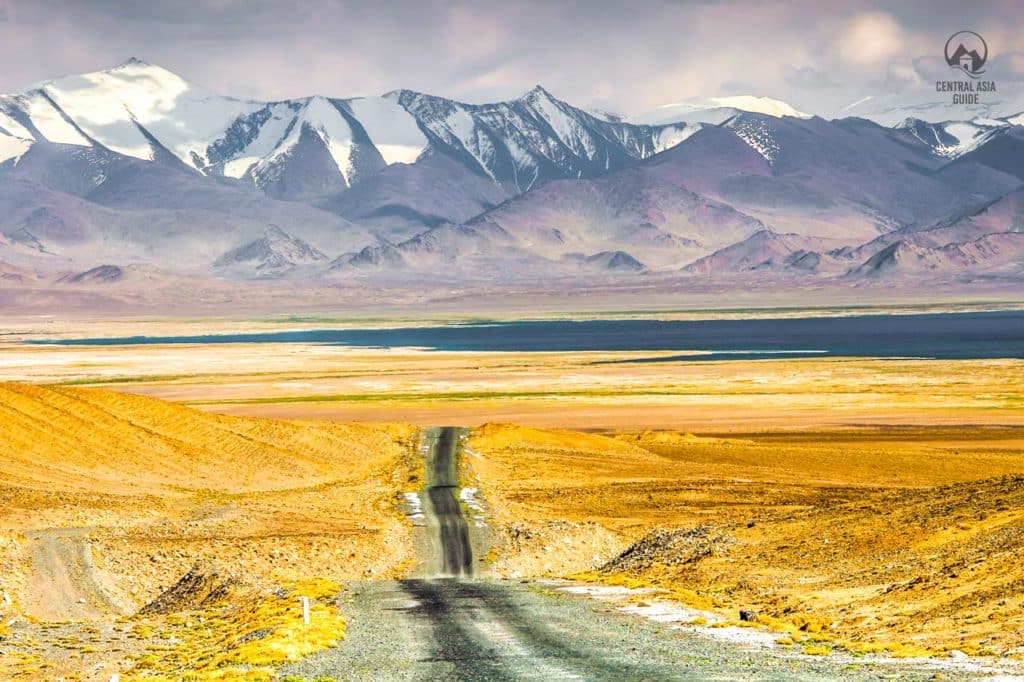
A huge, deep-blue lake in a meteorite crater at 3,960 m, just over the Kyzyl-Art pass on the Pamir Highway, with Lenin Peak on the horizon, Kyrgyz summer yurts, Saka geoglyphs and one of the driest, emptiest landscapes in Central Asia.
Lake Karakul at a glance
This is Lake Karakul in the Pamirs of Tajikistan, at 3,960 m on the Pamir Highway. It is not Karakul Lake in Xinjiang (China) or the town of Karakol in Kyrgyzstan.
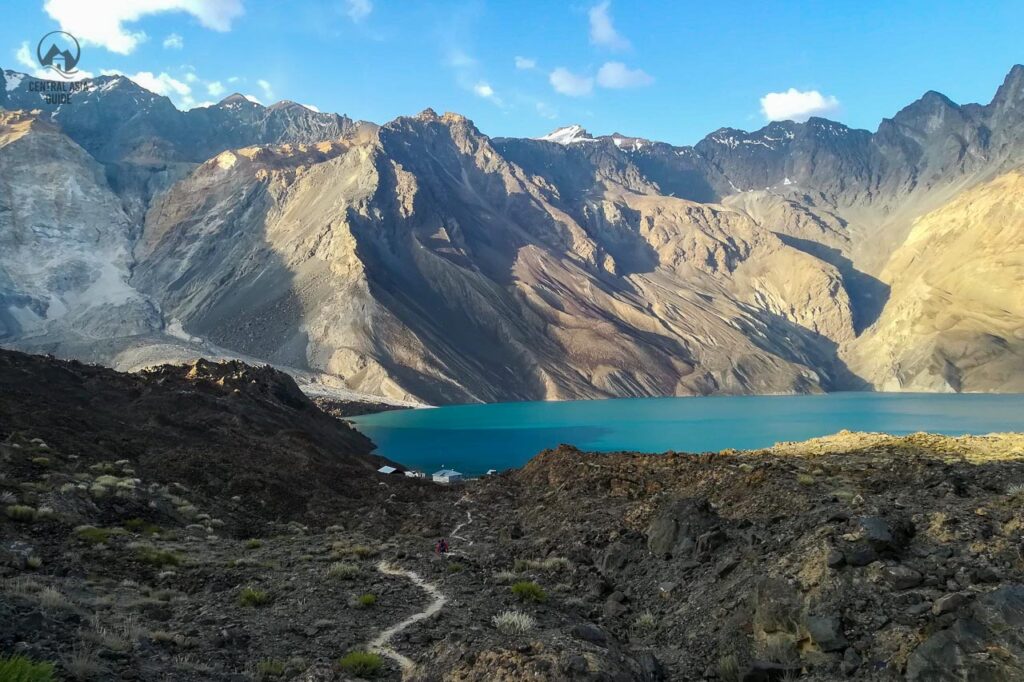
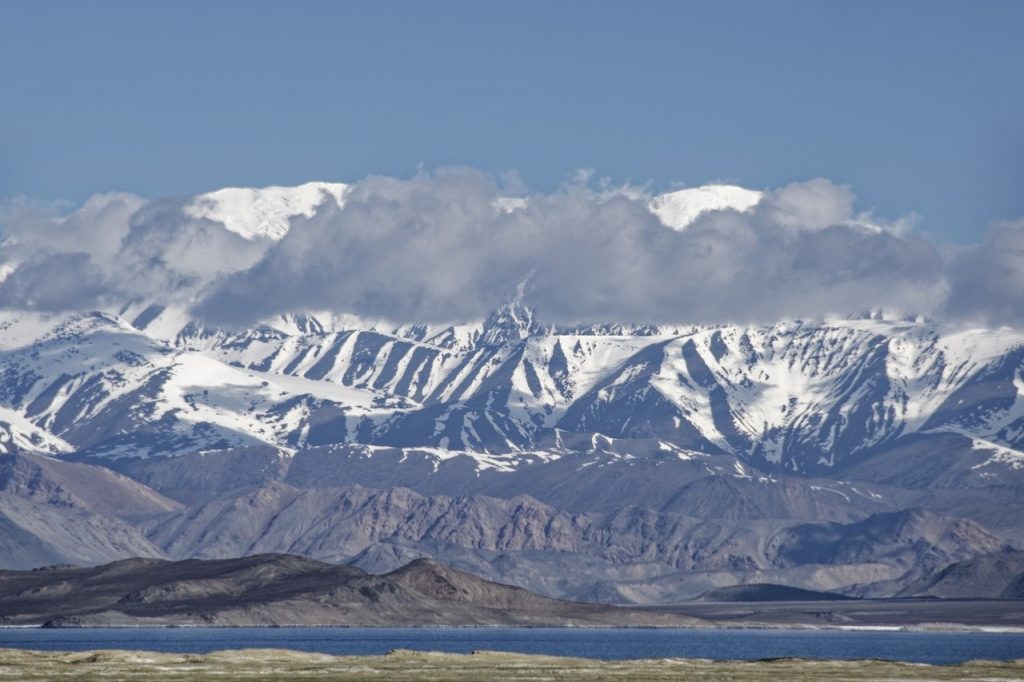
Karakul fills a giant meteorite crater in the eastern Pamirs. The lake is about 25 km across and covers some 380 km². It is a brackish lake with no outflow, fed by groundwater and three small rivers, in one of the driest places in Central Asia. In Central Asia and the Turkic-speaking world many places are called Karakul (Kara-Kul, Karakol, Qarakol), “black lake” – though this one is a deep, dark blue. The salt-covered beaches show that the lake was once larger, and some studies say it is still slowly shrinking.
A peninsula from the south and an island in the north divide the lake into two basins. The island is about 8 km long and 4 km wide, and the channel between it and the peninsula is about 1 km wide. The eastern basin is shallow, only about 13–19 m deep, while the western basin reaches about 230 m.
- Altitude: 3,960 m. Arriving from Osh in one day is a big jump, so watch for altitude sickness.
- Getting there: on the Pamir Highway, about 50 km from the Kyzyl-Art border and 133 km from Murghab.
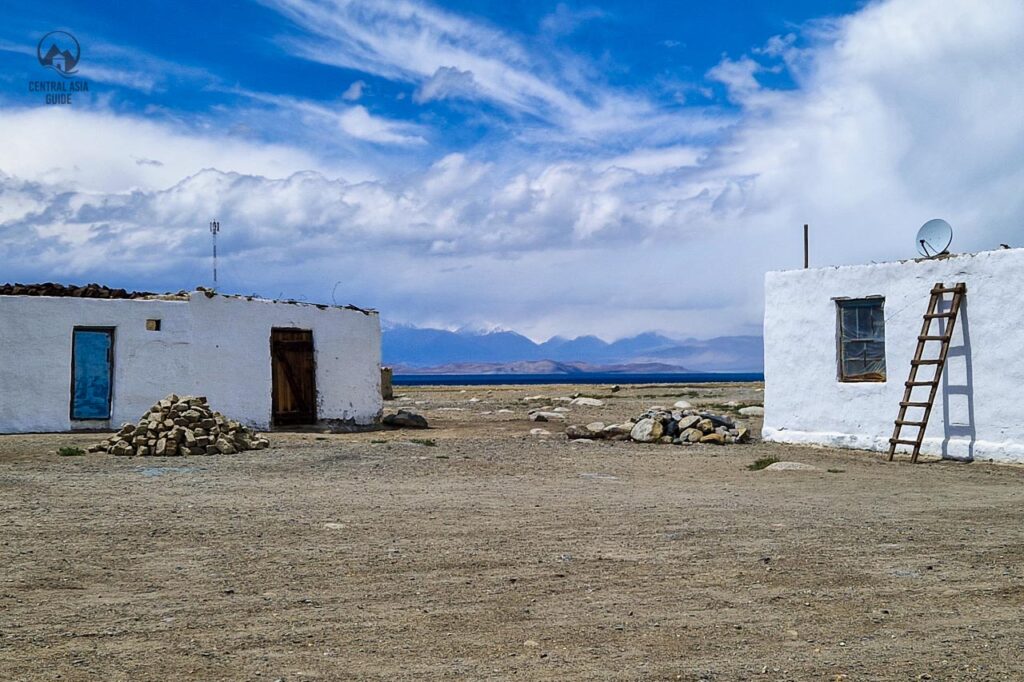
- Stay: simple guesthouses in Karakul village.
- Best time: June to September.
- Permit: a GBAO permit is required (see visa and GBAO permit).
Where it is and how to get there
Most Pamir tours pass the lake, as it lies only about 50 km from the Kyzyl-Art border with Kyrgyzstan on the Pamir Highway (M41), the only main road on this high plateau. At 3,960 m Karakul is one of the highest large lakes in the world outside Tibet.
The Kyrgyz and Chinese borders are close, and on a clear day you can see Lenin Peak from the shore. The lake lies inside the Tajik National Park, where the road is mostly unpaved and often damaged by erosion, earthquakes, landslides and avalanches.
Without your own car, take an Osh-bound shared taxi from the Murghab bazaar and ask to be dropped at Karakul. Getting a seat out of Karakul can take a day or two, as cars passing through are often full, so many travellers hire a car instead.
On our Pamir Highway group tour from Osh you stop at Karakul for lunch on the way from the Kyzyl-Art pass to Murghab, after two nights of acclimatisation at 3,600 m below Lenin Peak.
Karakul tours
10 days
The Pamir Highway from Osh to Dushanbe group tour
Embark on an unforgettable 10-day journey through the breathtaking landscapes of the Pamirs, starting in Osh, the…
- Culture
- Hiking
- +4
Starts in Osh
12 days
Pamir Grand Tour
Experience an extraordinary journey through the stunning landscapes of Central Asia on this 12-day tour from Osh to…
- Culture
- Hiking
- +3
Starts in Osh Private departures on request
7 days
Pamir Highway and Wakhan Corridor Tour from Dushanbe to Osh
This 7-day private 4x4 tour crosses the Pamir Mountains from Dushanbe in Tajikistan to Osh in Kyrgyzstan – more than…
- Culture
- Hiking
- +3
Starts in Dushanbe Private departures on request
7 days
Pamir Highway and Wakhan Corridor Tour from Osh to Dushanbe
This 7-day private 4x4 tour drives the Pamir Highway from Osh in Kyrgyzstan to Dushanbe in Tajikistan – a good…
- Culture
- Hiking
- +3
Starts in Osh Private departures on request
9 days
9 days Pamir Highway tour
This 9-day private 4x4 tour from Dushanbe follows the legendary Pamir Highway deep into the Pamir Mountains of the…
- Culture
- Hiking
- +2
Starts in Dushanbe Private departures on request
7 days
Budget Pamir Group Tour with Transportation Only
The Pamir Highway is among the most breathtaking road journeys in Central Asia. This 7-day group tour drives it from…
- Hiking
- Jeep (4x4)
- +2
Starts in Dushanbe Private departures on request
Climate and best time to visit
Karakul and its surroundings are one of the driest spots in Central Asia, with less than 30 mm of precipitation a year, as the high mountains around it block humid air from every direction. In July and August daytime temperatures reach only about +16 °C on average, and in winter they fall well below −20 °C. The nearby Markansu valley is famous for its fierce winds, raised when cold mountain air meets warm air from the Taklamakan desert; stories even tell of loaded camels being lifted by whirlwinds.
The best time to visit is June to September. The village has only a few simple guesthouses, open mainly in summer, and even then nights can drop below freezing.
The meteorite crater
Lake Karakul lies in an impact crater about 52 km across, so the lake fills only part of it. It was only recognised as a crater from satellite images in the late 1980s, and its age is still debated: estimates range from under 5 million to about 25 million years.
The lake has also made a few headlines of its own: between 2014 and 2017 the Roof of the World Regatta held sailing races here, at almost 4,000 m.
Karakul village and where to stay
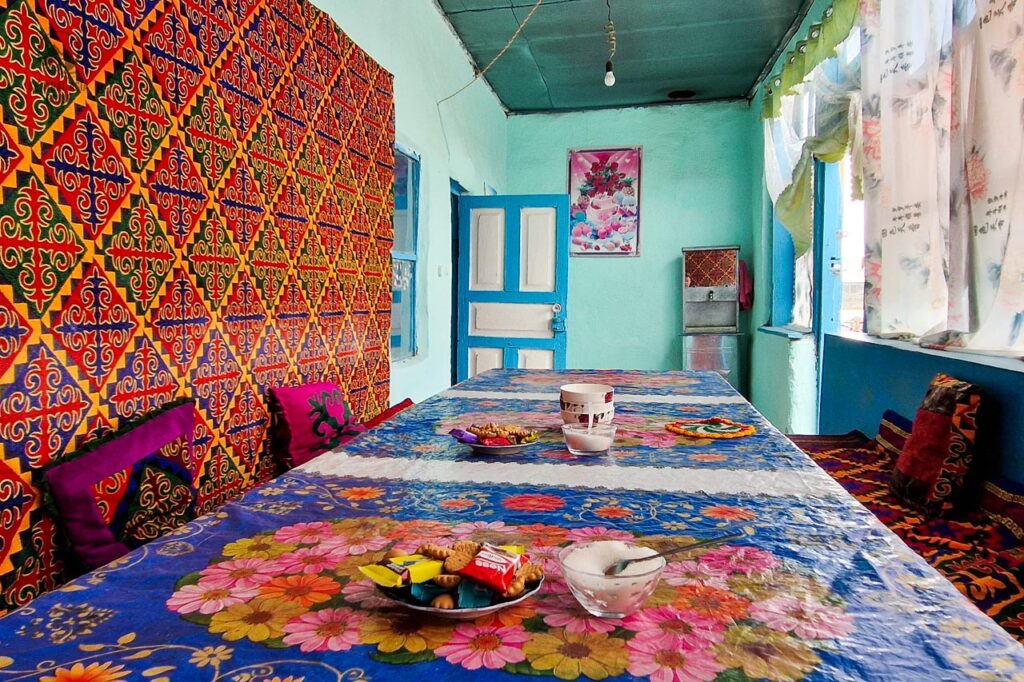
A walk through Karakul village is an experience in itself: it is rare to see people outside, and you really feel far away from everything. There are two simple guesthouses with shared rooms, outdoor toilets, no running water and electricity only in the evening, plus a truckers’ rest house that serves hearty, cheap meals. Bring a warm sleeping layer, as nights are cold even in summer. Hot food and fuel are available in the village.
Sights around Karakul Lake
There are several archaeological sites near the lake, with geoglyphs and tombs from the centuries BC. It is thought that the Pamirs were once lower and greener, which would explain finds such as the remains of wood fires, but this is not certain. One can always hike around the lake: the views are breathtaking and you meet few other tourists.
Hiking around Karakul Lake
Hiking is the obvious thing to do around Karakul, and the best area is the southern shore. The classic hike is to Aral Yuj (South Aral peak), almost 4,300 m: a track leaves the Pamir Highway at the southern end of the lake and runs about 15 km to the trailhead, from where it is about 2.25 km each way, around 3 hours in total, with a great view over the lake, the village and the desolate plateau beyond. Ask your guesthouse to arrange a driver to take you there and wait. There are countless other areas to roam on the high desert plateau.
Geoglyphs and Saka graves near Karakul
Near the resthouse at Kara-Art, about 8 km north from the village, a track turns off west to 2 sites of geoglyphs and Saka kurgans, starting about 500 m from the turnoff. In total there are 19 geoglyphs and 25 tombs, dated from the 7th to the 2nd century BC.
Muzkol valley and Kyrgyz summer yurts
In the Muzkol valley, south of the lake, you can see the geoglyphs at Shurali and meet the Kyrgyz herders who bring their yaks to the summer pastures of Jalang. Jalang also has a meteorite crater, like the Ak-Bura crater between Murghab and the Kulma pass. In summer it is often possible to stay with the families in their yurts; arrange it through your guesthouse or driver.
A track west from the road south of the lake also leads to the Kök-Jar viewpoint over the Tanymas river, and on towards the Bartang valley, a route that floods and landslides can make impassable.
Markansu Valley
The Markansu valley lies right next to the border with Kyrgyzstan and runs towards China. With often less than 30 mm of precipitation a year, it is one of the driest places in Central Asia, and in the afternoons it acts like a wind tunnel as cold air from the Pamir plateau is pushed through the narrow valley towards the Tarim Basin.
Oshhona archaeological site
At Oshkhona in the Markansu valley, archaeologists found an early human camp, radiocarbon-dated to roughly 7,500–9,500 years ago, with the ashes of a fire, stone tools and animal bones. Where the firewood came from is a puzzle; together with the cave paintings near Murghab, it suggests the Karakul area was once greener.
Pamir border fence
The Chinese border runs close to the road here, marked by a long fence along the Pamir Highway, and the whole area is a border zone, so you cannot wander everywhere.
Nature and birdlife
Lake Karakul is a Ramsar wetland of international importance (since 2001) and an Important Bird Area. More than 90 bird species have been recorded around it, including nesting bar-headed geese, which rest and breed on the islands, and the bearded vulture in the mountains; some species have their own Pamir subspecies. The only fish in the brackish water is a small stone loach.
Written by Anssi Karppinen, Central Asia Guide · Page updated