Wakhan Valley
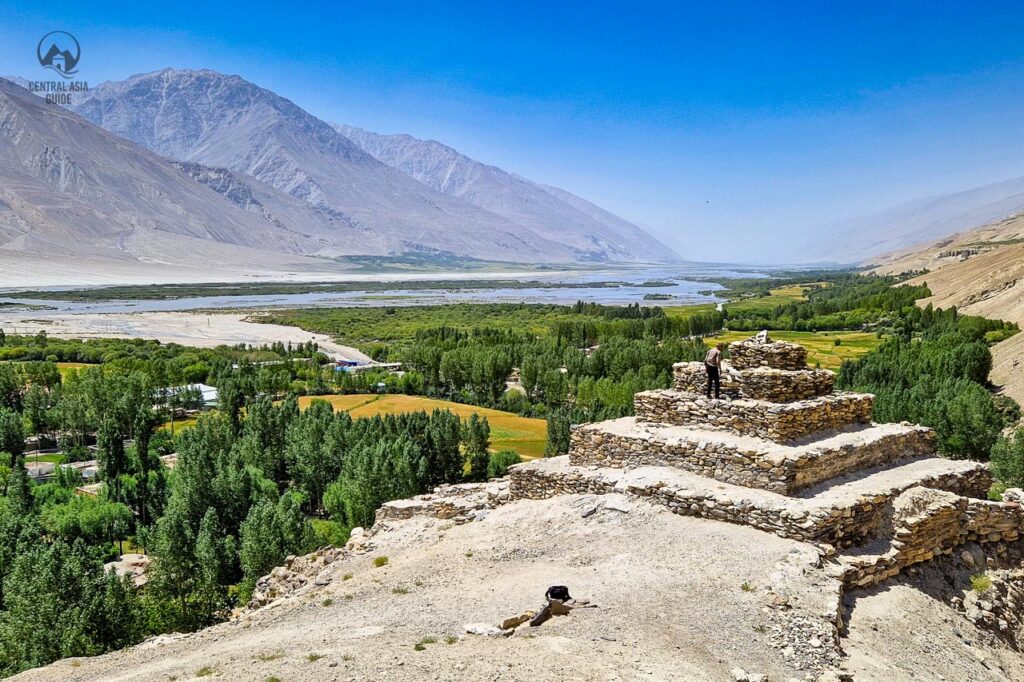
The green Panj valley along the Afghan border, with the snow peaks of the Hindu Kush across the river: ancient fortresses, hot springs, petroglyphs and Wakhi family homestays on the scenic detour of the Pamir Highway.
Wakhan Valley at a glance
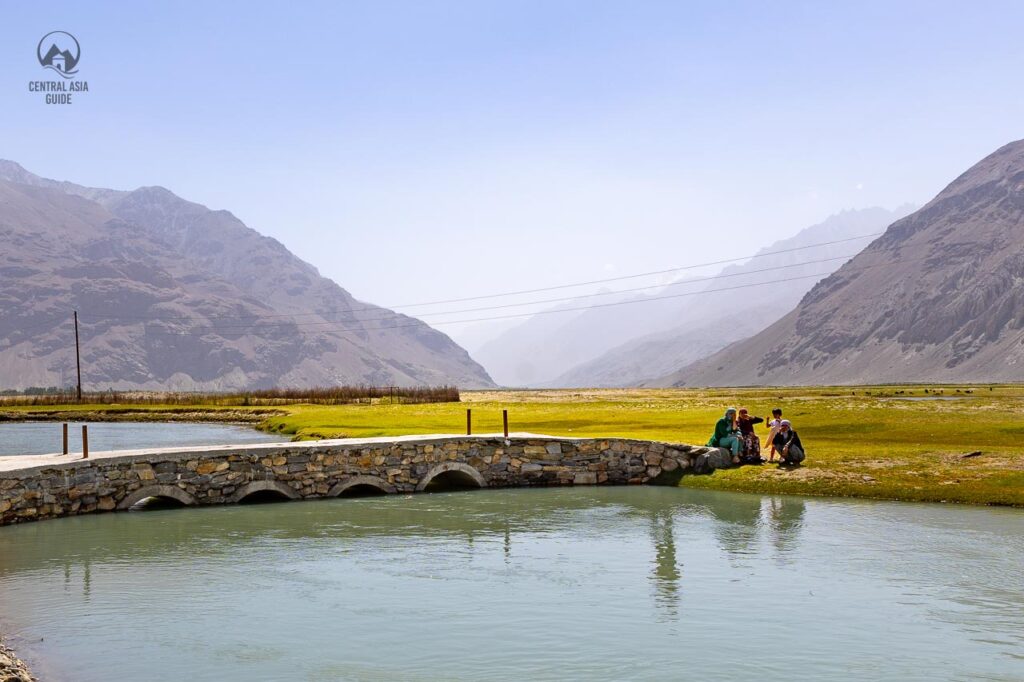
The Wakhan Valley of Tajikistan lies just north of the better-known Wakhan Corridor of Afghanistan, across the Panj river. It is the scenic southern detour of the Pamir Highway and holds some of the best sights in the Pamirs: ancient fortresses, hot springs, petroglyphs and views of the Hindu Kush. The valley is a narrow strip of fields and villages between steep, high mountains, following the upper course of the Panj, which later becomes the Amu Darya.
- Where: the Panj river valley along the Afghan border, from Ishkashim to Langar, with the Hindu Kush on the other side.
- Time needed: at least 3 days; a week to slow down and hike.
- Permit: a GBAO permit is required (see visa and GBAO permit).
- Best time: June to September; late May and early October are possible.
- Safety: the valley is calm and welcoming. Check current advice before you travel, as the region has had political unrest.
The narrow Wakhan Corridor of Afghanistan borders Tajikistan to the north, Pakistan to the south and China to the east. It is about 350 km long and 13–65 km wide, and takes in the easternmost ranges of the Hindu Kush and the south-eastern ranges of the Pamirs, where they meet the Karakoram.
Sights along the Wakhan Valley
The Wakhan is not officially part of the Pamir Highway, but most of our Pamir tours include it, as it holds the most important historical sites and some of the best scenery in the Pamirs. From west to east:
- Khakha (Qah-Qaha) fortress near Ishkashim, on a cliff above the Panj (see Khakha fortress).
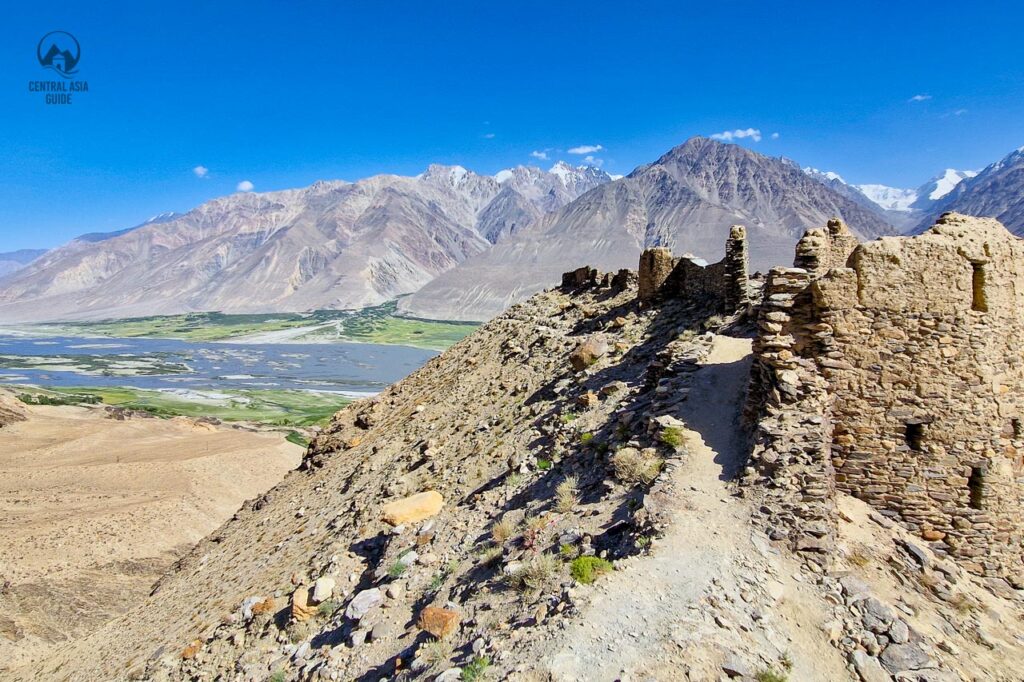
- Yamchun fort, high above the valley, said to be about 2,000 years old (see Yamchun fort).
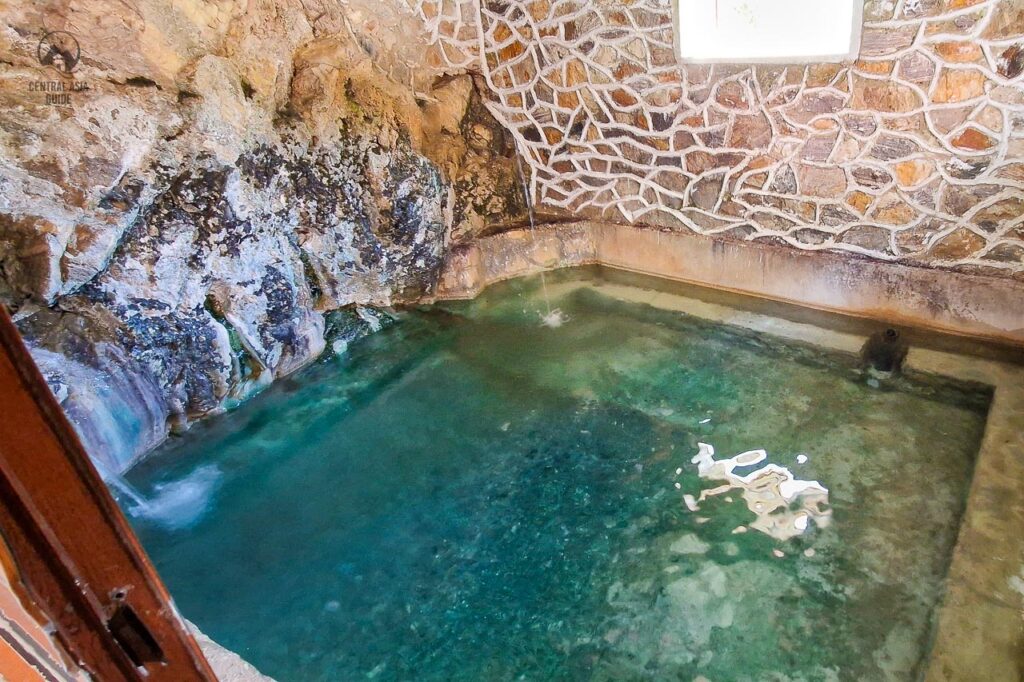
- Bibi Fatima hot spring, a short way above Yamchun fort, at around 41 °C (see Bibi Fatima hot springs).
- The Yamg museum of the Sufi poet and astronomer Mubarak-i Wakhani, with his stone calendar.
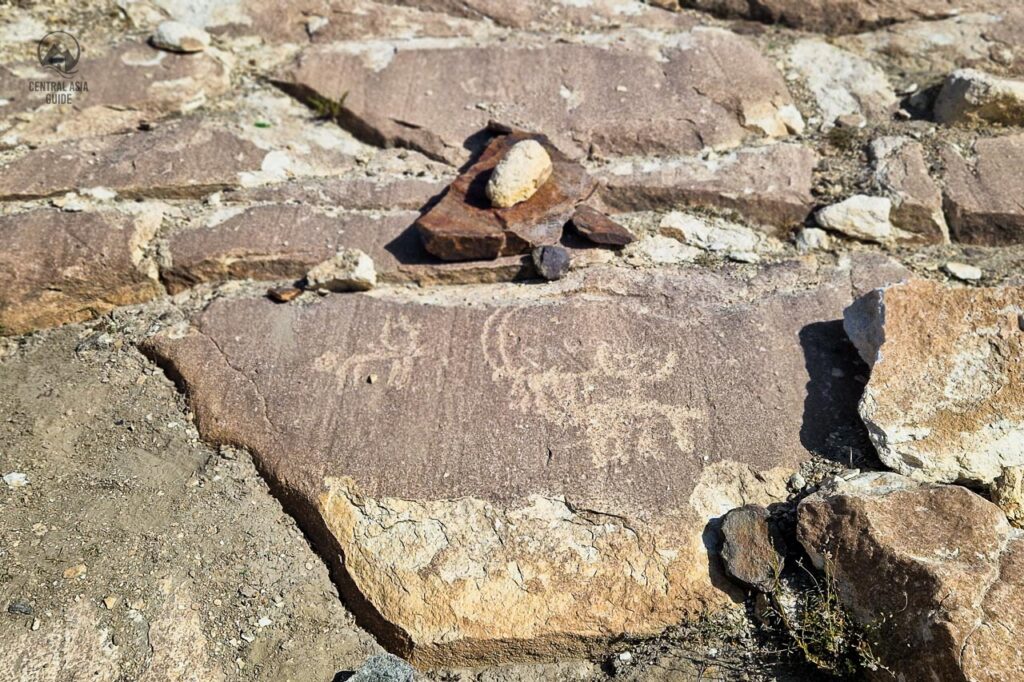
- Langar’s petroglyphs, thousands of rock carvings above the village (see Langar).
- The views of the Hindu Kush, the snow peaks of Afghanistan and Pakistan across the river, all along the road.
Stone calendar and house museum - Yamg
Yamg village is mostly known for being the home of a Sufi mystic, poet, musician, and astronomer Mubarak-i Wakhani (1839–1903). He was a revered Ismaili scholar whose influence on the spiritual and cultural life of the Wakhan Valley is profound. His house in Yamg has been turned into a small house museum, where visitors can learn about the Pamiri culture (and the Pamiri house) and his contributions to Sufi mysticism, poetry, and music and you can see his homemade sundial at the museum which allegedly tells the time of Nawruz, the time of Persian new year. His tomb is also located in the outskirts of Yamg.
Wakhan Fortresses
Yamchun fortress
Yamchun Fortress is a well-preserved ancient fortress located near Yamg, this historic site offers incredible views of the Panj River and the surrounding mountains. It is said to be about 2,000 years old, and its strategic location hints at the valley’s historical importance on the Silk Road as well.
Ratm fortress
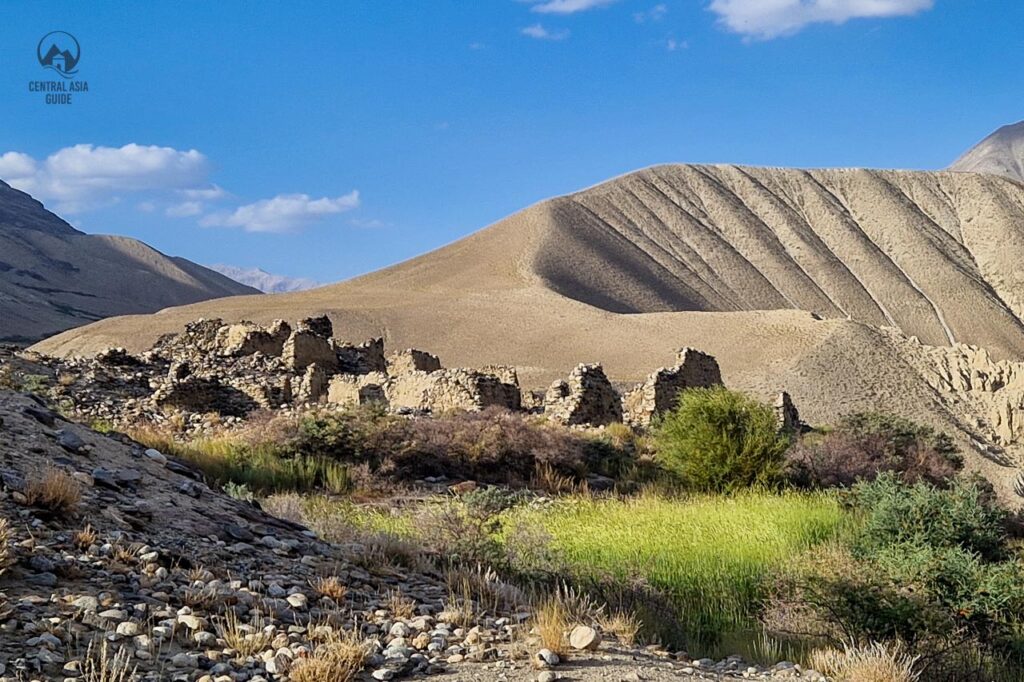
Ratm fortress is near Langar village and you need to walk for about 20 minutes to reach the site. The path is not well marked, so ask in the village for directions. This fortress has been clearly built to watch over the Wakhan valley as it offers an unobstructed view over the whole route.
In addition to the abovementioned fortresses there are tens of other fortress ruins in the Wakhan Valley. Most remarkable of them are the Khakha fortress, Abrashim Qala and Karon castle.
Wakhan Hot springs
The Wakhan Valley has the two best-known hot springs of the Pamirs and Tajikistan: Garm Chashma, in a side valley before Ishkashim, and Bibi Fatima, a short way above Yamchun fort, where the water is around 41 °C. Both are easy to visit on the drive through the valley.
Langar Village
Further up the Wakhan Valley, Langar is famous for its petroglyphs: thousands of rock carvings, some thousands of years old, showing hunters, animals and ancient symbols on the slopes above the village.
Vrang Buddhist Stupa
A reminder of the region’s diverse religious history, the Buddhist Stupa in the village of Vrang is a relic from the time when Buddhism was practiced in the region before the arrival of Islam.
Wakhan tours
These tours include the Wakhan Valley, most of them as part of a Pamir Highway journey between Dushanbe and Osh.
7 days
Pamir Highway and Wakhan Corridor Tour from Dushanbe to Osh
Car with an English-speaking driver; homestays and meals paid locally (about 30 USD a day)
- Culture
- Hiking
- +3
Starts in Dushanbe Next departure 01/05/2027
7 days
Pamir Highway and Wakhan Corridor Tour from Osh to Dushanbe
Car with an English-speaking driver; homestays and meals paid locally (about 30 USD a day)
- Culture
- Hiking
- +3
Starts in Osh Next departure 14/05/2027
9 days
9-Day Pamir Highway Tour from Osh to Dushanbe
Car with an English-speaking driver; homestays and meals paid locally (about 30 USD a day)
- Culture
- Hiking
- +3
Starts in Osh Next departure 09/05/2027
12 days
Pamir Grand Tour
Experience an extraordinary journey through the stunning landscapes of Central Asia on this 12-day tour from Osh to…
- Culture
- Hiking
- +3
Starts in Osh Private departures on request
10 days
Pamir Highway and Bartang Valley Tour from Dushanbe
A 10-day private 4x4 loop from Dushanbe: out along the Afghan border and the Wakhan, back through the wild Bartang…
- Culture
- Hiking
- +2
Starts in Dushanbe Private departures on request
History of Wakhan Corridor
The formation of the Wakhan Corridor took place during the late 19th century as a result of geopolitical maneuvering between the British and the Russians, known as the Great Game. The primary purpose behind establishing the Wakhan Corridor was to act as a buffer zone between the territories of the two empires. The Wakhan region, including the significant geographical feature known as the Pamir Knot, possesses exceptional value in terms of its unique environment, biodiversity, and its human inhabitants, which include settled Wakhi farmers and nomadic herders who reside in yurts, namely the Kyrgyz.
The Wakhan area is divided into three distinct geographical sections. The first is the primary Wakhan strip that stretches between Ishkeshem and Qala Panja. The second is the Pamir Knot, which consists of two separate blocks of high mountains, namely the Pamir-e-Kalan or Big Pamir and the Pamir-e-Khord or Little Pamir. This division reflects the geographical and topographical features of the region. The Ishkashim border crossing to Afghanistan and its Saturday cross-border market have been closed to foreign visitors for several years.
Wakhi people and culture
The establishment of imperial boundaries during that time led to the division of the Wakhi people across three different countries. As a result, communication between these separated communities has diminished, causing each group to develop their own distinct paths. In the early 20th century, the Kyrgyz shepherds sought to protect their traditional way of life from Russian influence and sought refuge in the most remote regions of the Wakhan Corridor, where they continue to reside to this day but a portion of them have returned to Kyrgyzstan. Visiting these communities is no small feat, requiring considerable time, effort, and financial resources, but the experience is undoubtedly rewarding. Their lifestyle closely resembles that of earlier times witnessed in the Wakhan area and the Pamir region and is very much in the interest of researchers with yearly scientific visits.
On the Tajik side of the border, the people of the Wakhan are Wakhi, Ismaili Muslims who speak their own Pamiri language (see Pamiri culture). Their villages are stone houses among apricot, apple and walnut orchards. Many Wakhi also live on the Afghan side of the river, but today their life is very different.
How to get to the Wakhan Valley
The Wakhan Valley can be entered from two points on the Pamir Highway: by taking the road south from Khorog via Ishkashim, or by turning south near Chukurkul lake on the high plateau, not far from the Yashilkul and Bulunkul lakes, over the Khargush pass to Langar.
See the whole valley on our Pamir tour from Dushanbe to Osh with the Wakhan: homestays booked, permit arranged, and time for the hot springs and fortresses.
Where to stay in the Wakhan
Family homestays in every village, with dinner and breakfast, usually for about 10–15 USD per person. Yamchun, Yamg, Vrang and Langar have several, some with views over the Panj to Afghanistan. Expect simple rooms with floor mattresses, electricity in the evenings only and patchy mobile signal.
Practical tips: transport, fees and phones
- Shared taxis: there is no timetable; cars leave when full, early in the morning, from the lot across the footbridge from the central bazaar in Khorog. Khorog–Ishkashim takes about 3 hours, Khorog–Langar about 7–8 hours (roughly 125–200 somoni). Between Langar and Alichur there is almost no traffic; a private car costs about 200 USD.
- Hot springs: Garm Chashma and Bibi Fatima have separate hours for men and women, and bathing is traditionally nude. Entry costs a few to a few dozen somoni; bring a towel and keep soaks short in the 40 °C water.
- Museums: the Mubarak-i Wakhani house museum in Yamg and the small museum at Khakha fortress charge about 10 somoni each; ask in the village if they are closed.
- Phones and power: Tcell has the best coverage, MegaFon works in places; there is no reliable Wi-Fi. Electricity is limited and often comes on only in the evening, so bring a power bank.
- Water and food: cold springs (chashma) are everywhere, but use a filter. Hosts serve breakfast and dinner; arrange lunch with them, as the teahouses are often closed. Small shops in the larger villages sell bread, drinks and snacks.
- Booking: homestays are not on booking websites; call ahead or ask on arrival.
Off the beaten path in the Wakhan
- Koh-i-Lal and the shrines on the way: between Khorog and Ishkashim lies the old Koh-i-Lal ruby mine, famous since Marco Polo’s time, and many small shrines (mazars). At Ryn near Ishkashim and at Zumudg there are stone sun calendars once used to fix the date of Nowruz.
- Darshai gorge: a narrow slot canyon just before Darshai village, east of Ishkashim, and a trail that climbs the gorge towards the glaciers below Mayakovsky Peak, with a summer yurt camp higher up. The village has a shrine with petroglyphs and a cold spring.
- Vrang beyond the stupa: monks’ caves across the stream, a rock said to bear the Buddha’s footprint, the ruins of Vrang fortress on the crag above, and the small house museum of the 11th-century Sufi poet Abdullo Ansori.
- Shirgin hot spring: a quieter covered pool (about 36 °C) some 15 km beyond Vrang.
- Zong and Hisor: quieter villages near Langar, with the ruins of Vishimqala, the “Silk fortress”, at Zong and Zangibar fortress at Hisor, orchards and walks into the side valleys.
- Langar’s sun shrine: besides the 5,000–6,000 petroglyphs, Langar has the pre-Islamic sun shrine of Shoh Kambari Oftab in a small garden.
- Panorama Ridge: near the Khargush pass, about 7 km before the pass from the Ratm side, a 1.5-hour climb to a viewpoint over the Wakhan and the Afghan Pamir.
- Khakha fortress near Ishkashim: part of it is still used by the border guards, so ask before exploring near the river and don’t photograph that section.
Allow extra days for these, and travel with a local driver or guide who knows the side tracks.
Treks from the Wakhan
The side valleys climb steeply from the Panj to glaciers and 6,000 m peaks. These hikes are moderate to hard, mostly unmarked, and exposed to sudden storms and stonefall, so go with a local guide.
- Pik Engels meadows: the most popular, an overnight hike from Langar (shorter and steeper) or Zong (longer and more gradual) to high meadows facing the Hindu Kush, continuing to about 4,200 m at the Kishtijarob glacier, the base camp for Engels Peak (6,510 m).
- Darshai gorge: from Darshai (2,750 m) up the gorge to meadows at about 4,000 m below Mayakovsky Peak.
- Yamchun valley: from Bibi Fatima up the Yamchun stream to about 3,900 m and beyond.
- Over the passes to the Shokhdara valley: from Vrang over the Vrang pass, or from Ratm over the Mats pass to Jawshangoz – multi-day treks for experienced hikers.
Map of the Wakhan Valley
The Wakhan Valley runs from Ishkashim to Langar along the Panj river and the Afghan border. Click a marker for a photo and a short description.
Destinations near Wakhan Valley
Written by Anssi Karppinen, Central Asia Guide · Page updated