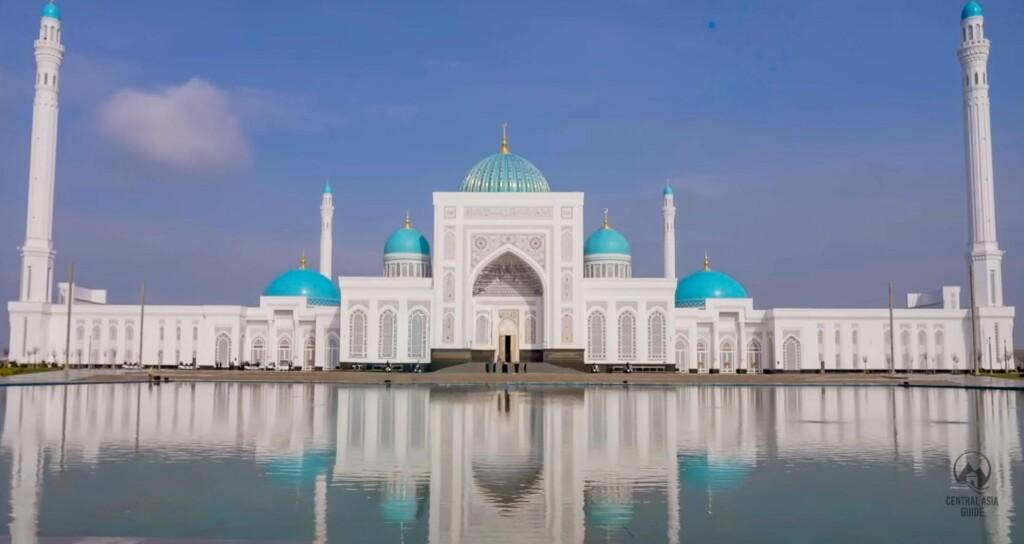
Memorial Complex
of Imam Al-Bukhari
Imam Al-Bukhari complex
Imam Al Bukhari had a remarkable memory and he memorized a hundred thousand hadiths (sayings or stories) of things Prophet Muhammad once said or did. His work resulted in a summation of hadiths – the “Al-Djami as-Sahih”, which was canonized by the 10th century as a major hadith anthology in the Sunni tradition. The tomb of the outstanding Sunni scholar Imam Al Bukhari is located near Samarkand, 25 km north of the city in Khoja Ismail village. In the 16th century, a small mausoleum was raised above the tomb of Imam al-Bukhari and a mosque was constructed next to it.
Today, the entire Muslim world lives by his hadiths, while in his native land, the rules of al-Bukhari have been made into law. Al Bukhari’s name got more popular only after a renowned Lebanese writer in 1958 visited the USSR and told that he wanted to find the tomb of a well-known seminary student. His request caused alarm among Communist Party officials. The inquiry was made to the Central Committee of the Communist Party of Uzbekistan, and from there to the Academy of sciences. The tomb was finally found near Samarkand, close by barely perceptible ruins of an ancient village.
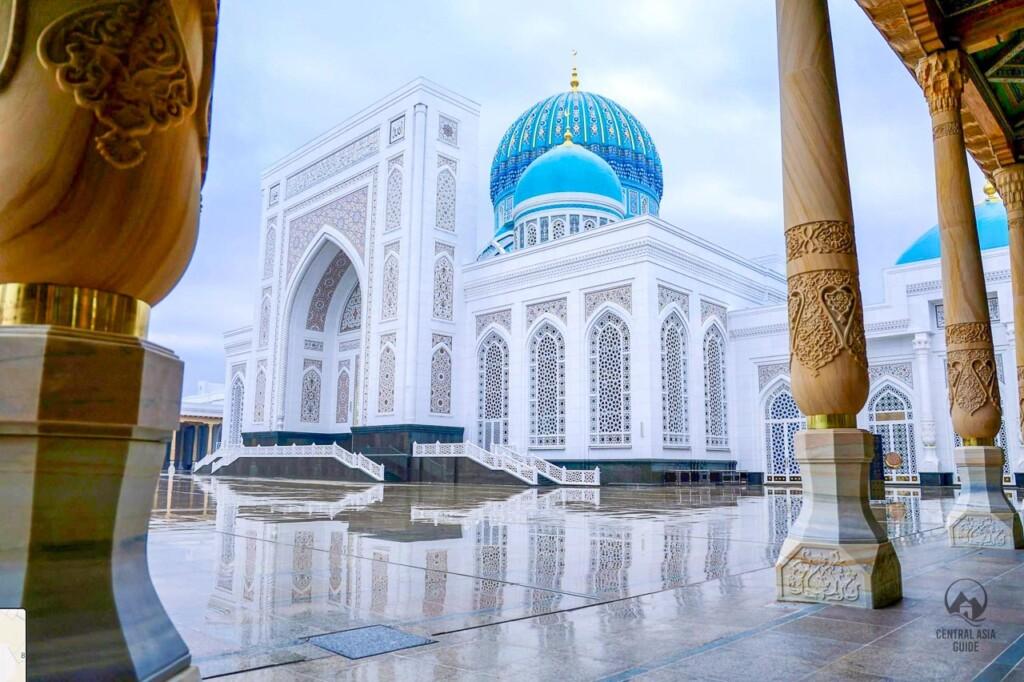
For the 1225th anniversary of Imam al-Bukhari in 1998, a new memorial complex was built at the place of the old mausoleum by the government of Uzbekistan. Therefore, the complex is mainly of interest to pilgrims and does not offer much value for a tourist except for the ones interested in the Islamic heritage. The modern memorial complex consists of a mausoleum, mosque, office building and other structures around the courtyard. The height of the mausoleum dome is 17 m. In 2026 a large scale construction was finished and the look of the Al Bukhari mausoleum complex changed completely and can now receive tens of thousands of visitors daily. The site now resembles a mosque with the mausoleum in the middle of the site.
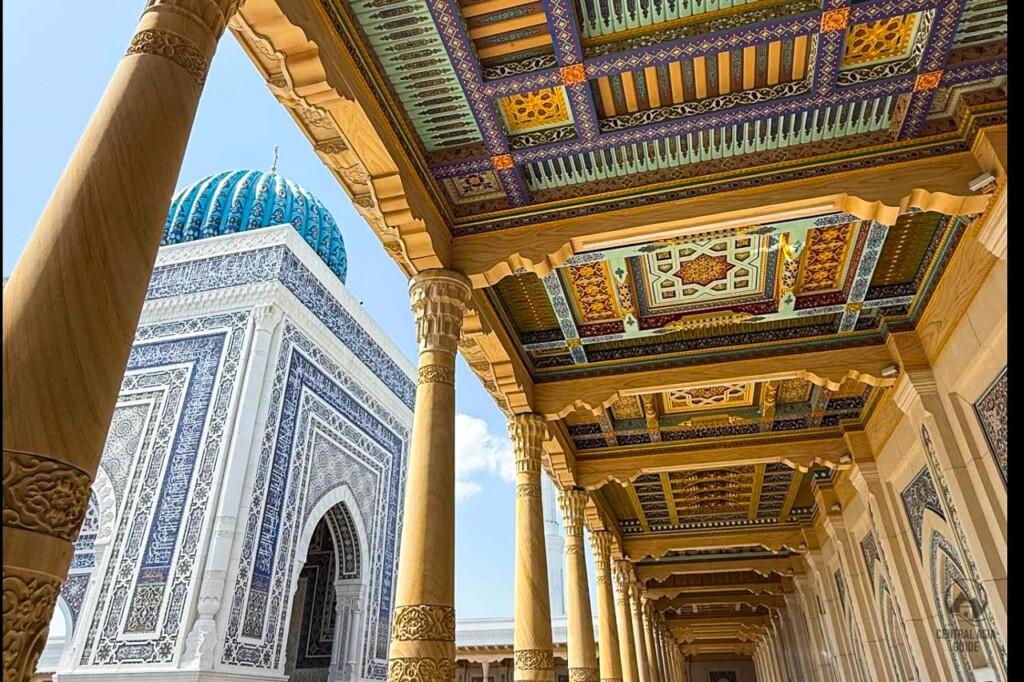
The walls are decorated with light green, blue, and white glazed tiles, marble, onyx and granite. In the center of the mausoleum, there is a tombstone coated with light blue onyx. Four-century old palm trees have been preserved in the yard. Behind the mausoleum, there is an educational center for hadith study and at the left side of the memorial ensemble an adjoining gallery with an area of about 800 square meters can accommodate more than one and a half thousand believers performing prayer. On the right side, there is a museum with a unique collection of handwritten books, which set forth the word of God addressed to devout Muslims.