Horse riding tour around Song-Kol Lake
TOUR DETAILS
-
Period
May to October -
Tour speed
Moderately paced - Tour length 4 days
-
Price from
391$ / person (group of 4 people)
SON KUL RIDING TOUR HIGHLIGHTS
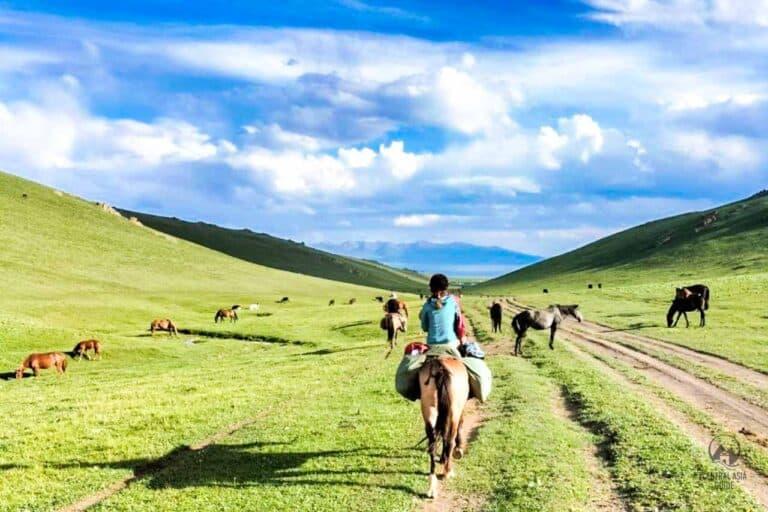
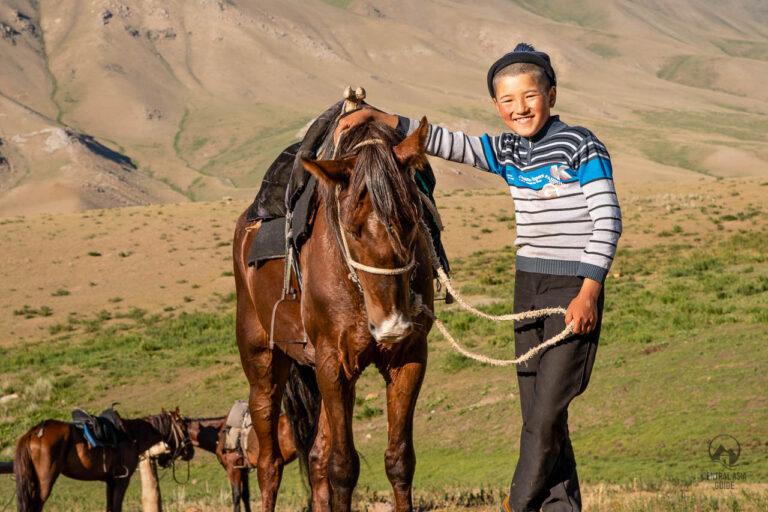
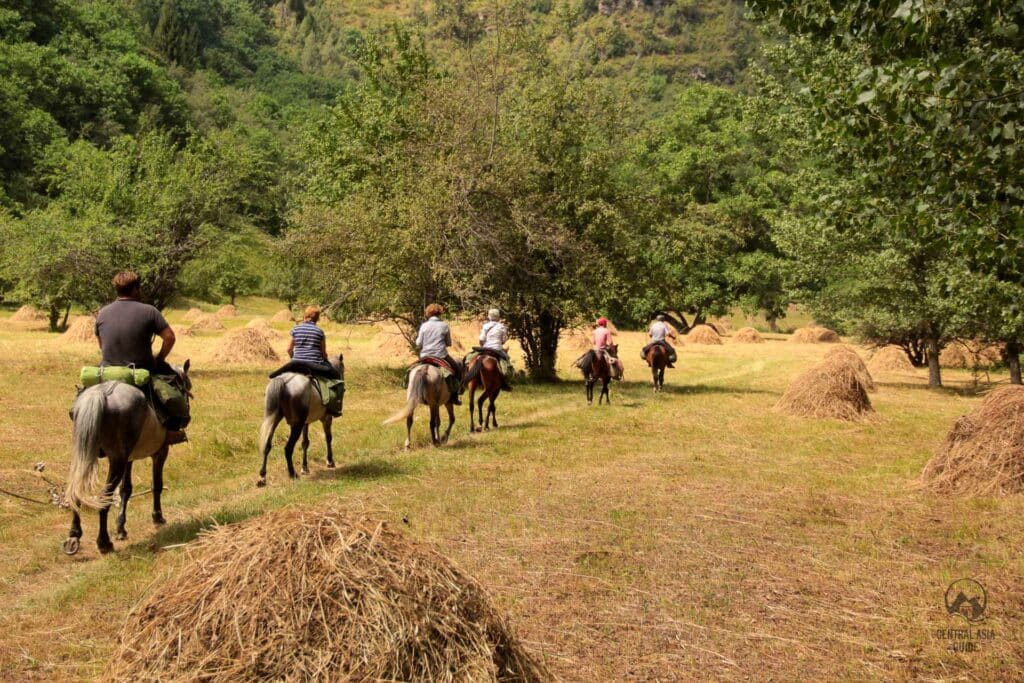
If you enjoy experiencing a true nomadic lifestyle combined with the thrill of horseback riding, this four-day horseback adventure to Song-Kol Lake is perfect for you. You will visit stunning Kyrgyz mountains on horseback, where every turn brings breathtaking views of alpine meadows, wildflowers, and crystal-clear streams.
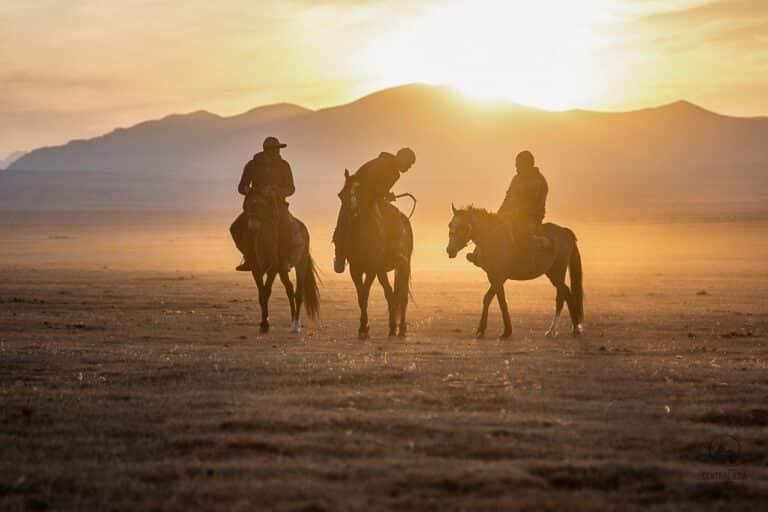
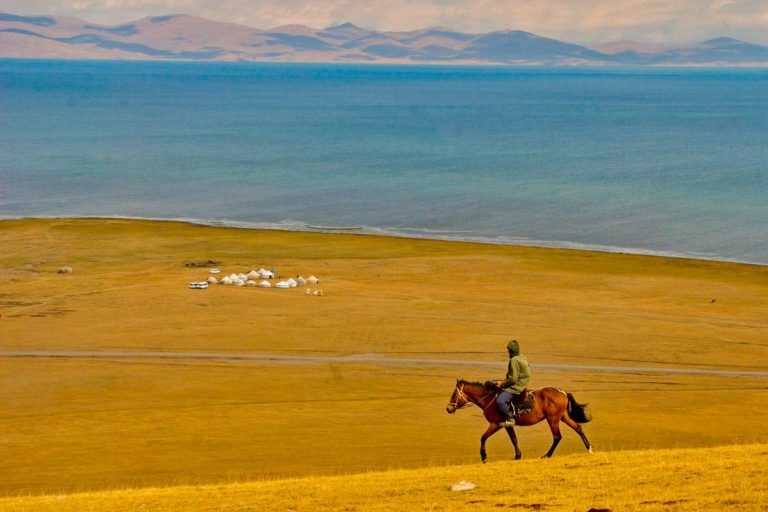
This journey follows Kyrgyzstan’s most popular horseback riding itinerary, offering you the chance to ride through untouched landscapes while staying in traditional Kyrgyz yurts at night. Immerse yourself in the local culture, enjoy hearty home-cooked meals, and experience the simplicity and warmth of nomadic life.
TOUR ITINERARY
Day 1 Bishkek to Kyzart village and horseback Kilemche pasture
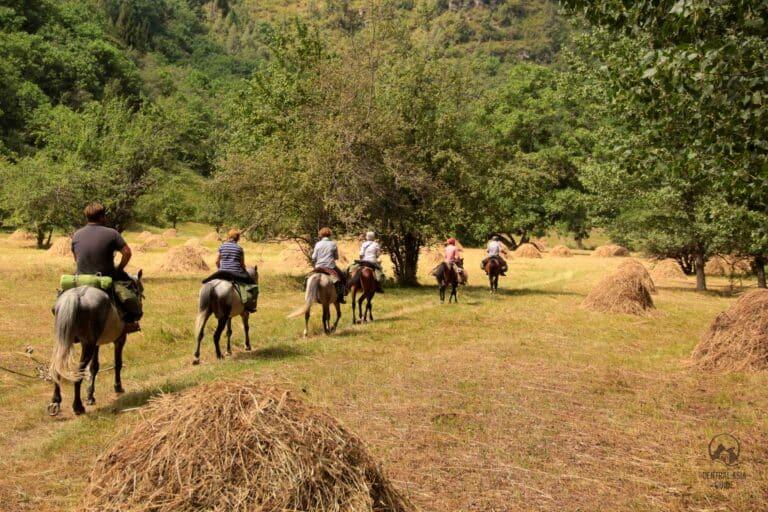
Morning pick-up from your hotel in Bishkek and drive toward Kyzart village. On arrival a briefing horse-riding introduction from your guide instructor. Start your horseback adventure on an unforgettable horseback tour along the Chaar-Archa River toward the stunning Kilemche pasture.
Ride through breathtaking mountain landscapes and immerse yourself in traditional Kyrgyz nomadic life. Spend the night with a local shepherd family, enjoying a warm welcome and a cup of tea, while discovering their daily routines. Hiking enthusiasts can explore the surrounding mountains and valleys for incredible views.
As evening falls, enjoy a traditional dinner under the stars, then settle in for your first night in the yurt, a classic Kyrgyz yurt, experiencing authentic life on the steppe.
Transfer: 280 km / 4–5 hours
Horseback riding: 22 km / 6–7 hours
Overnight: Traditional Kyrgyz yurt
Day 2 Horse riding from Kilemche to Song-Kol Lake
After breakfast in Kilemche, continue your horseback journey toward the Jalgyz-Karagai Pass (3,400 m), en route to the breathtaking Song-Kol Lake. From the pass, enjoy stunning panoramic views of both Song-Kol Lake and Kilemche Valley. After a short rest for both riders and horses, the trail winds across grassy hills dotted with grazing sheep, goats, horses, and cattle, offering a true taste of Kyrgyz pastoral life.
During the warm summer months, you may witness nomadic families engaged in daily chores, including milking cows and horses. Arrive at a yurt camp by the lake for a hearty lunch before continuing your ride along the lakeside trails. After about two more hours on horseback, you’ll reach the Tuz-Ashuu pasture, where a local shepherd family will warmly welcome you with kymyz, the traditional Kyrgyz drink made from fermented horse milk.
Spend the remainder of the day immersed in nomadic life, observing the family’s daily routines. Hiking enthusiasts can explore the surrounding mountains and valleys, enjoying the tranquil and wild beauty of the region.
Horseback riding: 18 km / 6–7 hours
Overnight: Traditional Kyrgyz yurt
Day 3 Smooth ride by the lakeshore
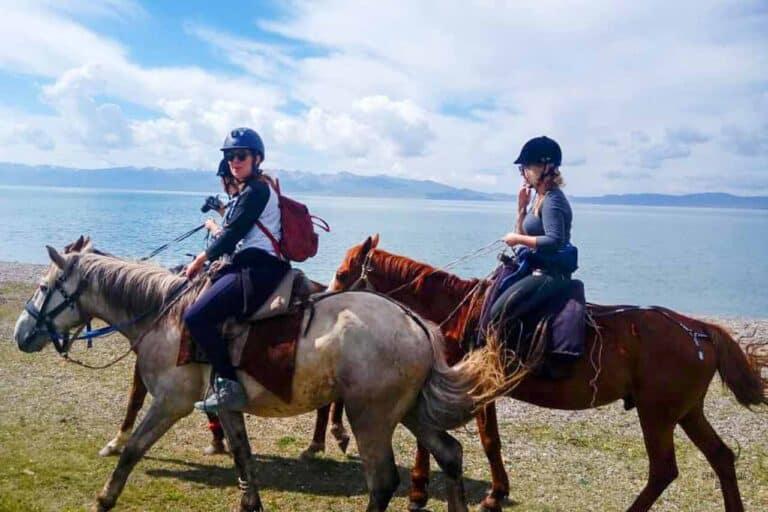
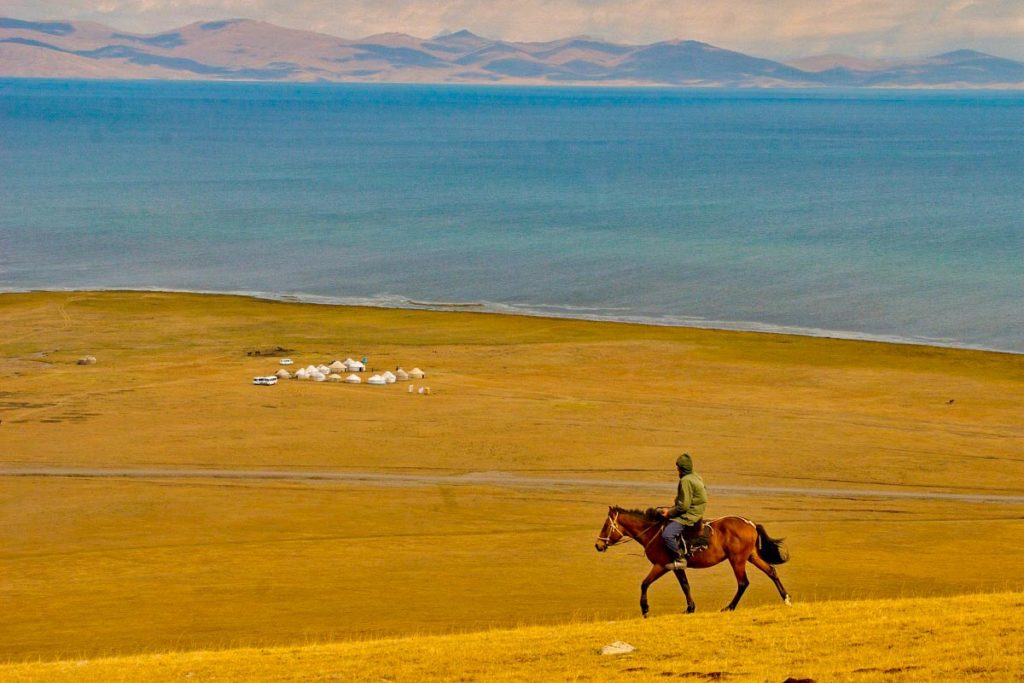
Start your day with a leisurely breakfast at your yurt before mounting your horse for another scenic horseback ride. Today’s journey takes you along the eastern shore of Song-Kol Lake, where the ride is smooth and easy, offering spectacular views of the lake and surrounding mountains at every turn.
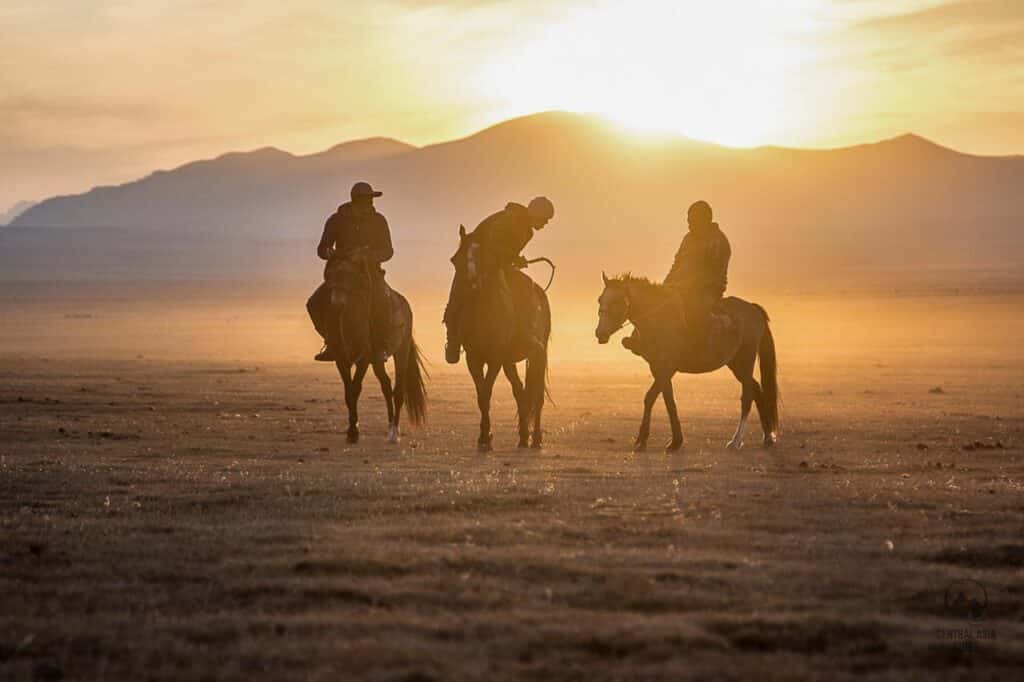
Midway through the ride, stop for a hearty lunch at a local shepherd’s yurt, experiencing the warmth of traditional Kyrgyz hospitality. In the afternoon, as your confidence on horseback grows, enjoy the thrill of a gallop along the lakeshore, where open pastures give the horses plenty of room to run.
By evening, arrive at the western side of Song-Kol Lake where a delicious dinner awaits. Before settling into your yurt for the night, gaze at the brilliant starry skies, which shine exceptionally bright over this remote, pristine landscape.
Horseback riding: 21 km / 6 hours
Overnight: Traditional Kyrgyz yurt
Day 4 Horseback from Song-Kol Lake to Kyzart and drive to Bishkek
Begin your day by soaking in the stunning scenery of Song-Kol Lake in the morning sunlight, with the surrounding mountains creating a breathtaking backdrop. After taking in the views, mount your horse and follow the upper trail for panoramic vistas of the lake as you make your way toward Kara-Kiya Pass (3,350 m).
The ride from the pass is moderately challenging, with a gradual descent toward the village, followed by a few hours of smooth horseback riding through picturesque valleys. Upon arrival, enjoy a delicious lunch at a local guesthouse before concluding your journey and driving back to Bishkek, carrying unforgettable memories of your Kyrgyz horseback adventure.
Horseback riding: 22 km / 5 hour
Transfer: 280 km / 4–5 hours
SON KUL WINTER TOUR INFORMATION
Price includes:
- English-speaking guide-driver
- TransportationÂ
- Meals and accommodations during the tour
- Horse
Price does not include:
- Hotel and meals in Bishkek
- Water
- Last dinner in Bishkek
PRICE PER GROUP 2026
| Number of People | Total Price (USD) | Price Per Person (USD) |
| 1 Person | $667 | $667 |
| 2 People | $909 | $455 |
| 3 People | $1,133 | $378 |
| 4 People | $1,564 | $391 |
Â
Clothing:
- Warm layers (fleece or down jacket) for chilly mornings and evenings
- Lightweight daytime clothing (t-shirts, long-sleeve shirts)
- Waterproof and windproof jacket
- Hat or cap for sun protection
- Gloves and warm socks
- Scarf or buff for wind protection
Horseback Riding:
- Long pants suitable for riding
- Comfortable trekking pants and shorts
- Riding gloves (optional)
- Lightweight, breathable clothing
Other Essentials:
- Small daypack for daily essentials
- Sunglasses and sunscreen
- Reusable water bottle
- Personal toiletries and towel
- Basic first aid kit and any personal medications
- Camera or smartphone for photos
- Power bank and charging cables
- Passport, ID, and copies of travel documents
Optional:
- Binoculars for wildlife spotting
- Light snacks for trekking
- Notebook or travel journal
Note
Guidance: You will be led by an experienced local horseman with basic English skills; guides with advanced English are available upon request.
Luggage: Large bags can be stored safely at the guesthouse in Kyzart, while essentials for the ride will be carried in saddlebags on your horse.
CHECK YOUR VISA POLICY FOR KYRGYZSTAN
Find your country from the list and check possible visa requirements for Kyrgyzstan
Book your tour here
If you would like to customize your tour please don’t hesitate to contact us. We are happy to organize a custom tour or to provide a modified itinerary based on one of the tours provided by the tour operators or to have a one fully custom made for your needs.
Kyrgyzstan travel information
Money & costs
Safety
Entry & exit
Best time to go
Health
Money & costs
Money & costs
The official currency is the Kyrgyz som (KGS). In the capital, Bishkek, an abundance of ATMs can be found, some of which dispense US dollars in addition to local soms. Beyond the city limits, ATMs are increasingly prevalent in few largest towns but are mostly not available in smaller towns except at the northern shore of Issyk Kul.
Mastercard is universally accepted at all ATMs but Visa is still the more widely accepted card of choice in Kyrgyzstan. Maestro or other cards might be accepted in few select machines. Demirbank with their red colored ATMs has been the best option lately for all foreign cards with moderate fees.Â
Currency exchange services are readily accessible in major cities, ensuring seamless exchange of rubles, US dollars, and euros into soms. It is imperative that foreign currency banknotes remain pristine, fresh, and devoid of any signs of wear. Larger banknotes from 50 USD and 50 EUR are favored by the cash exchange services and are sometimes the prerequisite for a better exchange rate.
While credit cards face limited acceptance nationwide the convenience of utilizing debit or credit cards extends to major hotels, restaurants, expansive supermarkets, and selected museums in Bishkek and Osh and rarely even in taxis. However, outside these two prominent cities and Northern Shore of Issyk Kul, the practicality of card payments remains unfeasible.
Safety
Safety
Kyrgyzstan is generally considered safe for travelers, but adherence to standard precautions is crucial. The country is experiencing an active surge in tourism. Key recommendations encompass:
- Always have your passport or a notarized copy with you, as lacking proper identification may lead to arrest by the police.
- Incidents of robberies, some of which can be violent, and thefts are commonplace especially in crowded places like the bazars. Caution is advised, particularly when venturing out after dark. Instances of sexual violence and harassment have been reported in public transportation.
- Steer clear of crowds and demonstrations to ensure personal safety.
- Show respect for local traditions, customs, laws, and religious practices at all times.
- The possession or use of narcotics is strictly prohibited.
- Photography of anything related to the armed forces or security services is not allowed.
- While same-sex relationships are legal, they are not widely discussed and lack public recognition.
- Avoid solitary walks or travels, especially during nighttime.
- Utilize established taxi services in advance to ensure reliability.
- The southern regions are susceptible to smuggling activities, rendering the security situation unstable and hazardous along the southern border zones with Uzbekistan and Tajikistan.
- Mind where you step in the cities as there are sometimes large holes on the streets and the pavements are not in pristine condition on the pedestrian areas.
Entry & exit
Entry & exit
Kyrgyzstan extends a visa-free arrangement to travelers from 69 countries. Alternatively, others can opt for the electronic visa system or submit applications through the embassy. Comprehensive information about visas is available here. For a tourist visa in Kyrgyzstan, a majority of passport holders require an invitation letter from a tourism company. Since September 1, 2017, Kyrgyzstan has introduced an electronic visa system. Special authorization is mandated for visits to border regions in Kyrgyzstan.
Best time to go
Best time to go
The optimal time to experience Kyrgyzstan is during the summer months of July and August. Despite the temperatures reaching approximately 30°C, this period witnesses the liveliest bazaars in the country. It is also the perfect season to delve into the mountainous landscapes and trekking routes that may be inaccessible during other times of the year. In July and August, you have the opportunity to explore Kyrgyzstan’s mountains either on foot or horseback, immersing yourself in traditional yurt accommodations with local families. Additionally, this time of the year hosts annual festivals celebrating Kyrgyz traditions.
While the winters in the highlands are prolonged, limiting passage through the elevated mountain passes, it presents a captivating season for exploring Kyrgyzstan. Engaging in various activities, akin to those enjoyed in summer (with the exception of rafting), such as hiking, horseback riding, or skiing in the mountains, allows for a unique experience. Accommodations in traditional yurts are also available during this season.
Health
Health
The overall state of healthcare in this country is recognized as relatively subpar, prompting a strong recommendation for travelers reliant on regular medications to carry ample supplies. Locating necessary drugs locally might pose challenges or incur significant costs. Medical facilities are anticipated to be scarce, underscoring the importance of securing comprehensive medical and travel insurance prior to arrival. In the event of a serious accident or illness, emergency air evacuation to a neighboring country may be necessary.
It is imperative to treat tap water and other local water sources as contaminated, necessitating thorough boiling before consumption. Opting for bottled water throughout the entire duration of stay in the country is a prudent choice. Exercise particular caution when consuming unpasteurized dairy products or animal products that may be susceptible to contamination.
Before entering the country, obtaining additional vaccinations against polio and tuberculosis is recommended, and other vaccinations may also be deemed necessary. Malaria poses a risk in the country, predominantly in the southern regions.
Other tours in Kyrgyzstan
Tour updated 14.1.2026