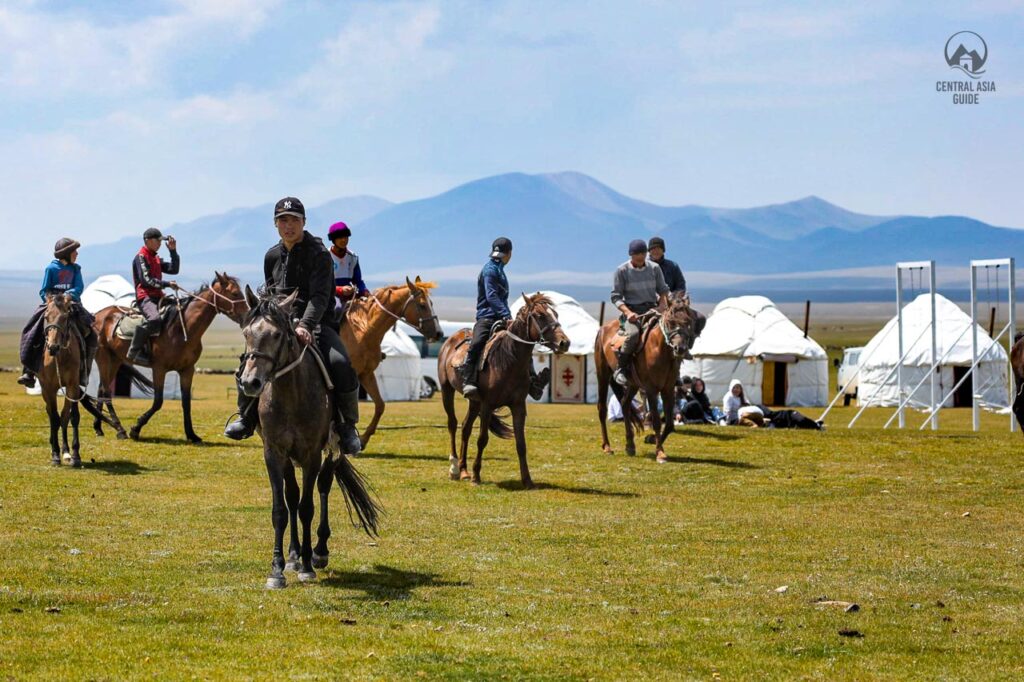
Horse trek from Kyzart to Song-Kul
The classic Kyzart – Song-Kul horse trek takes three days with two nights in yurts. Our tours ride it like this:
- Day 1: Kyzart to the Kilemche summer pasture, about 18–22 km and four to five hours in the saddle, with a night in a yurt camp.
- Day 2: from Kilemche over the Jalgyz-Karagai Pass (3,326 m) down to the shore of Song-Kul, about 15–23 km, with a night in a lakeside yurt.
- Day 3: back to Kyzart over the Tuz-Ashuu Pass (3,230 m) or the Kara-Kiya Pass (about 3,320 m), about 20–22 km, then the drive back to Bishkek.
Four- and five-day versions add a day of riding along the lakeshore or continue to Issyk-Kul. The winter ride follows the same trail, crossing the Tuz-Ashuu Pass to the frozen lake.
Do you need riding experience?
No. The local horses know the trails and walk most of the way, and a local horseman leads the group and looks after the horses. Complete beginners manage well, though stiff legs after the first long day are normal.
Hiking from Kyzart to Song-Kul
The same trail makes a good two-day hike of about 27–28 km, with the first night in the Kilemche yurts or in a tent near the Bazarturuk river. Fit hikers can reach the lake in one long day of six to seven hours, but the climb from 2,100 m to over 3,300 m is easier with a night on the way.
Getting to Kyzart
From Bishkek: about 270 km and four to five hours by car, past the Orto-Tokoy Reservoir to Kochkor and over the Kyzart Pass. On our tours the transfer is included.
From Kochkor: about 75 km and one to one and a half hours. Shared taxis run from Kochkor through the day, and minibuses from Bishkek towards Chaek and Min-Kush pass through the village.
From Chaek and the Suusamyr valley: Kyzart is about 50 km east of Chaek, the centre of Jumgal District, on the road that continues west to the Suusamyr valley and the Too-Ashuu Pass road to Bishkek.
Where to stay in Kyzart
Kyzart has a handful of homestays and small guesthouses with simple rooms and home-cooked meals. Travellers usually book them through the community-based tourism office in Kochkor or directly with the families. On the trail you sleep in yurt camps at Kilemche and on the shore of Song-Kul, which open from about June to mid-September. On our tours all nights are arranged for you.
Best time to visit Kyzart
The trekking season runs from June to mid-September, when the pastures are green and the yurt camps at Kilemche and on Song-Kul are open. July and August are the warmest months, while September is quieter, with golden grass and the first frosts. Even in summer, nights at the lake (3,016 m) can drop to around freezing, so bring warm layers.
Outside the season the camps close and Song-Kul freezes over from late autumn until May. Horse trips from Kyzart are still possible in winter, but expect deep cold, wind and the occasional change of plans because of the weather.
Altitude and preparation
Kyzart already lies at about 2,100 m, and the trail climbs over passes of 3,200–3,350 m to Song-Kul at 3,016 m. Most people feel fine at these heights, but a light headache or poor sleep on the first night at the lake is common. A night in Kochkor (about 1,800 m) or in Kyzart before the ride helps, as do plenty of water and an easy pace.
Map of Kyzart and the trail to Song-Kul
The map shows Kyzart, the Kyzart Pass, the Kilemche pasture and the passes our horse treks cross on the way to Song-Kul, together with Kochkor and the lake itself.
Kyzart FAQ
What is the altitude of Kyzart?
The village lies at about 2,100 m above sea level. The Kyzart Pass above it is 2,664 m, and Song-Kul Lake is at 3,016 m.
How far is Kyzart from Bishkek?
About 270 km, or four to five hours by car via Kochkor and the Kyzart Pass.
How many days does the horse trek from Kyzart to Song-Kul take?
The classic route takes three days with two nights in yurts: one at the Kilemche pasture and one on the lakeshore. Four- and five-day versions add more riding around the lake.
Can I hike from Kyzart to Song-Kul instead of riding?
Yes. The hike is about 27–28 km and usually takes two days, with a night at Kilemche or in a tent on the way.
Can I visit Kyzart in winter?
Yes. The road over the Kyzart Pass is open all year, and winter horse trips to the frozen lake are possible, although the yurt camps are closed and the weather can change the plans.
Sights near Kyzart