
Turkmen Food
Turkmen Cuisine
Turkmenistan’s cuisine reflects in its people that has a blend of its nomadic past, ethnic Turkmen majority, and Uzbek, Russian and Tajik minorities and the influence of Persia. Like the other Central Asian cuisines, Turkmen cuisine is piled high with meat, rice, sour milk products, cereals, vegetables, cheeses and butter made from camel’s milk. A distinctive feature of Turkmen cooking is preserving the original flavors of the ingredients and not covering them with intense herbs and spices which you will experience during our Turkmenistan Tours and Central Asia Tours.
Turkmenistan is also a meat-lovers paradise, with dishes including lamb, chicken, hares, gazelle, deer, camel, a medium-sized game bird called ptarmigans, and other wild birds. The consumption of horse meat is prohibited, as horses are considered sacred animals since ancient times whereas especially in Kyrgyzstan and Kazakhstan, horse meat is a delicacy and the centerpiece of celebrations. (The Akhal-Teke horse, a breed famous for its stunning coat with a metallic look, is the national emblem of Turkmenistan.)
Turkmen cuisine is known for its hearty meat dishes, breads, and soups, as well as its sweet and spicy seasonings. The use of tea is also a ubiquitous aspect of Turkmen culture, and it is often served as a sign of hospitality. Hospitality is a key aspect of Turkmen culture, and guests are treated with great respect and generosity. It is customary to offer tea, sweets, and other treats to guests, and to provide them with a comfortable place to stay.


Turkmen cuisine is not only about food; it embodies the traditions and hospitality of the Turkmen people. Meals are often communal, bringing families and friends together to share and enjoy dishes. Special occasions, weddings, and festivals often feature elaborate feasts that showcase the country’s culinary heritage. Turkmen national cuisine is a vibrant reflection of the country’s culture and history, offering a delightful experience for those who wish to explore its rich flavors and traditions. Whether enjoyed in a family home or at a bustling market, Turkmen cuisine provides a unique and memorable gastronomic adventure.
Dograma
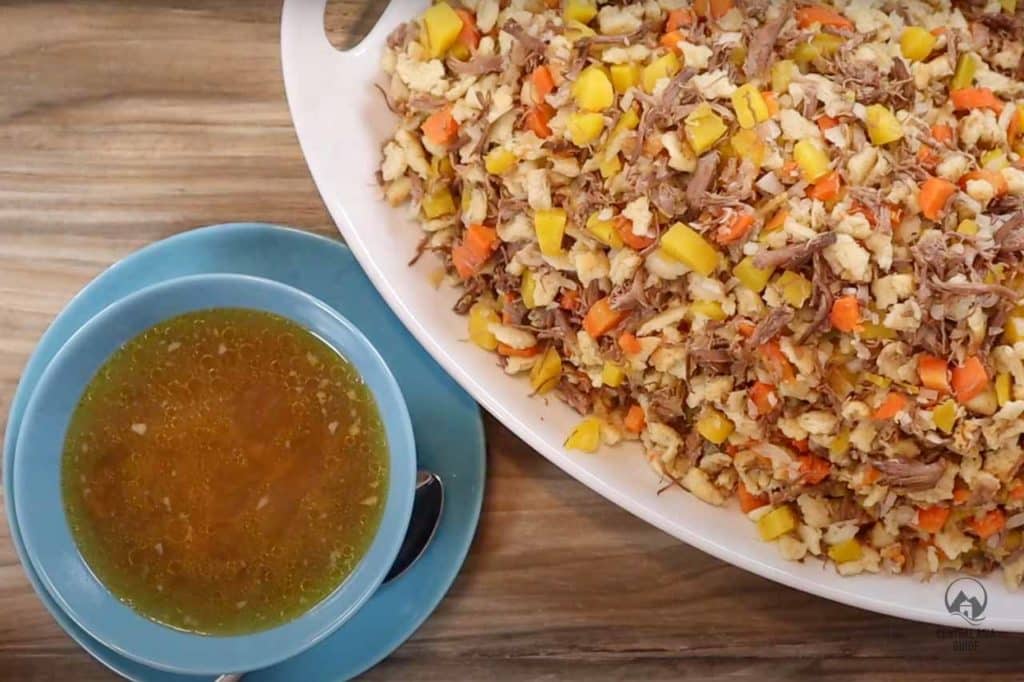
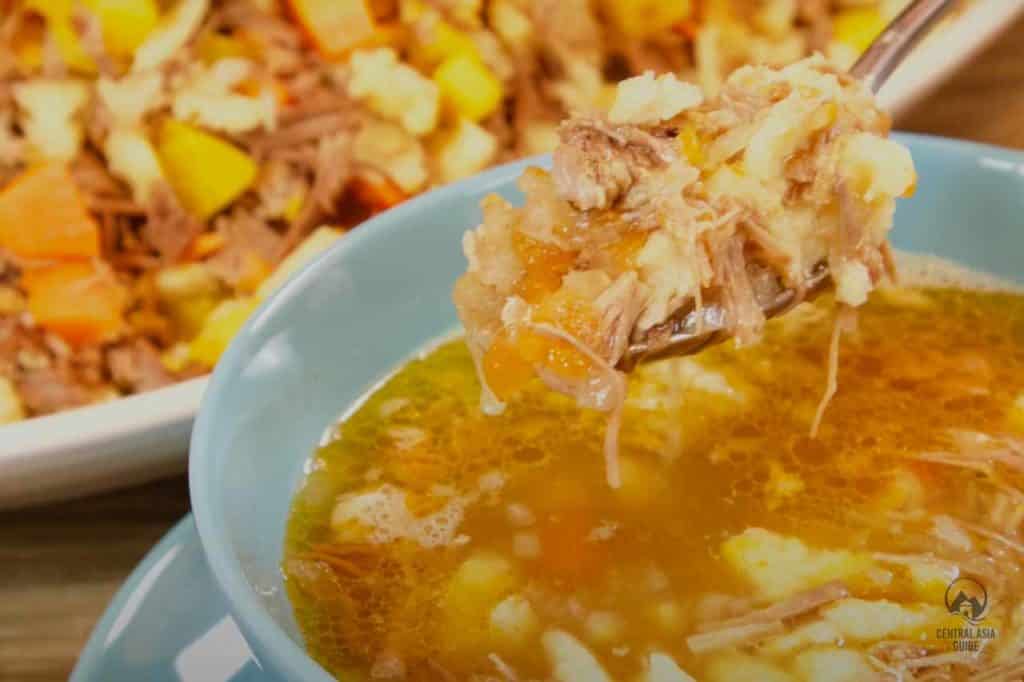
Dograma is the most traditional Turkmen dish that is only found in Turkmenistan. Traditionally this dish is reserved for special occasions. The name of the dish originates from the word “dogramak” which means to cut to pieces and refers to the making of dograma. It begins with baking multiple flatbreads in a tandyr (clay oven) and boiling fresh mutton in a large pot until the meat is tender enough to fall off the bones. The bread is then torn into small pieces – a task that usually involves the entire family – and mixed with slices of onion and shredded meat. Eventually, dograma is dipped into a bowl and covered with hot broth for each guest to enjoy.
Plov (Pilaf)
Plov is the quintessential Turkmen dish, often considered the national dish. It consists of rice cooked with meat (usually lamb or beef), carrots, onions, and a blend of spices. Plov is typically served at special occasions and celebrations. In principle, plov has a similar status in all Central Asian countries, but especially in Uzbekistan and Tajikistan whereas in Kyrgyzstan and Kazakhstan horse meat related traditions still dominate.
Turkmen pilaf, or plov, distinguishes itself from similar dishes in neighboring countries through unique ingredients, preparation methods, and cultural significance. Typically made with long-grain rice like *Basmati* or *Jasmine*, Turkmen plov uses lamb or beef and features an abundance of sautéed onions and carrots, which lend a sweeter taste compared to the stickier rice often found in Uzbek plov.
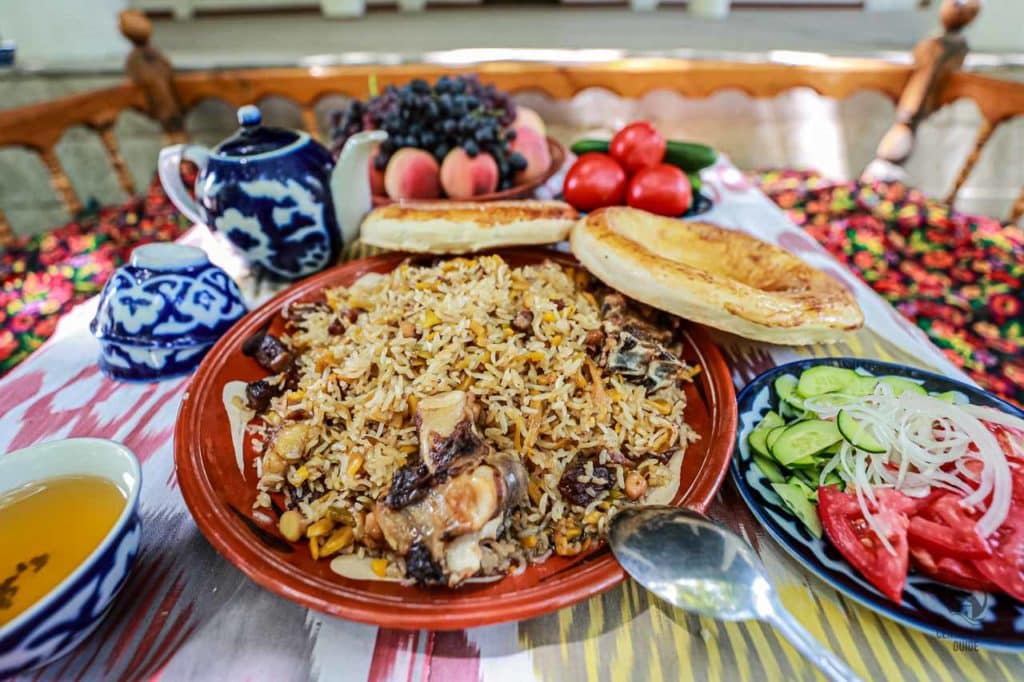
The cooking technique involves using a *kazan* (a deep and wide cast-iron or aluminium pot) over an open flame, with the rice layered on top of the meat and vegetables to absorb rich flavors, while Uzbek styles may mix the rice and meat more thoroughly. Served on a large platter with the rice heaped in the center, Turkmen plov is often accompanied by pickles, salad, or yogurt, emphasizing a balance of flavors and promoting communal sharing. This dish holds special significance in Turkmen culture, often featured at weddings and celebrations, and may include saffron for added flavor and color. Overall, the distinctive ingredients, cooking techniques, and cultural context of Turkmen plov reflect the rich culinary heritage of Turkmenistan, setting it apart from pilaf variations in surrounding regions.
Gomme Ishlekli
Gomme Ishlekli (Gomme Ichlekli) is a large Turkmen meat pie baked in a tandyr oven or traditionally inside hot ash (Gomme = buried version) and is considered one of the Turkmen national dishes. What also separates it from most meat pies is that the dough serves more as a vessel for cooking the meat inside it originating from the nomad heritage where it was hard to carry large containers for cooking purposes. It could be also described a Central Asian analogy of a baked in pizza but with a lot more meat inside and as usual in Central Asia, lots of onion. The meat is usually lamb or beef. Sometimes pumpkin or some greens are added inside, depending on the region and availability.


Dushbara
In contrast, pelmeni are a type of dumpling that originated in Russia and are popular across various countries in Eastern Europe and Central Asia. While pelmeni are also filled with minced meat, they often include a mixture of pork, beef, or chicken. The dough for pelmeni is slightly thicker than that used for dushbara, and the dumplings are usually rounded rather than pinched. Pelmeni are often served with sour cream or butter, and they can be boiled, fried, or baked.
While both dushbara and pelmeni share similarities as dumplings, their distinct fillings, preparation methods, and cultural contexts set them apart, highlighting the rich diversity of culinary traditions in the region.
Turkmen Kebabs
Turkmen kebabs are an important part of Turkmen cuisine, showcasing the nation’s rich culinary traditions and a deep-rooted passion for grilling. Typically made from marinated lamb, beef, or chicken, these kebabs are skewered and grilled over an open flame or hot coals, imparting a distinctive smoky flavor that is characteristic of traditional Turkmen barbecue. While lamb is the most popular choice, variations with beef and chicken are also common, emphasizing the quality and tenderness of the meat used.
Kebabs hold a significant cultural role in Turkmenistan, often featured at celebrations, family gatherings, and festivals, symbolizing hospitality and community spirit. Available as street food from outdoor grills or market stalls, they can also be enjoyed in restaurants and cafes, making them accessible to both locals and tourists. With regional variations such as shashlik (meat skewers) and kebabs that incorporate vegetables, Turkmen kebabs not only reflect local culinary preferences but also invite everyone to experience the warmth and richness of Turkmen culture.
Gutap
Gutap is a popular Turkmen pastry shaped like a half-moon and filled with a variety of ingredients and similar to Azerbaijani Qutab, Turkish Gözleme, and Central Asian Chebureki. Depending on the season, the fillings can include minced meat, spinach, or pumpkin.
Once filled, the pastry is pan-fried to a crispy texture, making it a delicious and versatile snack or light meal.
Chekdirme
Chekdirme is a hearty and traditional Turkmen one-pot dish in which lamb or beef is layered with onions, tomatoes, and potatoes in a pot and cooked slowly over low heat. The juices from the meat and vegetables blend together, creating a flavorful broth. This rustic, home-style preparation is a favourite of Turkmenistan food.
Chekdirme is often cooked outdoors over an open fire, bringing out deep, smoky flavours.
Kovurma
Kovurma is a classic Turkmen dish made by frying small pieces of lamb or beef in their fat, along with onions and spices, which give the meat a rich flavour.
Kovurma is perfect with some fresh tandyr baked chorek (Turkmen bread).
Kelem Dolmasi
Kelem Dolmasi are stuffed cabbage rolls, a popular Turkmen dish. The cabbage leaves are filled with minced meat (usually lamb or beef), rice, onions, and herbs, then rolled up and simmered in a tomato-based sauce.
These tender, delicious rolls are a comforting and hearty meal, often served during family gatherings and special occasions.
Turkmen Bread snacks
Pishme
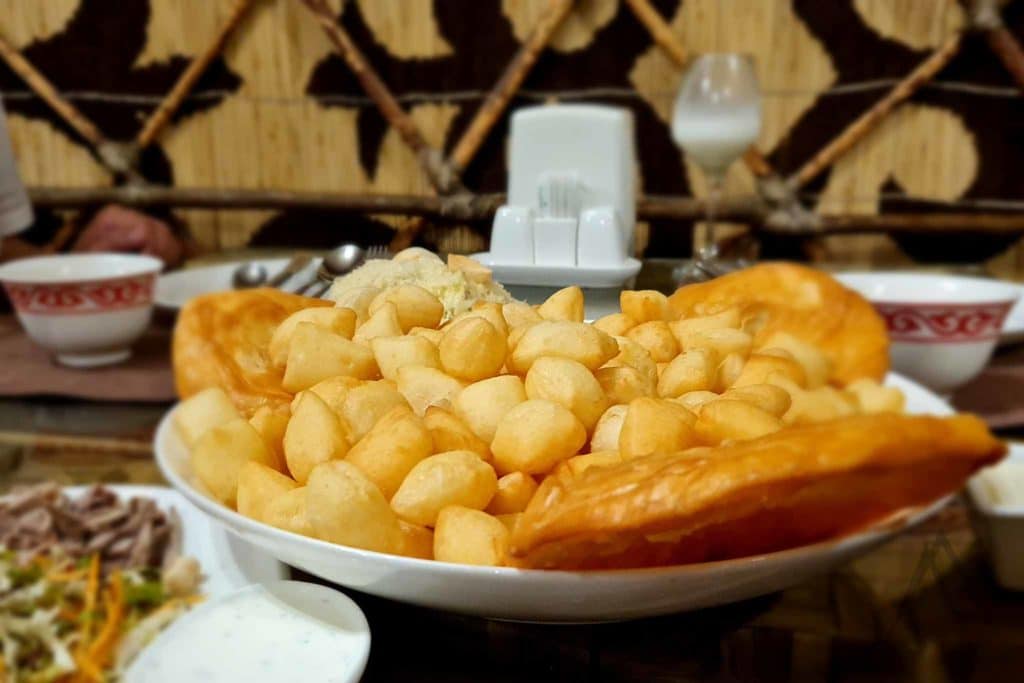
Pishme is little fried pieces of dough made for special events. They’re also served as appetizers and offered to the guests as a welcoming gesture. It is a prototype of other very similar snacks in Central Asian such as boorsok / baaursak and mostly differs in the shape the dough is cut before frying. Pishme is a traditional Turkmen snack that is served with green tea during celebrations, especially weddings, and other celebrations.

Fitchi (Turkmen Meat Pies)
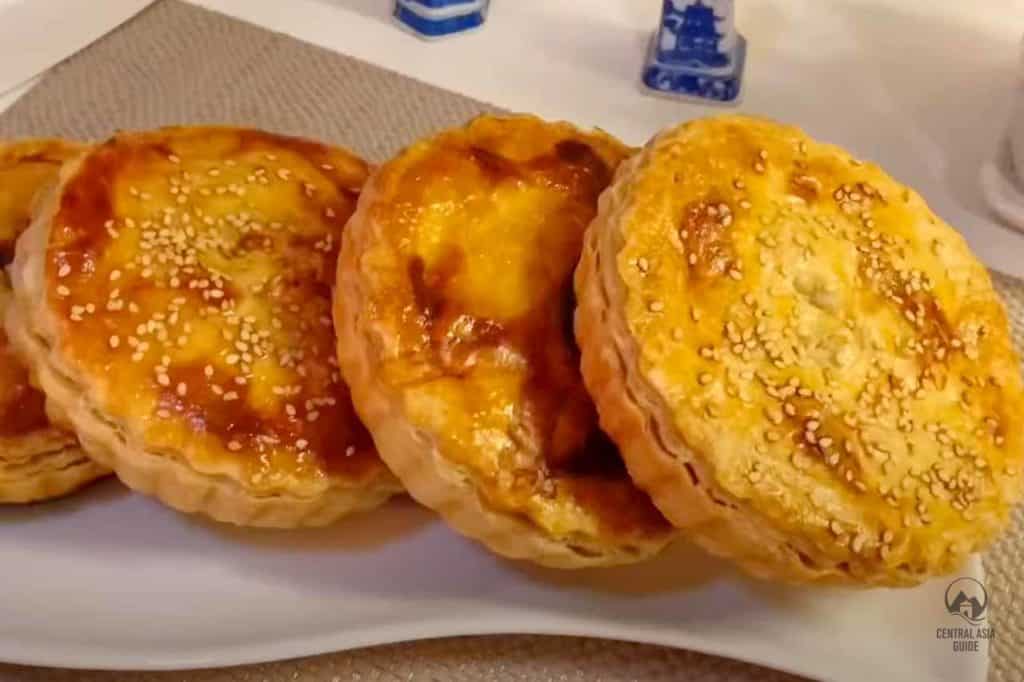
These meat pies are originally a take on the Turkmen traditional dish Ishlekli (Işlekli), meat pie cooked in the heat of the sand or clay oven but today the adapted version can be cooked in a regular oven. The modern ones are also significantly smaller compared to the traditional one that is meant to be shared among a large group of people.
Turkmen Fish Dishes
Turkmen fish dishes are especially popular in the communities which live along Turkmenistan’s Caspian Sea shore. They mainly use sturgeon, beluga, salmon, herring, stellate sturgeon, sea and river pike perch, catfish, mullet, sazan and kutum. Even the pilaf in this region of Turkmenistan is commonly cooked with fish.
The secret to delicious local fish dishes is the use of freshly-caught fish. The fish (balyk in Turkmen) may be roasted, fried in a pot, dried, stewed or boiled. It is normally served with spices and a sweet-sour sauce. Some of the Turkmen fish recipes are spinoffs of popular meat dishes, while others are more complex to make and have no equivalent elsewhere in Central Asia.
In Turkmen cuisine, salmon is often used to cook balyk shara (fish kebabs) and in a dish called govurdak (fried fish). For balyk shara, the fish is cooked in the same way as for meat kebabs with marinated pieces of fish alternated with onion rings on a skewer and roasted over hot coals. For balyk gavurdak, small boneless chunks of fish are fried in a pot in their own grease or sesame oil.
Other popular Turkmen fish dishes include balyk berek (fish manty dumplings), balykly yanahli ash (fish pilaf) and gaplama (a variant of pilaf).
Desserts in Turkmenistan
Pakhlava (Baklava)
Due to proximity with Iran, Pakhlave (Baklava) is a traditional dessert or sweet snack found also in Turkmenistan. (Nowadays also available elsewhere in Central Asia as it is worldwide.) Turkmen baklava consists of thin layers of pastry filled with nuts and soaked in sweet syrup. Super sweet and sticky in hand, it’s a classic dessert for special occasions.
Camel Milk in Turkmenistan
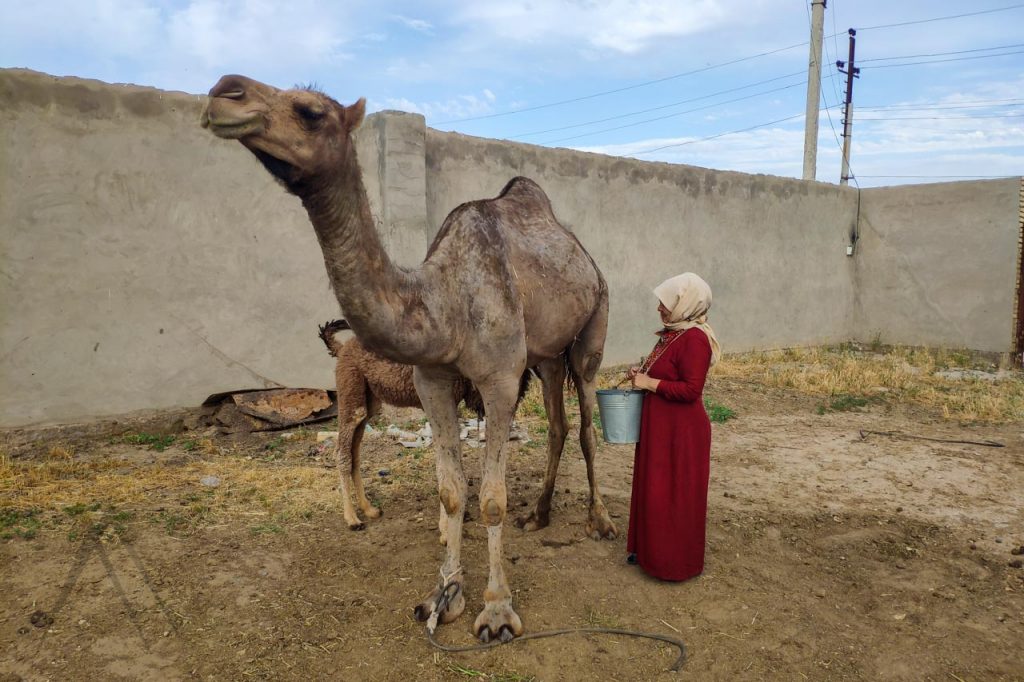
Turkmens have a strong and long traveling nomadic clan heritage and the custodian of the precious sheep, goat, cattle, and camel genetic resources. Nowadays, the majority of Turkmens have settled in the towns but there is still a fairly large portion of the population still keeping livestock in the vast desert-like areas keeping in nomadic lifestyle alive. Those people are still practicing camel nomadism as has been the way of life for ages do it by utilizing their famously good milking camel breed.
Chal (fermented camel's milk)
Chal is the fermented camel milk traditionally prepared by Turkmen nomads, which is known as “Shubat” in Kazakhstan. This drink is fatty and is flashing white with a sour flavor. “Chal” is normally prepared by first souring camel milk in a skin bag or ceramic jar by adding previously soured milk.
For 3–4 days, fresh milk is occasionally mixed, and the matured “chal” will consist of one-third to one-fifth of previously soured milk. Camel milk will not sour for up to 72 hours at temperatures below 10 °C (50 °F). At 30 °C (86 °F) the milk sours in approximately 8 hours (compared to cow’s milk, which sours within 3 hours).
Best destinations to enjoy Turkmen Cuisine
Other cuisines of Central Asia
Page updated 17.1.2026