
Tash Rabat
Tash Rabat Caravanserai
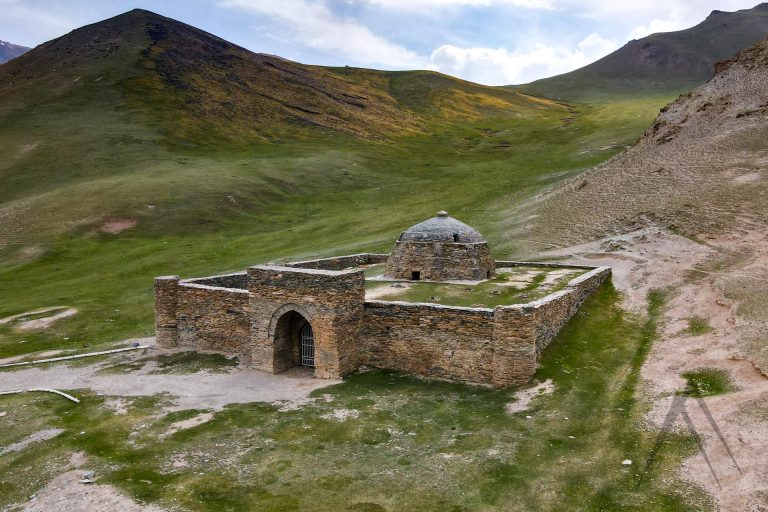
Tash-Rabat is one of the most extraordinary stone monuments in all Central Asia and along the Silk Road especially due to its high location at about 3200 meters from the sea level. This caravanserai is most likely a stone walled, 15th-century roadside inn that served as a Silk Road station at a pass between Chatyr Kul and the ancient settlement of Koshoy Korgon in the Tian Shan mountains.
Tash Rabat is also included in the UNESCO tentative list of Silk Road sites in Kyrgyzstan. Tash Rabat is located about 114 km northwest from Naryn, 434 km from Bishkek, and 92 km from the current Chinese border. Some of the caravans, ambassadors, travelers and other wanderers traveling to and from Kashgar (China) from all the way to Europe used to travel this way as a part of the Northern Silk Road and used Tash rabat as a resting place and for stocking on food, water and supplies. Most likely it has also provided protection for bandits and other dangers. From Tash Rabat westwards, the road had two branches: One leading to Issyk Kul and the other towards Ferghana valley.
The road to China continues through the Torugart pass at the altitude of about 3500 m above sea level, south from the salty lake called Chatyr Kul (There is another caravanserai just behind the border in China, but as it is the border zone, accessing it is not possible). Tash-Rabat is also well-known for its size, building materials and its special layout, based on almost perfect symmetry. Tash Rabat is part of several of our Kyrgyzstan tours and also many Central Asia tours.
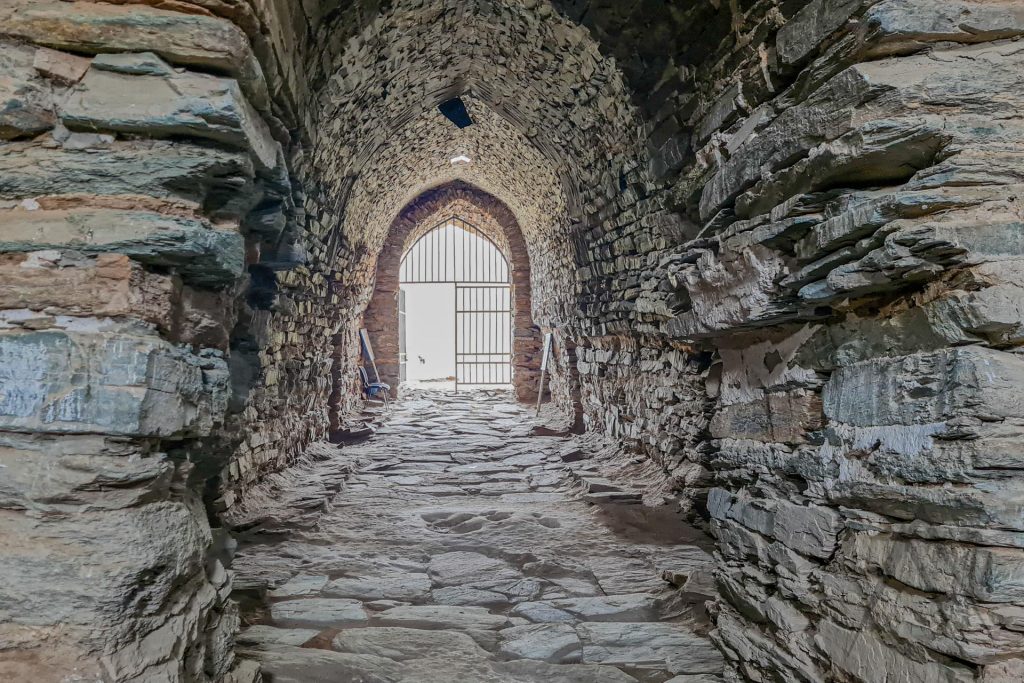
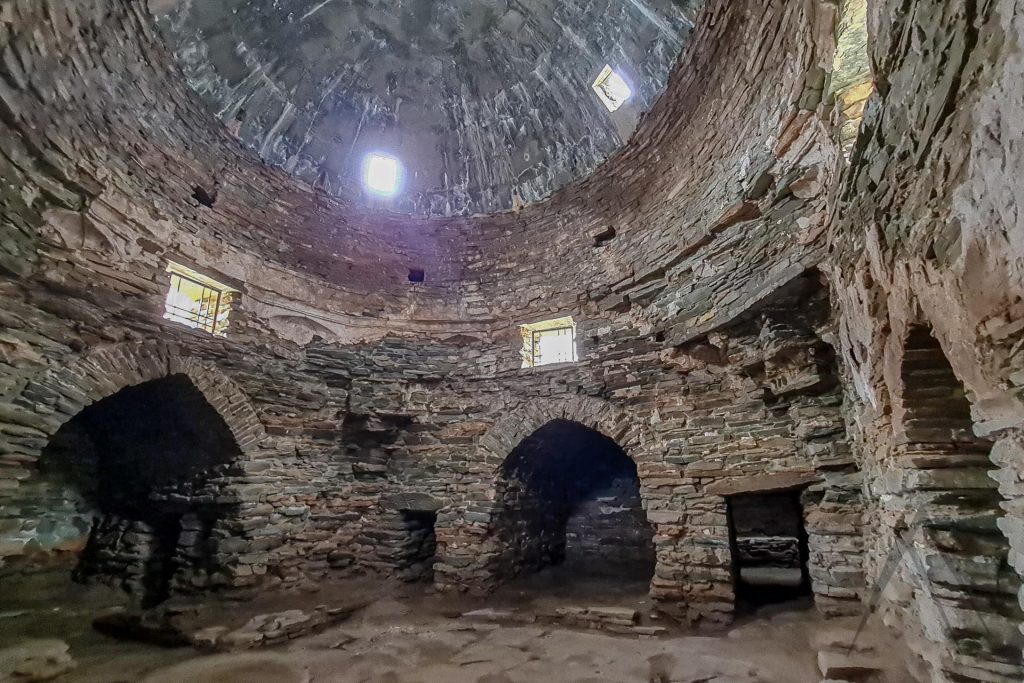
The Tash Rabat caravansarai has an almost square shape and the length of is sides are 33,7 and 35,7 meters, meaning it is BIG. Once inside, a corridor leads to the central hall where small holes have been cut in the ceiling letting the daylight in. Tash Rabat has 31 dome-shaped rooms made of crushed stones with clay mortar and with gypsum mortar for sealing the joints.
All other rooms except the main hall are quite dark with only small holes providing light inside. The facade of the building is traditionally directed to the east and it has a portal with a classical arch and corner towers that are designed for the sentinel guard. The roof of Tash-Rabat is crowned with twenty small and one large dome and the apertures for the light are easily visible. The site has been heavily restored in the 1980s under the Soviet rule and is currently undergoing its first major restoration since then (2025-2026). Visitors may see temporary protective fencing and shelter structures around parts of the monument that will be removed after restoration is completed.
Tash Rabat Legend and History
It has been said that Tash Rabat was built by father and a son. When they were building the cupola on the roof, the son heard a caravan coming from afar. The father asked him to stay so that they could finish the work, but the son went to greet the caravan and fell in love with a traveling girl. He left his father, who got sad that he didn’t finish the cupola and left few holes in it that are still there even now.
Tash-Rabat translates as a stone yard in Kyrgyz. Some historians argue that Tash Rabat may have been used as a monastery by the Nestorian Christians or even Buddhists that lived in the region before 13-century Mongol attack took place and before Islam spread out to the region. There are several versions and legends about the origin of the architectural complex, but it is most likely that it was built in the 15th century and served as an inn for merchants traveling along a nearby trade route.
There has been some controversy over confirming the origin of this building and the other competing opinions state that Tash Rabat represents the ruins of a 10th – 11th centuries Christian Nestorian monastery. The reason that lead to believe this, although Tash Rabat is located along a pass over the mountains and an old caravan route, there were no any remains of a courtyard meant for caravan animals found here. There are also many other old caravanserais all around Central Asia, mostly in Uzbekistan. In Kyrgyzstan, one of the best preserved, non restored ruins, resembling Tash Rabat, are in Kosh Dobo.
Tash Rabat Tours
Travel to Tash-Rabat
The easiest way to reach Tash-Rabat is to get yourself first to Naryn. From Naryn or At-Bashi the options are by your own wheels, taxi or with the help of a tour operator. No public transportation goes to Tash Rabat.
If you are on your way to Chatyr Kul, Tash Rabat is a good place to rest for an hour or two and perhaps enjoy an authentic Kyrgyz nomad meal in a yurt. If you wish to overnight in Tash-Rabat in the summer there are a lot of choices to stay in yurt camps. Locals from nearby villages will come and set up yurts and offer meals as well if requested. It might be cold in the night time so request for heating when necessary.
There are many trekking and horseback routes around Tash Rabat and you can visit for example the Tash Rabat (Panda) Pass and see the lake Chatyr Kul from the top with the Chinese mountains behind it.
Tash Rabat can be generally visited from May to October as outside these times the road access might be blocked or at least very difficult and requiring professional transportation and experienced drivers. Best times to visit are from from June to September and the high season with most services available is in July – August.
The caravanserai is usually open daily during the tourist season (May–September). If the entrance gate is closed, staff from the nearby yurt camp or guesthouse can normally provide access. Opening arrangements may vary outside the main tourism season. The entrance fee (150 KGS in 2026) can be paid only in cash.
Other destinations and sights near Tash Rabat
Page updated 27.7.2026