

Issyk-Kul Lake, Kyrgyzstan: Travel Guide
Kyrgyzstan's inland sea: a 180 km mountain lake ringed by the snow-capped Tien Shan, with sandy beaches, red-rock canyons, hot springs and yurt camps.
Issyk-Kul (Ysyk-Köl in Kyrgyz, often written Issyk Kul) is Kyrgyzstan’s inland sea: a 180-kilometre-long mountain lake at 1,607 metres, ringed by the snow-capped Tien Shan. It is the second-largest mountain lake in the world after Lake Titicaca, and its slightly salty water keeps the open lake ice-free all winter.
Holidaymakers from Kyrgyzstan, Kazakhstan and Russia come for the sandy beaches of the north shore. Travellers from further away come for what surrounds the water: red-rock canyons and quiet yurt camps on the south shore, hot springs and alpine valleys above Karakol, eagle hunters around Bokonbaevo, and rock carvings that are thousands of years old.
In short: you can see the highlights on a 3–4 day loop from Bishkek. Allow 5–7 days if you want to hike to Ala-Kul, soak in the Altyn-Arashan hot springs or spend a few nights in a yurt. The best time to visit is June to mid-September; the water is warmest from late July to late August.
Issyk-Kul is part of most of our Kyrgyzstan tours and Central Asia tours. See Issyk-Kul tours ↓
Looking for Lake Issyk near Almaty? That’s a different lake: see Lake Issyk, Kazakhstan.
Issyk-Kul at a glance
| Where | Issyk-Kul Region, north-east Kyrgyzstan, between the Kungey Ala-Too (north) and Terskey Ala-Too (south) ranges |
|---|---|
| Size | About 180 km long, up to 60 km wide, 6,236 km² |
| Depth and altitude | Up to 668 m deep; the surface lies at 1,607 m |
| Water | Slightly salty (about 6 g per litre, roughly a sixth of seawater); no river flows out |
| Records | Second-largest mountain lake in the world (after Titicaca); second-largest saline lake (after the Caspian) |
| Protected | UNESCO Biosphere Reserve since 2000 (UNESCO) |
| Swimming season | July–August; water about 20–24 °C on the north shore |
| From Bishkek | About 250 km / 3.5–4.5 h to Cholpon-Ata; about 400 km / 6–7 h to Karakol |
| Ring road | 446 km around the lake |
| Time needed | 3–4 days for the highlights; 5–7 days with a trek, hot springs or a yurt stay |
| Main bases | Cholpon-Ata (north), Bokonbaevo (south-west), Karakol (east) |


The name means “warm lake” in Kyrgyz. The lake is warmest from late July, when the water reaches the low twenties, and it doesn’t freeze over in winter. About 118 rivers and streams run into Issyk-Kul from the surrounding mountains, but none flows out. Water leaves only by evaporation, which is why the lake is slightly salty: about 6 grams per litre, roughly a sixth of seawater. That salinity and the lake’s sheer volume keep it ice-free even at –20 °C. Only in extreme cold spells, as in January 2023, does ice form along parts of the north shore (Copernicus).
The lake is shrinking. Kyrgyz officials said in 2026 that the water level has fallen by nearly 14 metres since the mid-19th century, and fewer rivers now reach it, which they link to glacier change and growing agricultural water use (The Times of Central Asia). The whole basin has been a UNESCO Biosphere Reserve since 2000.
At 1,600 metres the sun is stronger than it feels, especially on the water. Bring high-factor sunscreen, a hat and sunglasses even on cool days.


North or south shore? How Issyk-Kul is laid out
The lake is so big that each shore feels like a different region. A 446 km ring road runs all the way round, so most visitors drive one shore out and the other back, with Karakol at the eastern end as the turning point. The rebuilt south-shore road is almost finished, which makes the quieter side much quicker to reach than a few years ago.
| North shore | South shore | East (Karakol) | |
|---|---|---|---|
| Feel | Resorts and summer crowds; centred on Cholpon-Ata | Quiet villages, yurt camps, open landscapes | Mountain town and trekking base |
| Beaches | Sandy, with cafés and loungers; resorts charge for their stretch | Wild sand and pebble coves, few services | – |
| Water | Warmer, gentle entry | 2–3 °C cooler, rocky in places | – |
| Sights | Cholpon-Ata petroglyphs, Rukh Ordo, Grigoriev and Semenovka gorges, Ak Bermet hot spring | Skazka Canyon, Ak-Sai and Mars canyons, Barskoon waterfalls, Dead Lake, eagle hunters at Bokonbaevo | Altyn-Arashan, Ala-Kul, Jeti-Oguz, Jyrgalan, Karakol’s wooden cathedral and Dungan mosque |
| Sleep | Hotels and resorts, from simple to upscale | Yurt camps and guesthouses | Hotels and guesthouses; mountain huts |
| Best for | Beach days, comfort, families | Culture, photography, quiet | Hiking, hot springs, skiing |
Our advice: if you only have one night at the lake between June and mid-September, sleep in a yurt camp on the south shore. The landscapes are better, the stars are brighter and the eagle hunters are nearby. If you have at least 2 days and 2 nights, use Cholpon-Ata for a comfortable hotel night on the way back to Bishkek.
Cholpon-Ata and the north shore
Cholpon-Ata is the main area for local tourists in Issyk-Kul and the center of the beach and resort tourism. The town is located on the Northern shore of the lake. In Cholpon-Ata and in the surrounding areas you can find big hotels and lots of homestays especially in the hot season which takes place in July-August. During the high season period, locals, Russians and Kazakhs gather to spend time in the more cool climate and beaches of Issyk-Kul valley to run away from the 40º C in lower areas. Cholpon-Ata is a good base for exploring the whole northern side of Issyk-Kul. Just outside town, the open-air petroglyph field has hundreds of carved stones, from the Bronze Age to the early Middle Ages. Another major base for exploring Issyk-Kul area is Karakol, which is located in the southeast side of Issyk-Kul.
There are abundant numbers of shops and restaurants in the Northern shore area and during the high season it can be crowded, resulting in higher prices especially for accommodation. The prices can reach up to 150$/night in better quality hotels. During off season the prices can be less than half compared to high season. Less expensive homestays and cheaper hotels and hostels are still available all the time. Activities like water jets, parasailing, party boats and so on can be found most like in the Cholpon-Ata area or other nearby beaches.


After a change in law, the fences of the resorts are open at the beach but many resorts still ask for a fee to access to their beach areas even though you can walk past the resort freely along the beach line. If you are willing to walk or drive a little bit you can still find beaches in Northern Issyk-Kul that are not fenced and are free for anyone to roam but are also mostly without any services. Beaches are also a great place to catch some amazing sunsets in Issyk-Kul. Thank you for photos gladkov_nikolai


The south shore
The south shore of Issyk-Kul is a lot less populated by local tourists. There are some residences, hotels and homestays but in general the area is considerably less “touristy” and has more pristine nature. There are empty sandy or stony beaches for you to choose from and stay alone in quiet atmosphere if you wish so. In the southern Issyk-Kul side there are also some yurt villages, the Tamga Gorge and a Salty Lake or “Dead Lake” which is a highly saline lake just 10 minute walk from Issyk-Kul.
We highly recommend visiting and “swimming” in the lake. You will understand why the swimming is inside quotation marks after you really try it. The best base of operations for the exploration of the South part of Issyk-Kul is definitely Karakol but Bokonbaevo also has some services and there are few yurt villages nearby the beaches in the same area. Bokonbaevo is also the centre for eagle hunting demonstrations, which most of our south-shore days include.


There is also a canyon formed of reddish and yellowish rocks called Fairytale Canyon or “Skazka”. In the canyon you can see peculiar animal resembling shapes and other beautiful formations shaped by wind erosion and rain. The canyon is located not far from the village of Tosor. Similar kind of reddish rock formations can be found in the Jeti-Oguz gorge together with a sanatorium with some more hot springs nearby.
Barskoon Valley is a place worth to visit while traveling the South side of Issyk-Kul. The valley starts nearby the village of Barskoon and continues South towards the Tien Shan mountains. In the valley you can see spectacular views of mountain forests and the Barskoon waterfall which is named in Kyrgyz the “Tears of the snow leopard” plus some Soviet relics of Yuri Gagarin.


Karakol and the eastern valleys
Karakol, at the eastern end of the lake, is the base for the best mountain scenery around Issyk-Kul. The town itself is worth half a day:
- the wooden Holy Trinity Cathedral, completed in 1895 on the site of a brick church destroyed by the 1889 earthquake
- the Dungan Mosque (1907–1910), designed by the Chinese architect Zhou Si with craftsmen from Beijing and built entirely without metal nails
- the museum of the explorer Nikolay Przhevalsky, who died here in 1888
- on Sunday mornings, one of the largest animal markets in Central Asia
From Karakol:
- Jeti-Oguz is a 30–40 minute drive. Its red sandstone cliffs, the “Seven Bulls”, rise above a green valley.
- Altyn-Arashan is a high valley with natural hot-spring pools. You reach it by 4×4 or on foot.
- Ala-Kul is a turquoise glacial lake at about 3,500 m. It’s the classic 3-day trek from Karakol, and our Ala-Kul trekking tour does it with fixed camps.
- Jyrgalan is a village about an hour east, with day hikes in summer and, since 2026, the first section of new ski lifts in winter.
- The Karakol ski base is the best ski resort in Kyrgyzstan.
Ak-Sai and Mars canyons
Ak-Sai (Ak-Say) canyons are easy to miss while driving along the ring road at the southern side of Issyk-Kul but visitors with interest in hiking and mars like views should definitely stop here for a while. Ak-Sai Canyons are a quiet, lesser-known site near the town Ak-Say, loved by travelers who prefer solitude and raw landscapes. The canyons have eroded into soft reddish clay and sandstone by rivers dried up long ago, forming narrow passages, steep walls, and unusual shapes that change color with the sunlight. The changing colors of the canyons provide great opportunities for photography and especially for drone photography as the canyons are best seen from the flying eye of the drone.
The “Mars Canyons”, located near the town of Kaji-Say, are somewhat similar to the Ak-Sai canyons, also carved by ancient rivers but providing different views and colors.
This location is very accessible and popular with tourists. Short hiking trails lead through the canyon, making it suitable for visitors of different ages and fitness levels. The Mars-like scenery is especially beautiful at sunset, when the rocks glow in deep red tones.
Don’t forget to bring lots of water, sun screen and sun protective clothes when hiking in the Ak-Sai or Mars canyons as it can get extremely hot and the sun is reflected from the bright colored stones and sand. There are yurt camps near both the canyon areas providing opportunities for accommodation and catching also the early sunlight views at these sites.


Hot springs around Issyk-Kul
Several hot springs, man made or natural can be found in the Issyk-Kul area. Some of them are located not far from the lake itself and are easily accessible but others can be located high in the mountains and are only accessible by trekking or horseback. There is an area east from Cholpon-Ata, about 1 hour drive away, that has few hot spring places with services like massaging and drinks at the shoreline of Issyk-Kul, south towards the lake from the village of Chong Uruktu. There is also a very nice hot spring place called Ak Bermet, just west from Cholpon-Ata.


More famous hot springs are located on the southeast side of the lake, not far from Karakol, in the Juuku (Dzhuku) Valley and the Kyzyl-Suu hot springs are in the same region, together with the Ak-Suu hot springs not far from Karakol and the Altyn-Arashan gorge hot springs high in the mountain valley. Read more in our guide to the hot springs of Central Asia.


Ancient and medieval sites
There are numerous locations around the lake where one can find ancient symbols, fortresses, petroglyphs, balbals or rock drawings, dating back in the past from hundreds or even thousands of years.
Many of them represent Buddhist or the Tengrism religion that were once dominant in the area or are of Scythian origin. There are also remains of an ancient cities under the water but the locations have been kept secret to prevent vandalism and scavenging of relics. Issyk-Kul has been habited for a long time and during that time the water level has fluctuated and therefore aided and in turn destroyed the civilizations inhabiting its coasts.
In the very East end of the Issyk-Kul valley, about 20 kilometers from the border of Kazakhstan, there is a big pile of stones in a village called San Tash. There are many legends associated with the birth of the pile of stones but the most popular one is related to Amir Temur who was the ruler of a vast kingdom in Central Asia. On the route to invasion against China the ruler requested each soldier to add one stone to the pile and on the way back asked each one to pick up one stone from the pile thus calculating the losses of men in battle.


At the South shore of Issyk-Kul there are the small ruins of once a great city called Kan Dobo with a museum and some walls still standing from the 12th century and evidences of an underground city next to the small village of Turasu.
South from Kaji-Say, on the other side of a low mountain range or fells, there is a double fortress that was once guarding both sides of a river and the remains of a bigger fortress just next to the town of Tosor. There is also a fortress at the northern side of Issyk-Kul not far from the Zharkinbaevo village. There are also small fortress ruins in the Barskoon valley, just next to the road leading to the waterfalls.


Nature and wildlife
The great diversity of the landscape types in Issyk-Kul area offers living conditions for various plants and animals. In the western and southern parts of the Issyk-Kul valley, there are deserts and semi deserts but the eastern and northern parts of the area are more humid and green with mountain forests.
The mountain gorges that origin from the Issyk-Kul basin are mostly covered by Tien Shan spruce forests and in the lower areas also with other less robust species together with high plateaus that are used as summer pastures and are dotted with yurts, sheep and horses during the warm season. At the southern shore there is the Tien-Shan mountain range with peaks passing 5 000 m with some of the longest glaciers of the world outside of the polar regions.
There are a lot of land mammals living in the mountain valleys and gorges including bears, wild boars, Marco Polo sheep and even the elusive snow leopard. Issyk-Kul is also a home to numerous migratory birds and many rare geese species also live there together with vultures and large birds of prey accompanied by herons and different gulls. Even flamingos and pelicans are occasionally spotted in Issyk-Kul. There used to be several great birds of prey that hunted fish from Issyk-Kul but introducing predatory fish to Issyk-Kul has reduced their number greatly or even fully.


Things to do at Issyk-Kul
Issyk-Kul is the place where you can experience a big portion of the Kyrgyz culture. Apart from the obvious beach life, the mountain valleys offer a lot to experience especially with the still much alive nomad culture and old traditions not to forget the amazing nature for hiking and exploring. Cholpon-Ata and the surrounding nature has also been the regular location for the World Nomad Games that have been organized in Kyrgyzstan four times. The 2026 games took place with Cholpon-Ata as the main venue. Other locations included Rukh Ordo and the Ethno Village built for this purpose in Kyrchyn Gorge.
Kyrgyz culture and eagle hunting
Issyk-Kul is one of the best places to experience the Kyrgyz culture. Here you can see and accommodate in the beautifully decorated yurts, see eagle hunting and dog hunting shows sometimes accompanied by falcons. During many festivals and also off season, there are Kok Boru (Blue wolf) horse games where the dead carcass of a goat is battled over to be taken to the opposing team’s goal on horseback! Issyk-Kul also offers a lot of secrets for the Silk Road explorers and history lovers. If you venture far enough to the mountain pastures, it is also possible to see the real alive nomad culture with the traditional yurt dwelling high in the mountains. Traditional Kyrgyz food can also be well enjoyed everywhere around the lake.


Festivals
During the summer time, there are also several festivals and cultural events that are organized in Issyk-Kul and they mostly focus on the southern beach areas but there are also events taking place for example in the Grigoriev gorge and other locations at the northern side of the lake. Most events take place in July and August as the locals consider the season already mostly over in September. There are also more festivals and events in other parts of Kyrgyzstan.


Swimming in Issyk-Kul
Yes, you can swim in Issyk-Kul. The season runs from July to August, when the north shore reaches about 20–24 °C. The water is very clear and slightly salty, so you float a little more easily than in a freshwater lake. The south shore is usually 2–3 °C cooler, with rockier entries in places.
- Best swimming beaches: on the north shore, Cholpon-Ata town beach and Bosteri (sandy and shallow, with all services); on the south shore, Tamga and the coves around Kaji-Say (quiet, but with few facilities).
- Away from the big resorts there are no lifeguards, the afternoon wind can raise real waves, and the water deepens quickly on parts of the south shore.
- For a different kind of swim, try the Dead Lake, a small, very salty lake a ten-minute walk from the south shore, where you float without effort.
| Month | Water (north shore) | |
|---|---|---|
| January | 2–5 °C (36–41 °F) | Coldest month; small bays can ice over |
| February | about 3 °C (37 °F) | Deep winter |
| March | 4–6 °C (39–43 °F) | Very cold |
| April | 7–10 °C (45–50 °F) | Slowly warming with the spring melt |
| May | 10–15 °C (50–59 °F) | Too cold for swimming |
| June | 16–19 °C (61–66 °F) | Refreshing; a wetsuit helps for long swims |
| July | 20–24 °C (68–75 °F) | Swimming season starts |
| August | 21–24 °C (70–75 °F) | Warmest month |
| September | 17–20 °C (63–68 °F) | Still swimmable, with fewer people |
| October | 12–16 °C (54–61 °F) | Beach season over |
| November | 7–10 °C (45–50 °F) | Cold |
| December | 3–5 °C (37–41 °F) | Winter cooling |
Typical ranges; water temperatures vary from year to year.
Skiing
The winter tourism opportunities including skiing are centered in the southeastern part of the lake. Namely in Karakol and where the best skiing center of Kyrgyzstan is located providing the slopes all the way up to the height of 3 kilometers. The season here is also longer than in most other skiing locations in Central Asia. In Jyrgalan, about an hour east of Karakol, the first section of new modern ski lifts opened for the 2026 season.
Golf
Since 2026 an 18-hole golf course and golf academy have been open on the northern shore of Issyk-Kul, near the village of Kosh-Kol, about half way between Balykchy and Cholpon-Ata. Some of the additional services such as accommodation facilities were still under construction during the summer 2026.
The Issyk-Kul golf club was not planned as an exclusive club for the elite but an open venue where everyone can come to play, learn, and relax so it is open also for everyday golfers, international tourists, and beginners can book tee times and access the 18-hole championship layout. Read more about golf in Central Asia.
Best time to visit Issyk-Kul
June to mid-September is the main season. The roads over the passes are open, the valleys are green and the yurt camps are running. Most camps close by mid-September, so plan yurt nights before then. July and August are the warmest and busiest months, especially in Cholpon-Ata. June and early September are our favourites for hiking and photography: fewer people, softer light and comfortable temperatures.
| When | Weather | Good for | Keep in mind |
|---|---|---|---|
| May | Spring, cool nights | Green valleys, quiet roads | Many yurt camps not yet open; lake too cold to swim |
| Jun | Warm days, cool lake | Hiking, flowers, fewer crowds | Snow on the high passes (Ala-Kul) early in the month |
| Jul–Aug | Warm, sunny, 25–30 °C by the lake | Swimming, festivals, yurt camps | North shore busy and pricier; book hotels early |
| Sep | Clear and mild | Hiking, photography, autumn colour | Most yurt camps close by mid-Sep |
| Oct | Cool, golden valleys | Barskoon and Jeti-Oguz in autumn colour, hot springs | Short days; cold nights in the mountains |
| Nov–Apr | Cold air, lake stays open | Skiing at Karakol (Dec–Mar), hot springs, our winter tour | Most resorts and camps closed |
How many days do you need?
Issyk-Kul is a loop, so plan your days around the drive. These are the routes we use most often:
3–4 days: the highlights loop. Bishkek → south shore with a night in a yurt camp near Bokonbaevo, an eagle-hunting demonstration and Skazka Canyon → Jeti-Oguz and Karakol → back along the north shore via Cholpon-Ata. Our 3-day trip around Issyk-Kul does this loop the other way round, with a night in a nomad yurt on the Boz-Salkyn pasture.
5–6 days: add the mountains. As above, plus a night at the Altyn-Arashan hot springs, or Barskoon and the Ak-Sai canyons on the south shore.
7 days: the full circuit. Our private Issyk-Kul Tour covers it all: Burana Tower on the way in, a yurt camp near Bokonbaevo with horse riding and folk music, Skazka and Jeti-Oguz, two nights in Karakol with a spa afternoon, the Grigoriev and Semenovka gorges, and a final beach stop on the north shore.
Combine it with more of Kyrgyzstan:
- The Heart of Kyrgyzstan adds a yurt stay at Song-Kul.
- The Kazakhstan and Kyrgyzstan tour via Issyk-Kul links the lake with Almaty’s mountain lakes in 7 days.
Issyk-Kul tours
Every tour below spends at least a day at Issyk-Kul. All can run as private tours on your dates, and several have fixed small-group departures. Prices are per person; deposits are taken securely online.
7 days

Issyk Kul Tour
A private 7-day tour from Bishkek around Issyk-Kul, Kyrgyzstan’s great alpine lake, with canyons, gorges and nomadic…
- Culture
- Hiking
- +2
Starts in Bishkek Private departures on request
 3 days
 trip around Issyk Kul
Experience three unforgettable days around Issyk-Kul Lake, the “Pearl of the Tien Shan”. On the way from Bishkek you…
- Culture
- Nature
- Silk Road
Starts in Bishkek Private departures on request
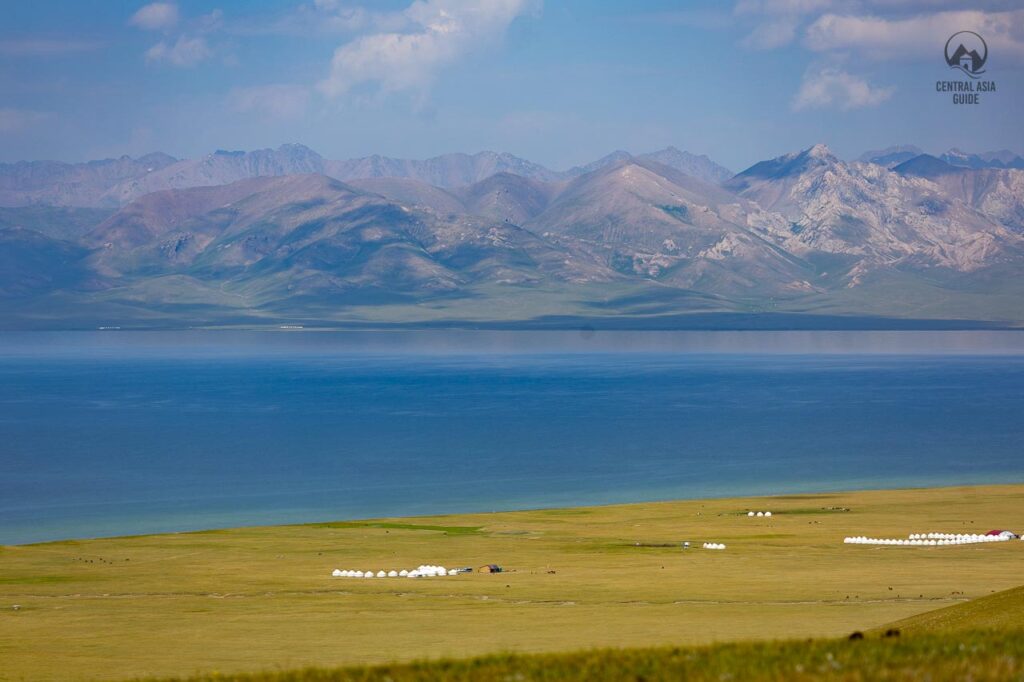 9 days
The heart of Kyrgyzstan Tour
This 9-day group tour from Bishkek shows you Kyrgyzstan’s best-known destinations and puts the focus on Kyrgyz culture…
- Culture
- Hiking
- +2
Starts in Bishkek Next departure 20/05/2027
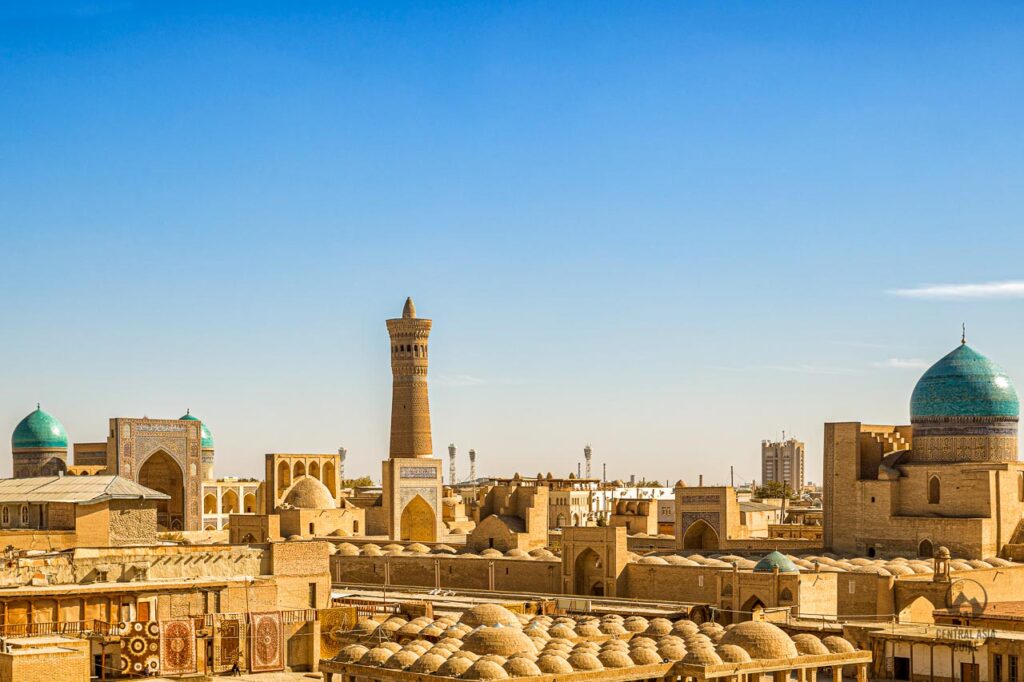 22 days
Featured


The Best of the Five Stan Tour
Embark on a 22-day journey through all five countries of Central Asia, beginning in Bishkek and ending in Ashgabat. In…
- Culture
- Multi-country
- +2
Starts in Bishkek Next departure 07/04/2027
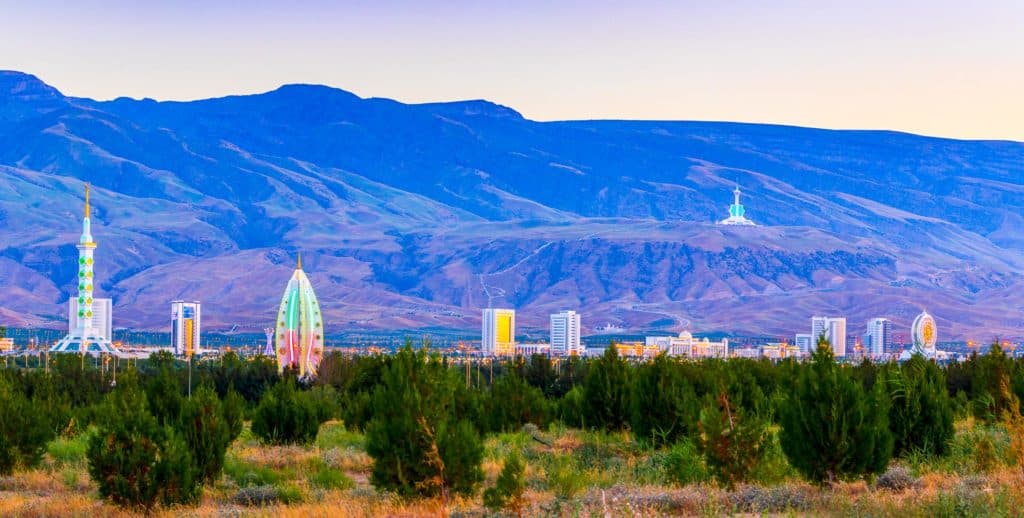 15 days
Sale
Five Stans of Central Asia Tour
Start on an extraordinary adventure across the heart of Central Asia with our Five Stan Tour, exploring the unique…
- Culture
- Hiking
- +3
Starts in Ashgabat Next departure 22/12/2026
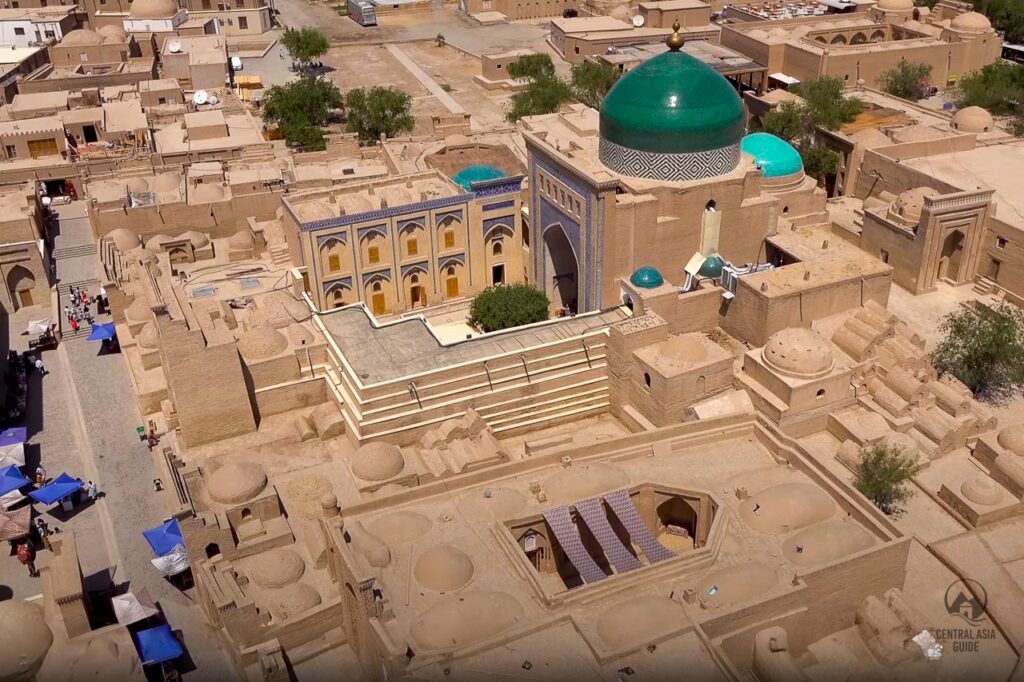 18 days
Sale
Four Stan Tour through Central Asia
Discover the legendary Silk Road on this 18-day small-group tour through Kyrgyzstan, Kazakhstan, Tajikistan and…
- Culture
- Multi-country
- +2
Starts in Bishkek Next departure 03/04/2027
 10 days
Mountain Biking Tour in Kyrgyzstan
This 10-day mountain biking tour from Bishkek explores the quiet southern shore of Issyk-Kul – “the aquamarine in a…
- Biking
- Culture
- Nature
Starts in Bishkek Private departures on request
 13 days
Kazakhstan and Kyrgyzstan Trekking Tour
Start a 13-day journey through Kazakhstan and Kyrgyzstan, where ancient landscapes and vibrant cultures await. From…
- Nature
- Trekking
Starts in Almaty Private departures on request
 9 days
Kyrgyzstan Tian-Shan trekking tour
This 9-day small-group trek takes you into the Tien Shan mountains south of Issyk-Kul. Five days of hiking between…
- Nature
- Trekking
Starts in Bishkek Next departure 19/06/2027
Where to stay at Issyk-Kul
These are places we use on our own tours.
- North shore (Cholpon-Ata): Karven Issyk-Kul, a large lakeside resort with its own beach, and Caprice Lakeside Resort. July–August prices are high, so book early. Expect up to about USD 150 a night for the better hotels in high season, and less than half that in spring and autumn.
- South shore: yurt camps near Tosor and in the Tamga Gorge, and family guesthouses and nomad-style yurts around Bokonbaevo (for example Boz-Salkyn). Many yurt camps now have flush toilets and warm showers, but they are mostly shared.
- Karakol: comfortable 3-star hotels such as Green Yard, Amir, Hotel 78 and My Hotel Karakol, plus guesthouses.
- In the mountains: simple guesthouses in Altyn-Arashan with hot-spring pools on site, and tent camps on the Ala-Kul trek.
Getting to Issyk-Kul
From Bishkek by road. The most common route is the main road east through the Boom Gorge:
- Cholpon-Ata: about 250 km, 3.5–4.5 hours.
- Karakol along the north shore: about 400 km, 6–7 hours.
- Bokonbaevo along the south shore: about 300 km, 5 hours.
On our tours you travel by private car or minibus with a driver. Independent travellers can use shared taxis and marshrutkas from Bishkek. Stop on the way at the Burana Tower or the Konorchek and Kok-Moinok canyons.


From Almaty.
- Overland: the scenic way is east past Charyn Canyon and the Kolsai and Kaindy lakes, crossing into Kyrgyzstan at Kegen–Karkara and reaching Karakol from the east. The Karkara crossing is open all year, but its opening hours change with the season, so check them before you set off (on our tours we plan around them). The alternative is via Bishkek (Korday border).
- By air: in the summer season only, there are flights to Issyk-Kul International Airport at Tamchy, near Cholpon-Ata, including direct flights from Almaty of about 75 minutes. Outside summer, fly into Bishkek or Almaty and continue by road.
By train. In summer only, a slow train runs from Bishkek to Balykchy at the western tip of the lake, in about 5 hours. It’s a window on village life rather than a fast transfer; you continue by road from Balykchy.
Visas and permits. Most European and North American visitors can enter Kyrgyzstan visa-free; see Kyrgyzstan visa information. The lake shore needs no permit. The valleys towards the Chinese border (Enilchek, Merzbacher Lake, Khan Tengri) need a border-zone permit, which we arrange for our tours.
Map of Issyk-Kul
Issyk-Kul lies in north-east Kyrgyzstan, between the Kungey Ala-Too and Terskey Ala-Too ranges. Cholpon-Ata is on the north shore, Bokonbaevo on the south shore and Karakol at the eastern end.
Issyk-Kul FAQ
Can you swim in Issyk-Kul?
Yes, from July to August, when the water is about 20–24 °C on the north shore. The south shore is 2–3 °C cooler. The water is clear and slightly salty.
Is Issyk-Kul fresh or salt water?
Slightly salty: about 6 g per litre, roughly a sixth of the salinity of the sea. No river flows out of the lake, so the minerals stay in it. Don’t drink it.
Does Issyk-Kul freeze in winter?
No, the open lake stays ice-free thanks to its salinity and huge volume. In extreme cold, as in January 2023, ice can form along parts of the shore.
Which is better, the north or south shore?
The north shore has the beaches, hotels and nightlife, centred on Cholpon-Ata. The south shore is quieter, with yurt camps, canyons and eagle hunters. Most travellers see both on a loop. See the comparison.
How many days do you need at Issyk-Kul?
3–4 days for the highlights loop from Bishkek, or 5–7 days with a trek, the Altyn-Arashan hot springs or extra yurt nights. See sample routes.
How far is Issyk-Kul from Bishkek?
About 250 km (3.5–4.5 hours) to Cholpon-Ata and about 400 km (6–7 hours) to Karakol.
When is the best time to visit?
June to mid-September. July and August are the warmest and busiest months; June and early September are better for hiking. Most yurt camps close by mid-September. Winter is for skiing at Karakol and Jyrgalan. See best time.
Is Issyk-Kul worth visiting if I don’t want a beach holiday?
Yes. For most of our guests the lake is the backdrop rather than the destination. The canyons, hot springs, alpine valleys, yurt camps and eagle hunters are the reason to go.
Do I need a permit?
Not for the lake or the main valleys. Areas close to the Chinese border (Enilchek, Merzbacher Lake, Khan Tengri) need a border-zone permit, which we arrange.
Destinations and sights around Issyk-Kul
Written by Anssi Karppinen, Central Asia Guide · Page updated