Bukhara 2 days Tour
Accommodation, guides, transport, 2 train journeys included.
Tour start date:
Bukhara 2 days Tour Highlights
Discover Bukhara, for centuries a holy city of madrasas that attracted the finest minds of the East and a vital stop on the Silk Road between China, Central Asia, the Middle East and the Mediterranean. Trade has always been the favorite occupation of its people, and they still dedicate themselves to it with pleasure today. This 2-day tour takes you from Tashkent to Bukhara and back by train, with a guided tour of the magnificent old town and a night in Bukhara.
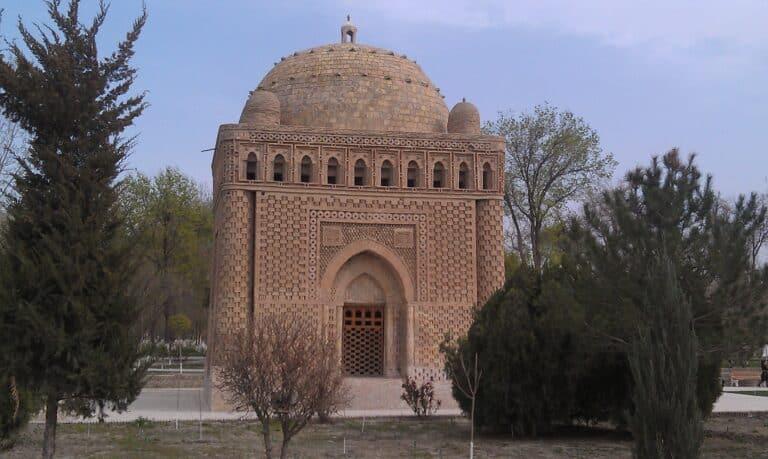
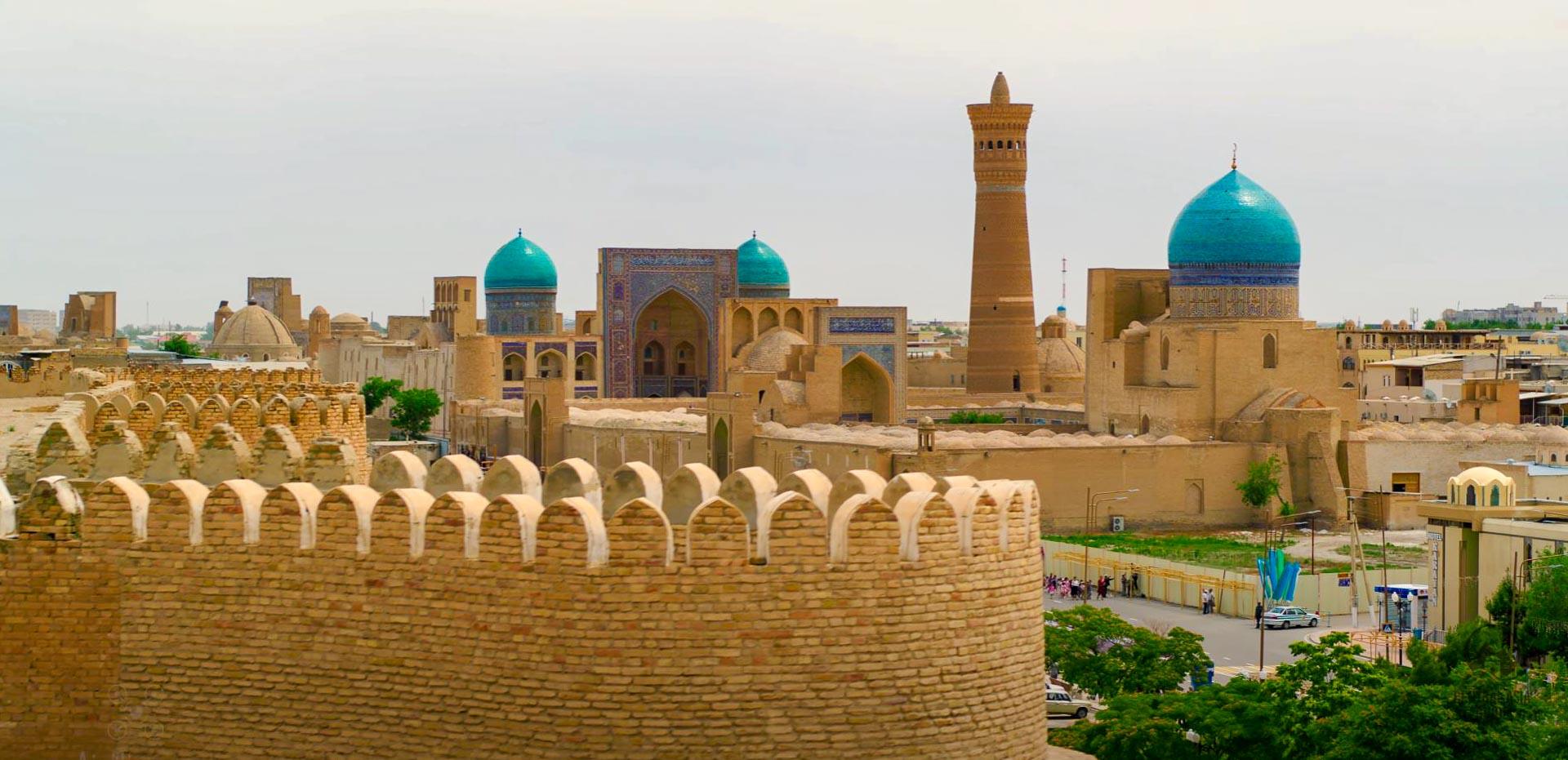
On the first day you visit the shrine of Bahauddin Naqshband, founder of the Naqshbandi Sufi order, the 10th-century Ismail Samanid Mausoleum, one of the first masterpieces of Central Asian architecture, the Chashma-Ayub shrine, the Bolo Hauz Mosque, where Friday prayers are still held, and the Ark of Bukhara fortress. The second day leads to the Poi Kalyan ensemble with the Kalyan Minaret, the Kalyan Mosque and the Mir-i-Arab Madrasah, through the old trading domes of the jewelers and cap sellers to the Lyabi-Hauz ensemble around its 17th-century pool, before the train takes you back to Tashkent in the evening.
Difficulty: Easy Two guided city tours of about 4–5 hours a day on foot and by car on mostly flat ground, plus a train ride of about 4 hours each way between Tashkent and Bukhara (meeting at the Tashkent station at 06:30 on day 1, back in Tashkent around 19:40 on day 2).
Tour Itinerary
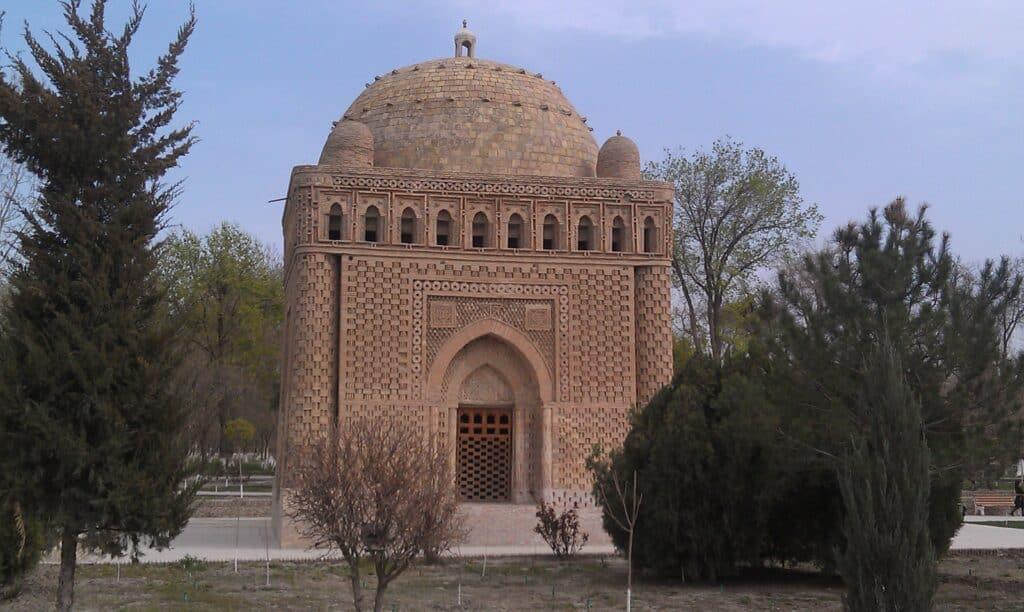
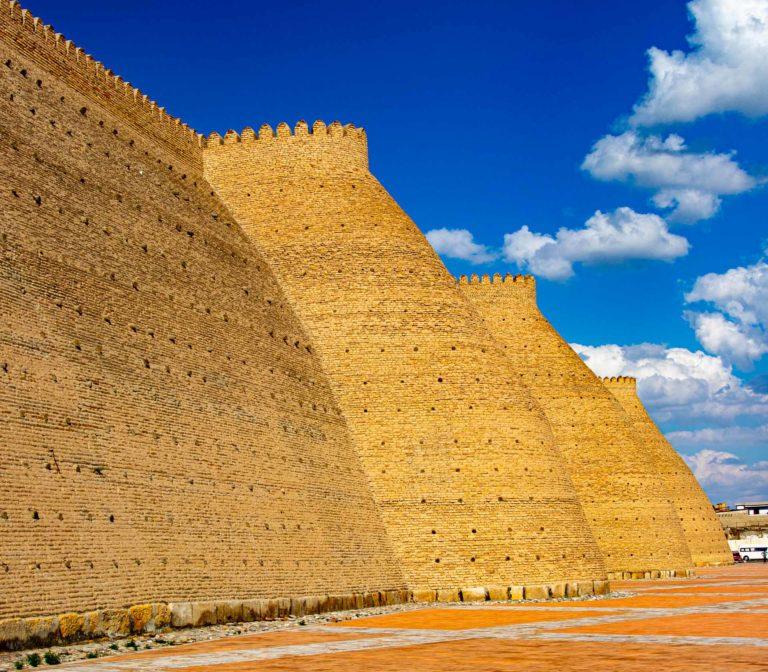
06:30 Meet your guide at Tashkent's Northern railway station and board the Afrosiyob high-speed train to Bukhara at 07:28. 11:15 Arrival at Kogon railway station near Bukhara, where your driver picks you up. 11:30 Start the city tour with Bukhara's holy places: Bahauddin Naqshband Shrine (16th century) in the Kogon district – the memorial complex of the famous saint, Islamic scholar and founder of the Naqshbandi Sufi order. Ismail Samanid Mausoleum (9th–10th century) in today's city park – the tomb of Ismail Samani, founder of the Samanid state, and his descendants. It is one of the first mausoleums in the history of Central Asian architecture and a masterpiece that preserves the traditions of ancient Sogdian building. Chashma-Ayub complex (14th–17th century) – a rectangular shrine (19 x 26 m) of four rooms in a row from west to east, each covered by a different dome, built around a holy spring. Bolo Hauz Mosque (1712) – a large domed mosque from 1712, with the courtyard and rooms added in the 19th century, the porch in 1915–1917 and a separate minaret by the masters Shirin Murodov and Hafizov. Friday prayers are still held here. 14:00 Lunch at a restaurant at Lyabi-Hauz. Afternoon visit to the Ark of Bukhara (1st century BC) – the citadel was first built in the 1st century BC and was home to the rulers of Bukhara before the Arab conquest. It was rebuilt and fortified with walls and towers under the Samanids (9th–10th century) and destroyed several times under the Karakhanids (11th–12th century) and during the Mongol invasion (13th century). 16:00 End of the city tour and time to rest at the hotel. 19:00 Dinner at a restaurant at Lyabi-Hauz.
Bakhauddin Naqshband Mausoleum, Samanids Mausoleum, Chashma-Ayub Mausoleum, Bolo Hauz Complex, Ark of Bukhara
- Tashkent → Bukhara (600 km)
- Bukhara → Bakhauddin Naqshband Mausoleum (12 km)
- Bakhauddin Naqshband Mausoleum → Bukhara (12 km)
Overnight: Bukhara (Hotel)
Meals: Lunch, Dinner
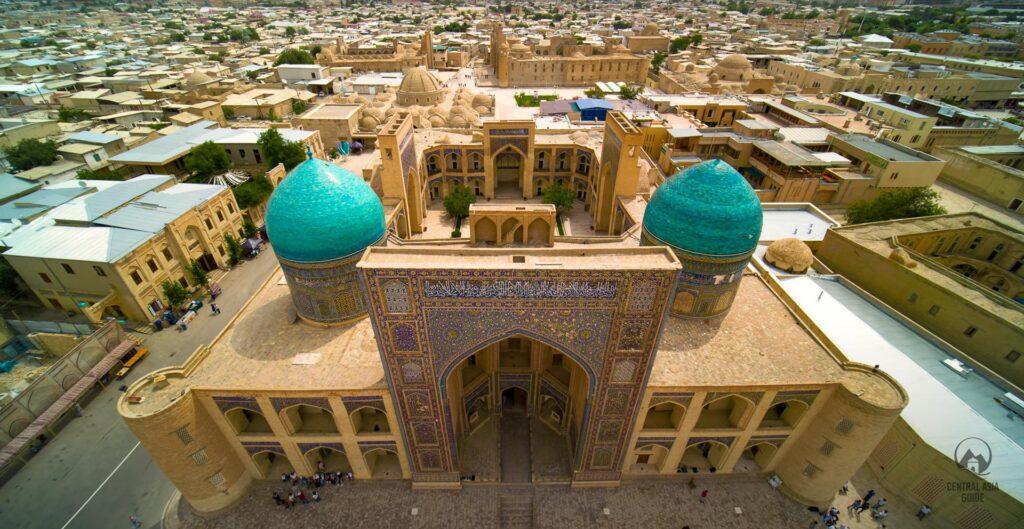
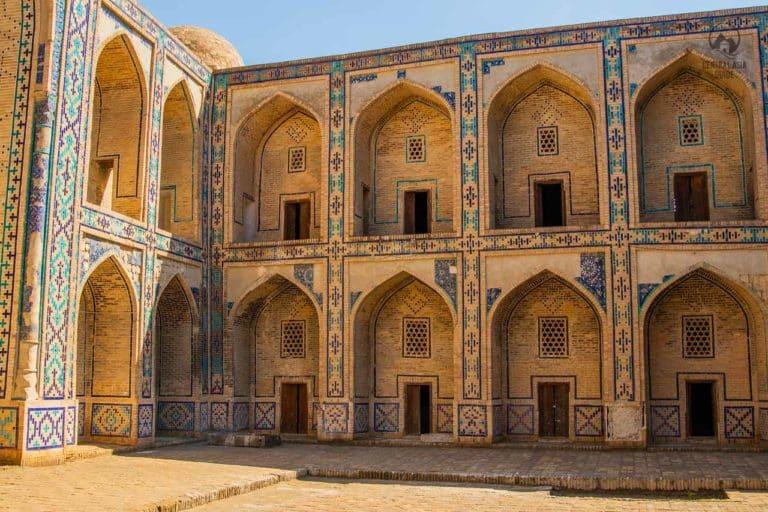
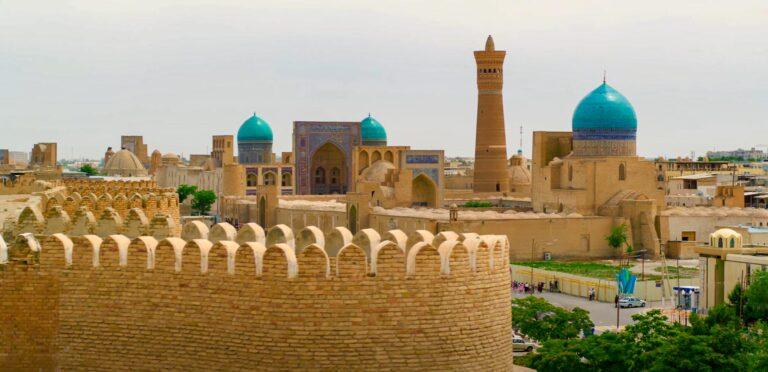
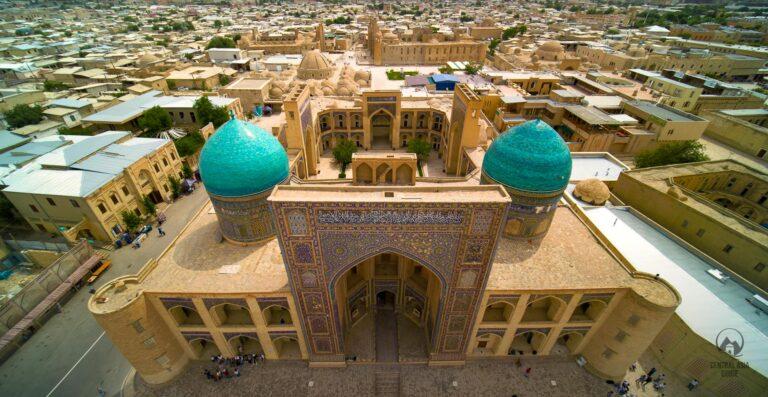
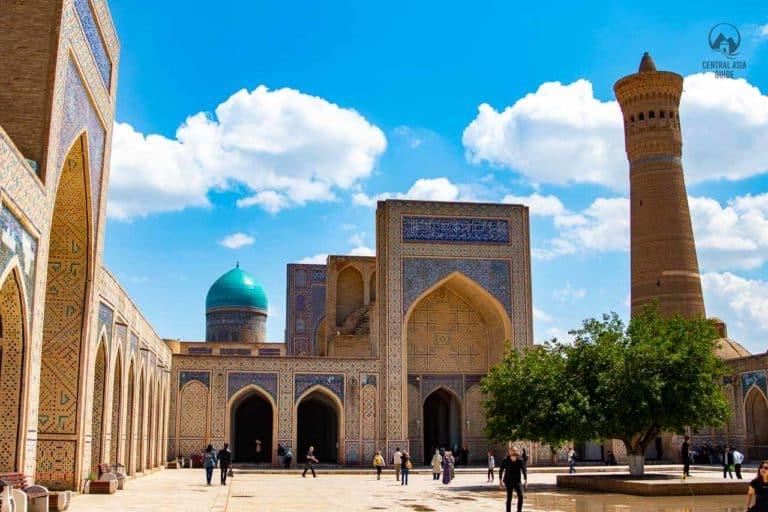
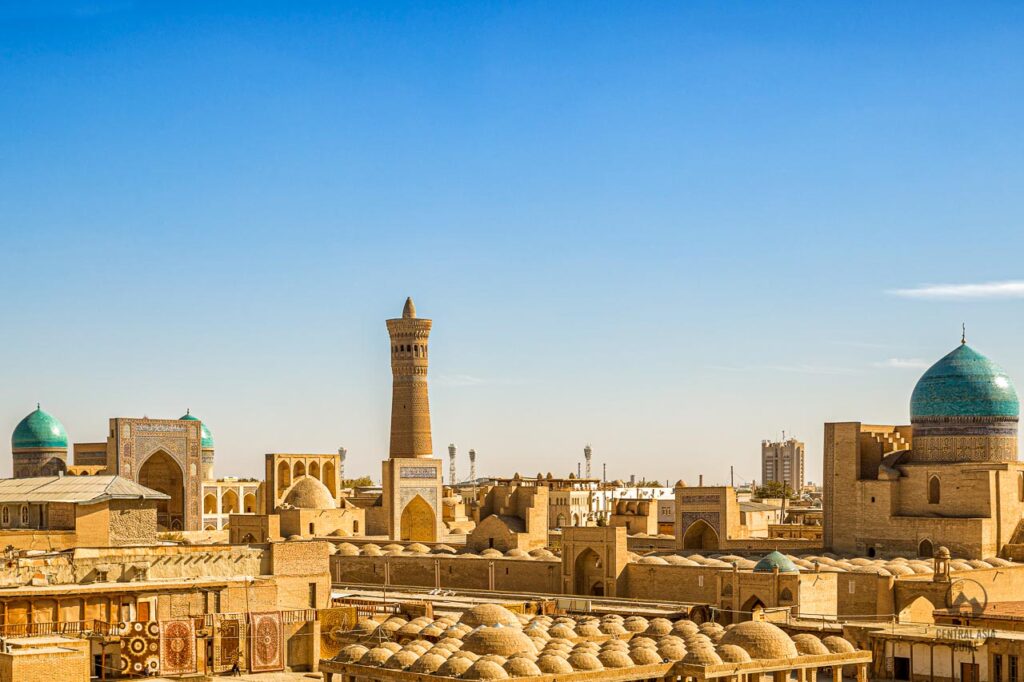
07:00–09:00 Breakfast at the hotel and check-out. 09:00 Continue the city tour in Bukhara: Kalyan Minaret (1127) – the minaret was rebuilt after an earlier tower collapsed. It served as a watchtower and called the faithful to Friday and Eid prayers at the Kalyan Mosque; some sources say it was also a place of public executions in the time of the Bukhara Emirate. Kalyan Mosque (14th–16th century) – built on the remains of a 12th-century building, as archaeological excavations in and around the courtyard have shown; construction began in the 14th–15th centuries and the mosque was restored in the early 16th century. Mir-i-Arab Madrasah (1530–1536) – opposite the Kalyan Mosque and next to the minaret, built by Sheikh Abdullah with a gift from the ruler and poet Ubaydullah Khan. It shows the traditional design and decoration of Central Asian religious schools. Toqi Zargaron and Toqi Telpakfurushon (16th century) – old covered bazaars: the jewelers' dome, the largest and most complex of Bukhara's trading domes, and the cap sellers' dome, built in 1570–1571 at a crossing of five streets. Lyabi-Hauz ensemble (17th century) – originally a market square. The pool was dug in its middle in 1620 and lined with stone steps and marble gutters; it is 36 m wide, 45.5 m long and 5 m deep. 13:00 Lunch at a local restaurant or guesthouse. 14:30 End of the city tour and transfer to Kogon railway station for the Afrosiyob train to Tashkent at 15:50. 19:40 Arrival in Tashkent and end of services.
Poi Kalyan, Trading Domes of Bukhara, Lyabi-Hauz Ensemble
- Bukhara → Tashkent (600 km)
Meals: Breakfast, Lunch
Share this tour privately
Travelling alone or as a couple? Join other travellers who want to take this tour privately, or post your own request. The private price per person drops as the group grows.
No open requests for this tour yet. Post the first one and we'll show it here and on the group requests page.
What's included
Included
- ✓Accommodation in a 3* hotel in Bukhara with breakfast (1 night, twin-sharing)
- ✓Train tickets Tashkent – Bukhara – Tashkent in economy class (Sharq train or Afrosiyob high-speed train, depending on the option booked)
- ✓Comfortable transport with a professional driver for all transfers and tours as per the itinerary
- ✓Professional, certified guide-interpreter in English or other languages
- ✓2 lunches and 1 dinner in local restaurants or guesthouses
- ✓Entrance tickets to the museums and monuments as per the itinerary
- ✓All taxes
Not included
- –Additional charges during the tours
- –Photo and video fees at the sights
- –All other extra services and charges not included in the program
Nargiza is the office manager of Central Asia Guide and mostly responsible for multi country "Stan" tours.
Where you'll stay
-
Night 1
Bukhara
3* hotel in Bukhara or similar
Good to know
- Train: Tashkent – Bukhara – Tashkent by the Sharq train or the Afrosiyob high-speed train, both in economy class. The trains leave from Tashkent’s Northern railway station and stop at Kogon station near Bukhara.
- Transfers in Bukhara: a Mitsubishi Delica for groups of 2–3 travelers.
- What to bring: comfortable shoes.
Uzbekistan travel information
Practical essentials for travelling in Uzbekistan. Open a topic to read more.
Visa policy
Find your country from the list and check possible visa requirements for Uzbekistan before booking.
The local currency is the Uzbek sum. Uzbekistan is still mostly a cash economy, but money is easy to exchange and ATMs are common in the larger cities.
Exchanging money
Banks exchange US dollars, euros, British pounds and Japanese yen. There are exchange offices in major cities such as Bukhara and Khiva and at Tashkent airport; elsewhere you need a bank, which often gives a better rate anyway. Your notes must be in pristine condition. Sum is hard to exchange outside Uzbekistan, but you can change it back to US dollars at a local bank.
Cards and ATMs
Cards are accepted in upscale hotels and restaurants in Tashkent and the main tourist cities, with Visa more widely recognised than Mastercard and a standard 3% commission. ATMs dispense sum and are easy to find in the larger cities; many also offer US dollars.
Uzbekistan is generally a safe destination, with little religious extremism and few crimes against foreigners.
Documents
Always carry your passport: it is a legal requirement, and police carry out routine checks.
Getting around
- Use licensed taxis. Local taxi apps are the easiest way to get a ride at local prices, and Yandex works very well in Tashkent and Samarkand. If you take a taxi on the street or at the airport, agree the price first.
- Many roads outside Tashkent, especially in the Tian Shan and Fan mountains, are in poor condition. Driving standards are generally low, and rural roads are often unlit, so night driving is riskier.
- On night trains, keep valuables safe, do not leave belongings unattended and lock the compartment door from the inside.
- Watch your belongings as you would anywhere, and avoid demonstrations and large gatherings.
Laws and customs
- Possessing narcotics is strictly illegal.
- Same-sex relationships are illegal and still socially condemned. Avoid public displays of affection.
- Drones are in practice banned. Permits can be applied for but are very rarely granted.
Photography
Be discreet near government buildings such as the Palace of Forums in Tashkent, and sometimes at local markets that see few tourists. Restrictions have eased, but check before photographing near airports, border checkpoints, military sites, bridges and police stations.
Earthquakes
Uzbekistan is prone to earthquakes, mostly tremors, though stronger ones occasionally occur.
Entering Uzbekistan is straightforward when your documents are in order. Citizens of many countries can visit visa-free, and for many others a visa is easy to get without an invitation.
Registration
Registration rules are stricter than elsewhere in Central Asia: by law you must be registered within 3 days of arrival. Hotels usually do this for you, but register yourself if you stay longer than 3 days in, for example, a rented apartment. Border officers check the registrations when you leave and may ask for the paper slips, so keep them until you exit the country.
Customs
Exporting handcrafted items older than 50 years is prohibited. At land borders, customs officers may check your phone and photos for explicit or confidential material, though this has become very rare.
The best times to visit Uzbekistan are spring (March to May) and autumn (September to November), between the summer heat and the winter cold.
Summer
At the height of summer the land dries out, especially in the countryside, and temperatures rise well above 30°C, often up to 40°C.
Winter
From November to March it can get cold, sometimes below zero, but the skies are mostly clear and bright. Snow is occasional and usually melts within a day or two.
Medical services in Uzbekistan have improved in recent years but are still limited, so good travel insurance that includes evacuation is essential.
Food and water
To avoid traveller's diarrhoea, drink only bottled, filtered or boiled water, and do not use tap water for brushing your teeth or for ice. Choose meat and fish that are thoroughly cooked and served hot.
Medical care
Uzbekistan has a state healthcare system and a small private sector. Larger clinics serve the cities and regional hospitals the countryside. Hospitals usually ask for payment in cash up front, even if you are insured, and serious cases may need evacuation home. Contact your insurer straight away if you need urgent care, and check before you leave what your insurance covers in Uzbekistan.
Medicines
Pharmacies are private, and the range of medicines can be limited. Prescriptions generally require a doctor's consultation. If you travel with medication, check the rules with the embassy, a consulate or Uzbekistan's Ministry of Health.
Similar tours
More tours in Uzbekistan.
15 days
Sale
Five Stans of Central Asia Tour
Start on an extraordinary adventure across the heart of Central Asia with our Five Stan Tour, exploring the unique…
- Culture
- Hiking
- +3
Starts in Ashgabat Next departure 22/12/2026
18 days
Sale
Four Stan Tour through Central Asia
Discover the legendary Silk Road on this 18-day small-group tour through Kyrgyzstan, Kazakhstan, Tajikistan and…
- Culture
- Multi-country
- +2
Starts in Bishkek Next departure 03/04/2027
22 days
Featured
The Best of the Five Stan Tour
Embark on a 22-day journey through all five countries of Central Asia, beginning in Bishkek and ending in Ashgabat. In…
- Culture
- Multi-country
- +2
Starts in Bishkek Next departure 30/10/2026
Tour updated