Five Stans tour from Bishkek to Ashgabat
Accommodation, guides, transport, a flight and 2 train journeys included. 20% deposit, balance 30 days before tour starting date.
Tour start date:
Highlighted dates show the full length of the tour, so it's easier to check against flights. Dates within the next 2 weeks aren't available for booking.
No departure dates are available yet - please use "Request this tour" and we'll help you find a date.
Travelers sharing a room - No single supplement.
Traveler in their own room - Includes single supplement
The remaining balance is due 30 days before the tour starting date. You will receive a payment link to your email for the balance payment. If the tour starts in 30 days or less, only full payment is available.
This is who we'll contact about payment and trip details.
One filled-in sheet covers every traveler on this booking - no need to upload one per person.
Review your booking summary on the right, then confirm below to pay securely via Stripe.
Five Stans tour from Bishkek to Ashgabat Highlights
Experience the highlights of Kyrgyzstan, Kazakhstan, Uzbekistan, Tajikistan and Turkmenistan on an exciting 15-day journey through the heart of Central Asia. From the alpine landscapes of Kyrgyzstan and a boat trip on the stunning Issyk-Kul Lake, to the spectacular Charyn Canyon in Kazakhstan and the legendary Silk Road cities of Samarkand and Bukhara, this tour combines dramatic scenery, ancient history, vibrant cultures and unforgettable local experiences.
The adventure reaches its finale in Turkmenistan, where you explore the ancient ruins of Merv and Nisa, discover the striking marble capital of Ashgabat and venture into the Karakum Desert to the legendary Darvaza Gas Crater. Spending the night in the desert beside the glowing “Gates of Hell” makes this Five Stans Express an ideal choice for travelers looking for a perfect balance of culture, nature, adventure and iconic Central Asian experiences.
Difficulty: Easy Sightseeing tour with short walks (Skazka Canyon, Jeti-Oguz Gorge, Charyn Canyon viewpoints, Marguzor Lakes). The pace is busy: 15 days in five countries, four land border crossings, several long drives of 276–390 km, and nights in yurt camps on Issyk-Kul and at the Darvaza Gas Crater.
Guaranteed departures
Every date runs as scheduled. Same price on all departures.
Guaranteed tour dates 2027
| Dates | Days | Price | Book |
|---|---|---|---|
| – Available | Sat – Sat | $3,490 |
|
| – Available | Sat – Sat | $3,490 |
|
| – Available | Sat – Sat | $3,490 |
|
| – Available | Sat – Sat | $3,490 |
|
| – Available | Sat – Sat | $3,490 |
|
| – Available | Sat – Sat | $3,490 |
|
| – Available | Sat – Sat | $3,490 |
|
| – Available | Sun – Sun | $3,490 |
|
| – Available | Sat – Sat | $3,490 |
|
Tour Itinerary
Arrive in Bishkek at any time. Standard hotel check-in is after 14:00. Enjoy some free time to relax or explore on your own before the group gathers. At 14:00, meet your guide and fellow travelers for a welcome briefing covering the itinerary and travel plan, followed by a city tour of Bishkek. In the evening, join a welcome dinner at a traditional restaurant to sample authentic Kyrgyz cuisine. Note: since most flights to Bishkek arrive late at night or early in the morning, we highly recommend booking an extra night at the hotel prior to the tour start date.
Bishkek
Overnight: Bishkek (Hotel)
Meals: Dinner
Start the day with breakfast at the hotel. Our journey begins with a visit to the Burana Tower, an ancient minaret in the Chuy Valley in northern Kyrgyzstan. The tower, along with funerary monuments, earthworks, castle remains and three mausoleums, is all that survives of ancient Balasagyn, a town founded by the Karakhanids at the end of the 9th century. Enjoy lunch in Iskra village with a local Dungan family, an ethnic group of Chinese Muslims who fled China, and taste their traditional cuisine. We then continue to Issyk-Kul, the largest lake in Kyrgyzstan and one of the deepest in the world, driving to your hotel located right on the lakeshore. Your first stop at Issyk-Kul is the Petroglyph Museum, spanning 42 hectares dotted with ancient stones, tombs, balbals and petroglyphs dating from the 2nd millennium BC to the 4th century AD. Enjoy free time to relax on the beach and swim in the lake. Dinner at the restaurant is available at your own expense.
Burana Tower, Cholpon Ata petroglyphs museum, Cholpon Ata
- Bishkek → Cholpon Ata
Overnight: Cholpon Ata (Lakeside resort)
Meals: Breakfast, Lunch
Start the day with breakfast at the hotel and take a boat trip on Issyk-Kul, the largest lake in Kyrgyzstan and one of the deepest in the world. En route to the south shore, stop in the village of Bokonbaevo to meet a local eagle hunter and his bird of prey, a chance to witness eagle hunting, one of the nomads’ most ancient traditions. Enjoy dinner and an overnight stay at a yurt camp.
Issyk-Kul Lake, Bokonbaevo
- Cholpon Ata → Bokonbaevo (320 km)
Overnight: Royal Gate yurt camp (Yurt camp)
Meals: Breakfast, Lunch, Dinner
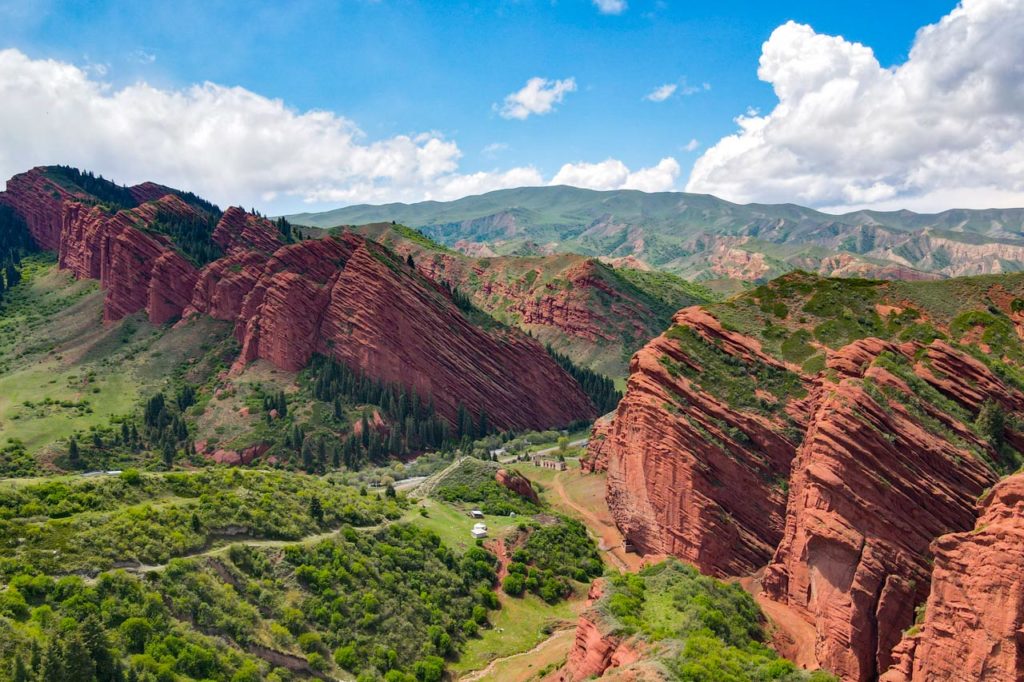
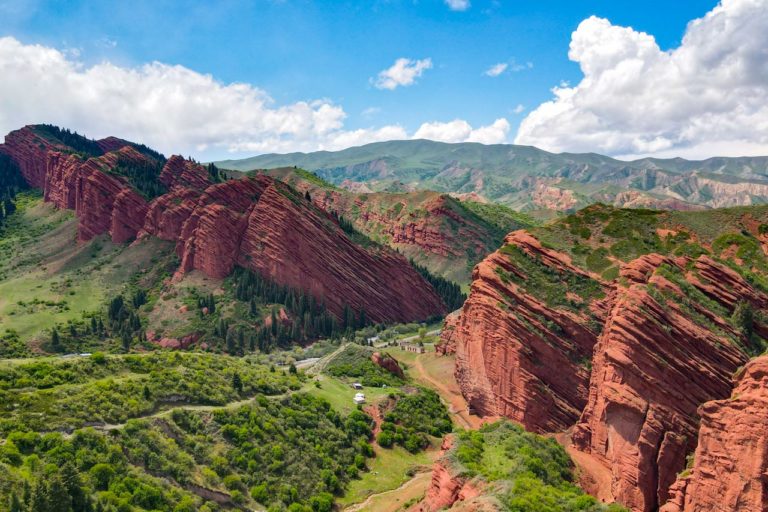
After breakfast, visit Skazka Canyon (“Fairytale” in Russian), where wind and time have carved the rocks into surprising shapes and sizes. Keep an eye out for formations that resemble skyscrapers, castles or animals. Next, head toward Barskoon Gorge, famous for its waterfalls. The best known, “Tears of a Leopard”, sits near a monument to Yuri Gagarin, the first cosmonaut, who loved this spot and often rested at the nearby Tamga military sanatorium. Continue to Jeti-Oguz Gorge. Its name means “seven bulls” in Kyrgyz, after seven giant red-brown rock formations that resemble bulls standing together. Take a walk here to enjoy the striking landscape. Arriving in Karakol, visit the city’s landmark sights, including the Russian Orthodox Cathedral and the Dungan Mosque. For dinner, try ashlan-fu, a specialty of Dungan cuisine unique to this region.
Skazka Canyon, Barskoon Valley, Jeti Oguz, Karakol, Karakol Orthodox cathedral, Karakol Dungan Mosque
- Bokonbaevo → Karakol
Overnight: Karakol (Hotel)
Meals: Breakfast
Enjoy breakfast at the hotel before departing toward the border. Cross from Kyrgyzstan into Kazakhstan – ready for another stamp in your passport! After completing border formalities, meet your Kazakh guide and driver and continue into Kazakhstan as the landscape gradually shifts around you. Along the way, visit Charyn Canyon, one of Kazakhstan’s most striking natural landmarks. Explore its dramatic rock formations from several viewpoints – it is often compared to a “mini Grand Canyon” for its scale and color. Continue toward Almaty, driving through scenic steppe and mountain scenery, and arrive in Kazakhstan’s largest city.
Charyn Canyon, Almaty
- Karakol → Almaty (390 km)
Overnight: Almaty (Hotel)
Meals: Breakfast
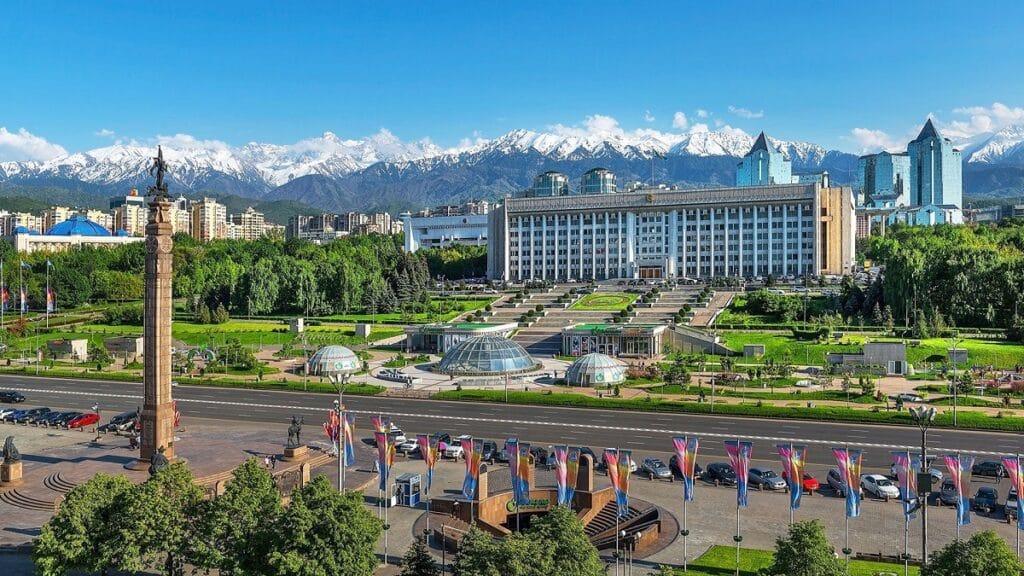
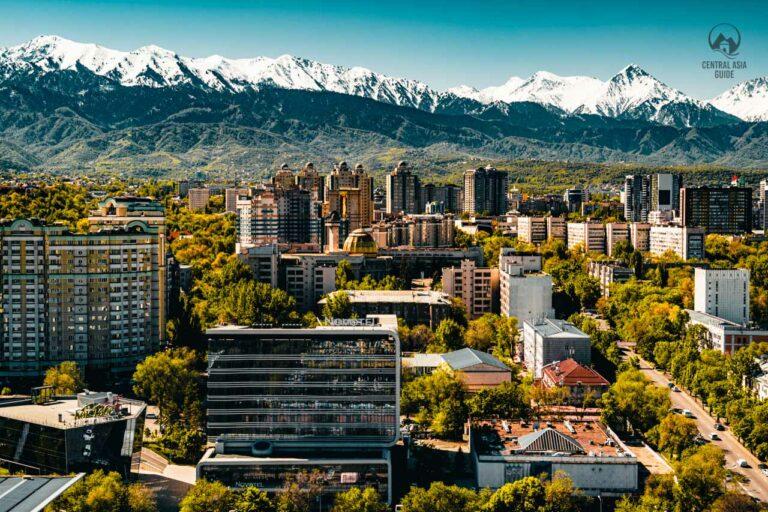
Enjoy breakfast at the hotel before setting out to discover Almaty on a light walking tour of the city’s main highlights. Visit Republic Square, stroll through Panfilov Park and admire the beautiful Zenkov Cathedral. Then explore the lively Green Bazaar, where local colors, aromas and flavors bring the city’s everyday life vividly to the surface. Next, head to Kok-Tobe, the highest point in the city, known for its sweeping panoramic views in every direction. Getting there is part of the experience: a cable car ride starting near Hotel Kazakhstan glides over some of Almaty’s oldest neighborhoods and its lush fruit-growing gardens. At the top you’ll find the iconic 372-meter TV Tower, visible from across the city, along with stunning mountain and city views and a handful of attractions to enjoy. In the evening, dinner at a local restaurant.
Almaty, Panfilov Park, Zenkov Cathedral (Ascension Cathedral), Almaty Green Bazaar, Kok Tobe Mountain
Overnight: Almaty (Hotel)
Meals: Breakfast, Dinner
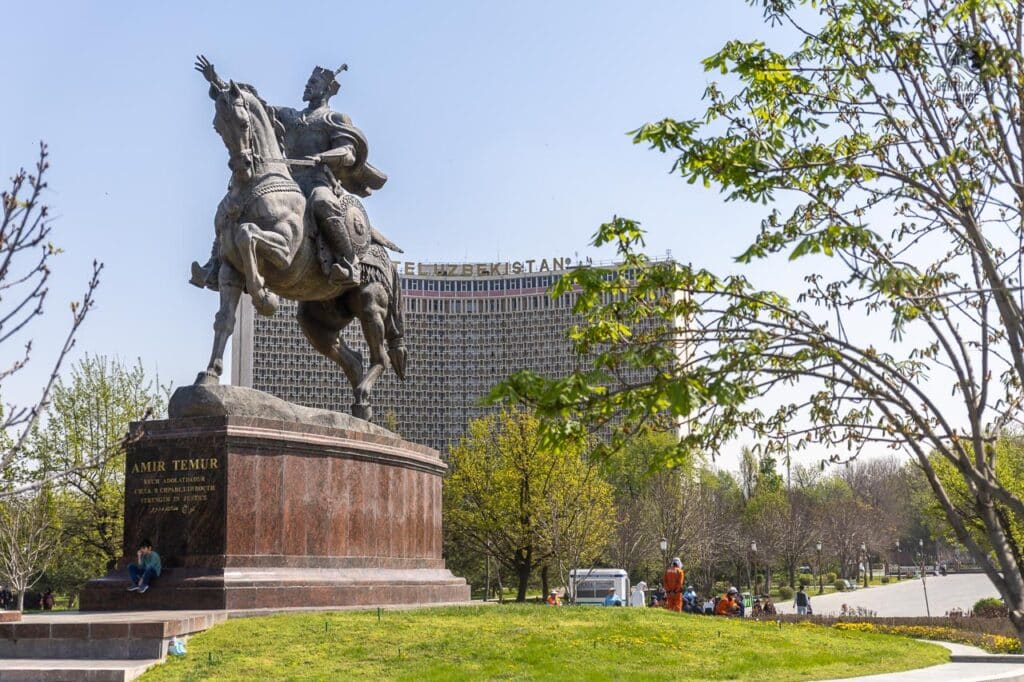
Enjoy breakfast at the hotel, then transfer to the airport for your flight to Tashkent (Kazakhstan → Uzbekistan). On arrival, you’ll be welcomed by our local team and transferred to your hotel (standard check-in from 14:00). Flight times are subject to change – Almaty–Tashkent flights operate daily at varying schedules. Begin your tour in Tashkent’s historic heart at the Khast-Imam Complex, home to the Barak-Khan Madrasa, the Tilla-Sheikh Mosque and the Kaffal Shashi Mausoleum. Afterward, discover the modern side of Tashkent, starting at Independence Square, one of the largest public squares in the world and a powerful symbol of Uzbekistan’s sovereignty. Continue to the Memorial to the World War II Victims, followed by the Monument of Courage, commemorating the devastating 1966 earthquake. Finish the day exploring the legacy of Amir Temur, the celebrated Central Asian conqueror and statesman, at the Amir Temur Museum and Square. Return to the hotel for an overnight stay.
Tashkent, Hazrati Imam complex, Tashkent Independence Square, Amir Temur Square
- Almaty → Tashkent
Overnight: Tashkent (Hotel)
Meals: Breakfast
Enjoy breakfast at the hotel before transferring to the train station at 07:30 for your 08:30 departure to Samarkand, arriving at 10:55. Our sightseeing starts at the Gur-Emir Mausoleum, the resting place of Tamerlane and one of the city’s most majestic complexes. Originally built as a khanaka and madrasa for Muhammad Sultan, Timur’s grandson, it later became the tomb of Amir Timur and his descendants. Next comes Registan Square, the vibrant heart of Samarkand, whose name means “place of sand”. The square is framed by three madrasas: the 15th-century Ulugbek Madrasa, the 17th-century Sher-Dor Madrasa and the Tillo-Kori Madrasa, famed for its golden dome. We continue to the Bibi-Khanym Mosque, the largest 15th-century mosque in Central Asia, built in honor of Tamerlane’s wife, and Siyab Bazaar, Samarkand’s oldest market. The day ends at the Shakhi-Zinda Necropolis, a stunning complex of eleven mausoleums built between the 14th and 15th centuries, adorned with shimmering blue tiles. Its main mausoleum is attributed to Kusam ibn Abbas, a cousin of the Prophet Muhammad; “Shakhi-Zinda” means “The Living King” in Persian. Return to the hotel for an overnight stay.
Gur-e Amir Mausoleum, Registan, Bibi-Khanym Mosque and Mausoleum, Siyob Bazaar, Shah i Zinda
- Tashkent → Samarkand
Overnight: Samarkand (Hotel)
Meals: Breakfast
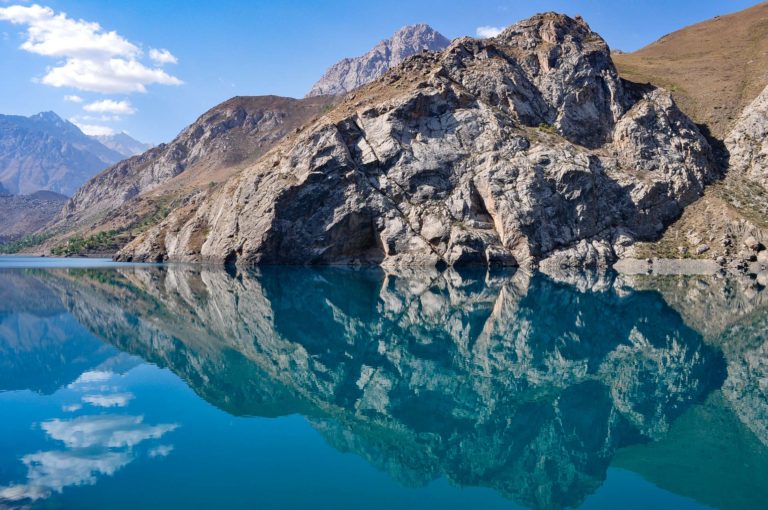
Enjoy breakfast at the hotel before meeting your driver at 09:00 for the transfer to the Jartepa–Sarazm border crossing (Uzbekistan → Tajikistan). Around 10:00, meet your local Tajik team and continue to the Marguzor Lakes. En route, visit the Sarazm archaeological site and museum, a UNESCO World Heritage Site with a history stretching back 5,500 years, followed by the old central market in Penjikent. Drive along the lakes and villages, stopping for photos and to take in the scenery. In case of limited time, bad weather or poor road conditions, the drive continues only as far as Lake 6, the largest of the Marguzor Lakes; a visit to Lake 7 cannot be guaranteed. Optional lunch is available near Lake 3 (own expense). By 16:30, return to the border, where you’ll be met by your Uzbek team for the transfer back to your hotel in Samarkand.
Sarazm, Panjakent, Haftkul – Seven lakes
- Samarkand → Haftkul – Seven lakes
- Haftkul – Seven lakes → Samarkand
Overnight: Samarkand (Hotel)
Meals: Breakfast
Enjoy breakfast at the hotel before transferring to the train station at 09:00 for your 10:00 departure to Bukhara, arriving at 11:45. In Bukhara we visit the Faizulla Khojayev House-Museum, the family home of a prominent statesman and politician whose father was a wealthy 19th-century merchant, and the Chor-Minor Madrasa (1807), whose four uniquely decorated towers (“Four Minarets”) symbolically represent the world’s major religions. We continue to Sitorai Mokhi-Khosa, the summer residence of Bukhara’s last Emir, a striking blend of Eastern and Russian architectural styles, and the Bahauddin Naqshband Mausoleum, one of Central Asia’s most significant Muslim sanctuaries, often called the region’s “Mecca”. After the excursion, transfer to the hotel.
Fayzulla Khujayev House, Chor Minor, Sitori-i Mokhi Khosa palace, Bakhauddin Naqshband Mausoleum
- Samarkand → Bukhara
Overnight: Bukhara (Hotel)
Meals: Breakfast
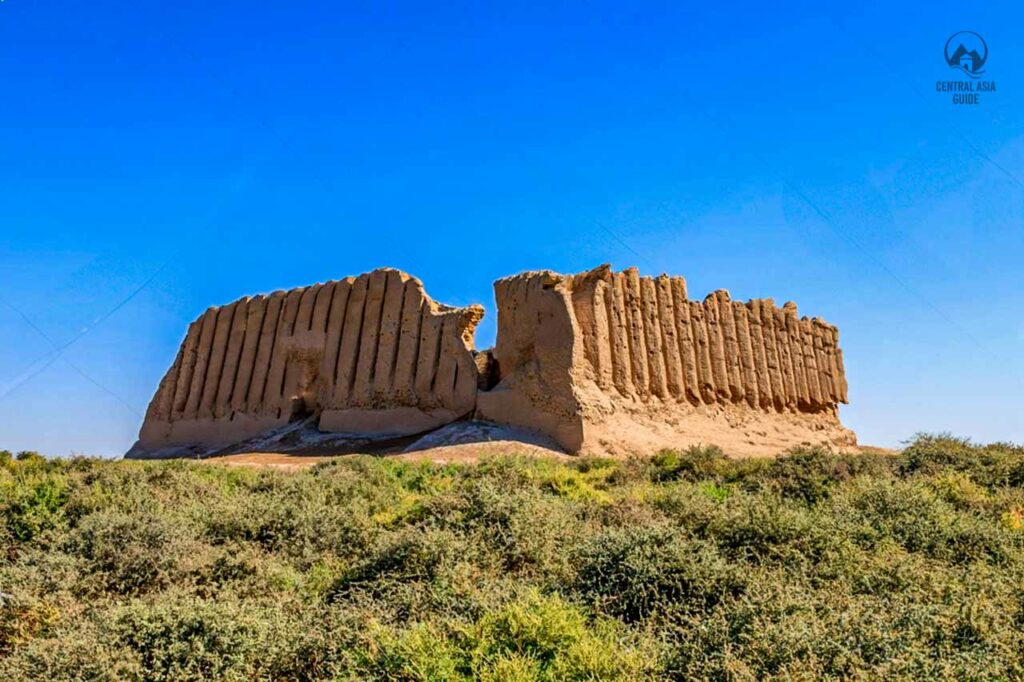
Enjoy breakfast at the hotel before transferring to the Farab border at 08:00 (Uzbekistan → Turkmenistan). Your Turkmen local team will meet you at the border for the transfer to Merv (255 km, about 5 hours). Explore Ancient Merv, once ranked among the most important cities of the Islamic world alongside Baghdad, Cairo and Damascus. Highlights include the Greater and Lesser Kyz Gala (6th–7th century), the Complex of Askhabs (8th–14th century), Erk Gala (6th century BC), Gyaur Gala (4th century BC), the Hoja Yusup Hamadani complex and the mausoleums of Sultan Sanjar and Muhammad ibn Zeid. After sightseeing, continue to Mary (35 km, about 40 minutes) for an overnight stay.
Merv, Mary
- Bukhara → Mary
Overnight: Mary (Hotel)
Meals: Breakfast
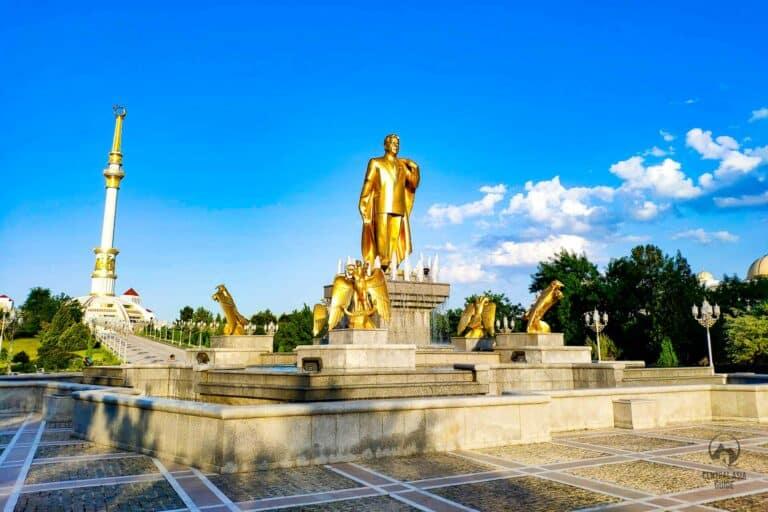
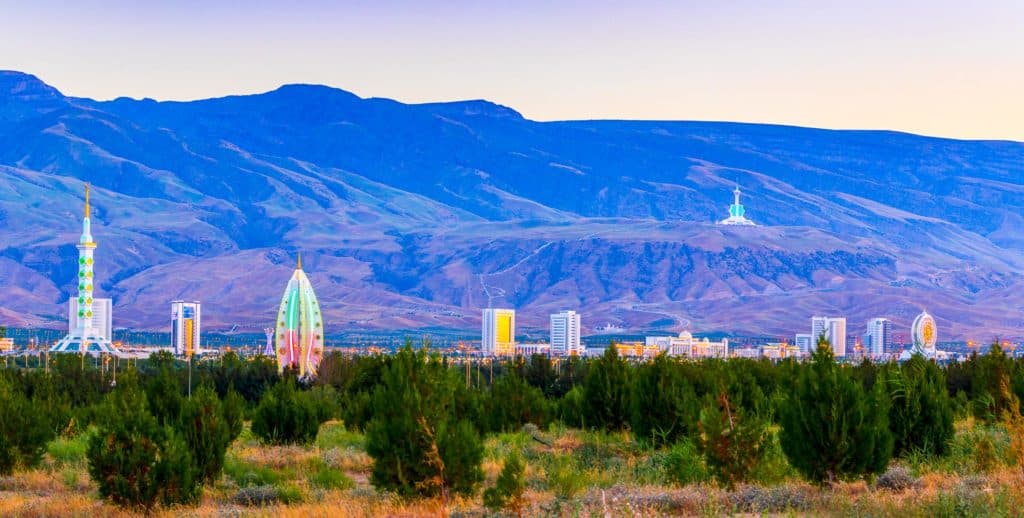
Enjoy breakfast at the hotel before driving to Ashgabat (360 km, about 4 hours). Upon arrival, enjoy a city tour of Turkmenistan’s striking capital. In 2013, the Guinness Book of Records recognized Ashgabat as the “white marble city”, home to the largest concentration of white marble buildings in the world. Highlights include the Monument and Park of Independence, Ashgabat’s main flagpole, the Arch of Neutrality, the Constitution Monument, the Ferris Wheel and the Wedding Palace, along with a panoramic view over the city from the Halk Hakydasy Memorial Complex atop the hill.
Ashgabat
- Mary → Ashgabat (360 km)
Overnight: Ashgabat (Hotel)
Meals: Breakfast
Enjoy breakfast at the hotel, then visit the National Museum of History & Ethnography, home to a rich collection of over 500,000 ancient artifacts from Turkmenistan across nine themed halls. The Hall of Ancient History features flint tools from the Mesolithic era used by prehistoric peoples of western Turkmenistan, alongside Neolithic ceramics and ornaments from the earliest settlements along the northern slopes of the Kopet-Dag. Next, drive to Nissa Fortress, the “Sanctuary of Parthian Kings” and a UNESCO World Heritage Site since 2007. The ruins of this ancient settlement lie 18 km from Ashgabat, in the village of Bagyr. On the return journey, stop at the Turkmenbashi Ruhy Mosque and Mausoleum, once the largest mosque in Central Asia at the time of its construction. Finish the day at the Horse Stable, home to Turkmenistan’s national pride, the Akhal-Teke, widely considered one of the world’s most beautiful horse breeds. Bred by Turkmens for over 5,000 years, this unique breed has never been crossed with others; the farm is home to more than 35 of these striking horses.
Ashgabat, Nisa
Overnight: Ashgabat (Hotel)
Meals: Breakfast
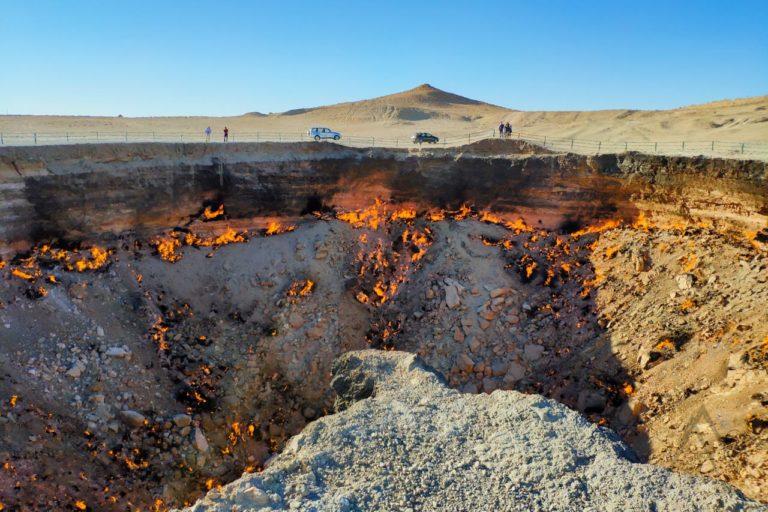
Enjoy breakfast at the hotel, then set off to visit the “Altyn Asyr” Oriental Bazaar (open Wed, Thu, Sat, Sun) at Jygyldyk, 20 km north of Ashgabat. One of the largest open-air bazaars in the world, it’s packed with colorful rugs, jewelry, carpets, silk, traditional Turkmen costumes and, in other sections, livestock. If the bazaar is closed on the day of your visit, you’ll instead visit Gulistan Bazaar, known locally as the “Russian Bazaar”, the oldest covered market in the city. In the afternoon, drive to the Darvaza Gas Crater (276 km, about 4 hours), one of Central Asia’s most iconic sights. Fed by the region’s abundant natural gas reserves, the crater has been burning continuously for over 50 years, glowing in the heart of the Karakum Desert. Along the way, you’ll also have the chance to see nearby water and mud craters. As night falls and the crater lights up the sky, settle in for a barbecue dinner and an overnight stay in a Turkmen yurt or private tent camp.
Karakum Desert, Darvaza Gas Crater
- Ashgabat → Darvaza Gas Crater (276 km)
Overnight: Darvaza Gas Crater (Yurt camp)
Meals: Breakfast, Dinner
Start the day with a picnic-style breakfast in Darvaza before driving back to Ashgabat (276 km, about 4 hours). Upon arrival, enjoy some free time for last-minute shopping and packing. End of service, with departure from Ashgabat.
Ashgabat
- Darvaza Gas Crater → Ashgabat (276 km)
Meals: Breakfast
Download the itinerary
Tour Price
Group Tour Price
Single room supplement: $490
Optional extras
Pre-tour accommodation in Bishkek (1 night): double/twin room $120, single room $90
Post-tour accommodation in Ashgabat (1 night): double/twin room $160, single room $120
What's included
Included
- ✓Small group tour.
- ✓Private transportation throughout.
- ✓English-speaking guide.
- ✓Accommodation as per program.
- ✓Meals as per program (14 breakfasts, 2 lunches, 4 dinners).
- ✓Flight: Almaty – Tashkent (economy class).
- ✓Train ticket: Tashkent – Samarkand (economy class).
- ✓Train ticket: Samarkand – Bukhara (economy class).
- ✓Visa support letters for Kyrgyzstan, Kazakhstan, Tajikistan, Uzbekistan and Turkmenistan tourist visas.
Not included
- –Airport transfer: 50 USD one way per person.
- –Personal expenses and travel insurance.
- –Extra night in Bishkek: 120 USD (double/twin room) / 90 USD (single room).
- –Extra night in Ashgabat: 160 USD (double/twin room) / 120 USD (single room).
- –Visa fees (if required).
- –Any services not listed above.
Nargiza is the office manager of Central Asia Guide and mostly responsible for multi country "Stan" tours.
Where you'll stay
-
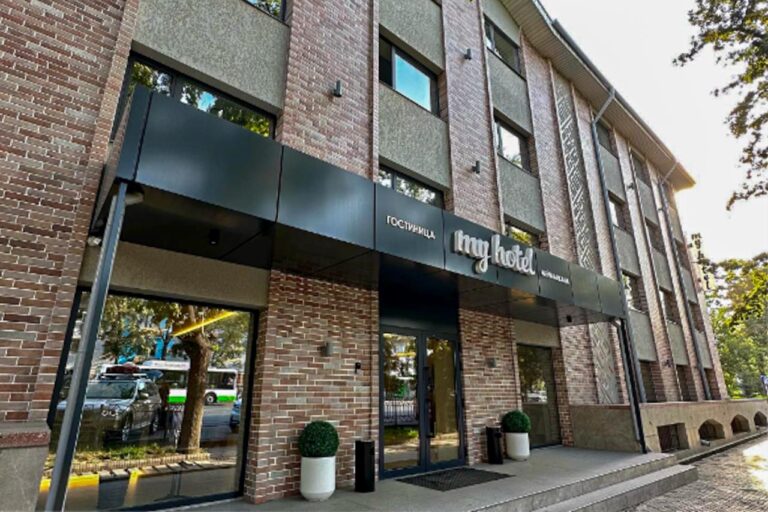
Night 1
Bishkek
My Hotel or similar
-
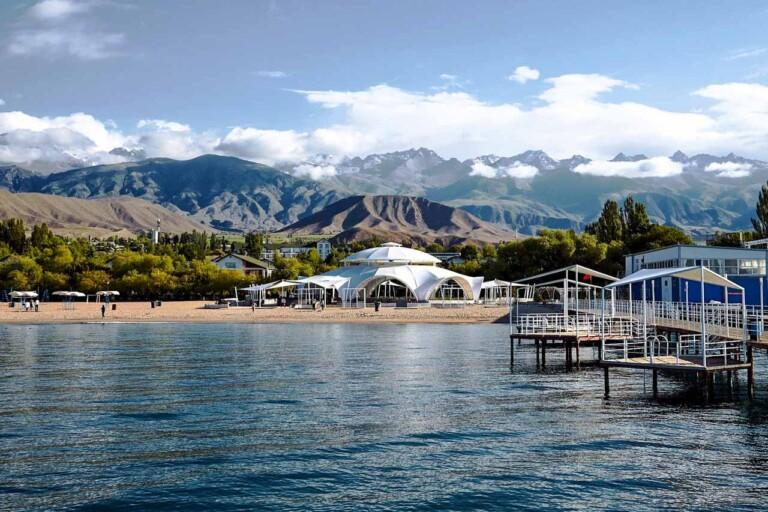
Night 2
Cholpon Ata
Caprice Lakeside Resort or similar
-
Night 3
Royal Gate yurt camp
Royal Gate yurt camp or similar
-
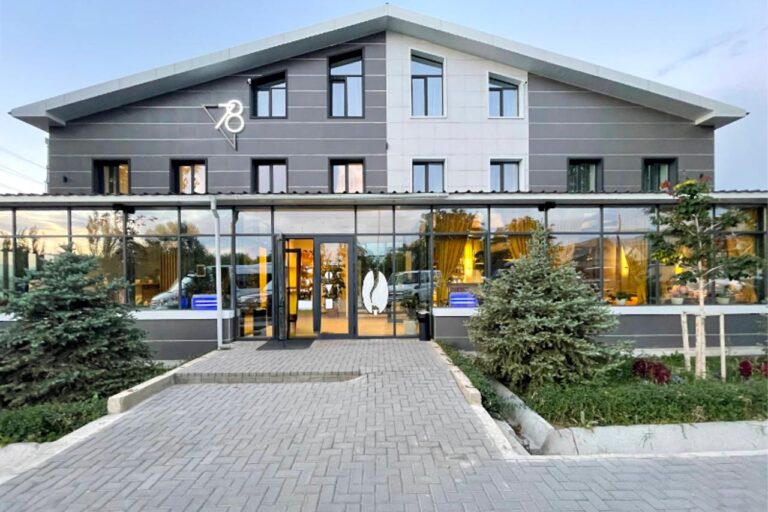
Night 4
Karakol
Hotel 78 or similar
-
Nights 5–6
Almaty
Kazzhol Hotel or similar
-
Night 7
Tashkent
Art Deluxe Hotel or similar
-
Nights 8–9
Samarkand
Zilol Baht Hotel or similar
-
Night 10
Bukhara
Al Hayat Hotel or similar
-
Night 11
Mary
Taj Palace Hotel or similar
-
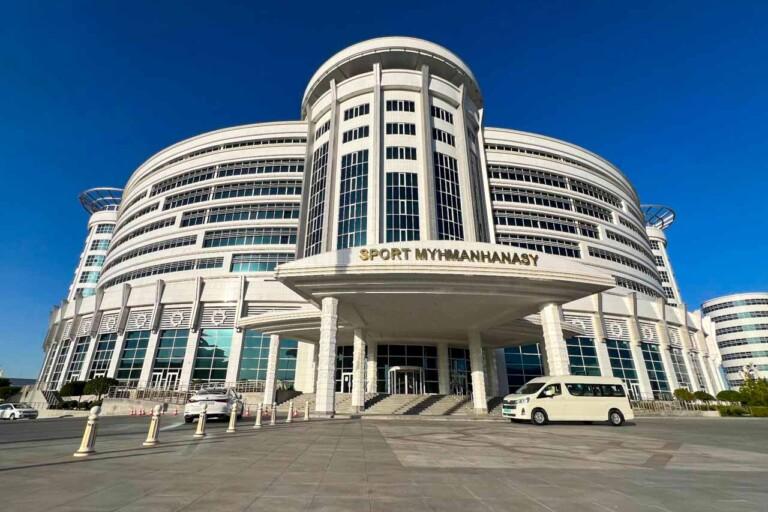
Nights 12–13
Ashgabat
Sport Hotel or similar
-
Night 14
Darvaza Gas Crater
Darvaza yurt camp or similar
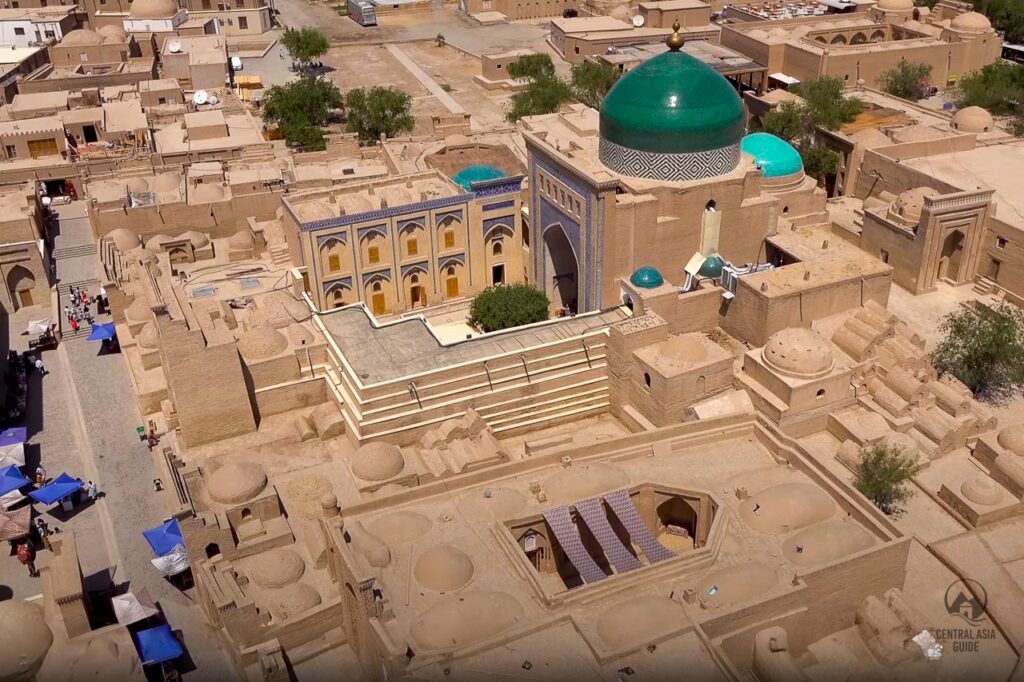
Good to know
- Hotel check-in after 14:00, check-out before 12:00.
- Set menus include salad, soup, main course, bread, tea and water.
- The hotel list is subject to availability and may vary depending on the departure date.
- Most flights to Bishkek arrive late at night or early in the morning, so we highly recommend booking an extra night at the hotel before the tour starts.
Uzbekistan travel information
Practical essentials for each country on this tour. Open a topic to read more.
Visa policy
Find your country from the list and check possible visa requirements for Kazakhstan, Kyrgyzstan, Tajikistan, Turkmenistan and Uzbekistan before booking. For Turkmenistan most tourists require a letter of invitation and a visa based on it.
The official currency is the Kyrgyz som (KGS). Bishkek has plenty of ATMs, but outside the larger towns and the northern shore of Issyk-Kul cash is how almost everything is paid.
ATMs and cards
Some ATMs in Bishkek dispense US dollars as well as som. Beyond the capital, ATMs are found in the few largest towns but mostly not in smaller ones, except on the northern shore of Issyk-Kul. Mastercard works in all ATMs, but Visa is still the more widely accepted card. Demirbank's red ATMs have lately been the best option for foreign cards, with moderate fees.
Exchanging money
Exchange offices in the major cities change US dollars, euros and roubles into som. Notes must be clean, fresh and without any signs of wear. Exchange offices prefer larger notes from 50 USD and 50 EUR, and sometimes give a better rate for them.
Paying by card
Cards are accepted in major hotels, restaurants, large supermarkets and some museums in Bishkek and Osh, and occasionally even in taxis. Elsewhere, apart from the northern shore of Issyk-Kul, paying by card is not practical.
Kyrgyzstan is generally safe for travellers and tourism is growing fast, but the usual precautions matter.
Documents
Always carry your passport or a notarised copy. Without proper identification you can be detained by the police.
In towns
- Robberies, some of them violent, and thefts happen especially in crowded places such as the bazaars. Take care after dark.
- Sexual harassment has been reported on public transport. Avoid walking or travelling alone, especially at night.
- Book taxis in advance from established services.
- Stay away from crowds and demonstrations.
- Watch where you step: some streets have large holes and pavements are often uneven.
Laws and customs
- Respect local traditions, customs, laws and religious practices.
- Possessing or using narcotics is strictly prohibited.
- Do not photograph anything related to the armed forces or security services.
- Same-sex relationships are legal but not widely discussed or publicly recognised.
Border areas
Smuggling makes the southern border zones with Uzbekistan and Tajikistan unstable and best avoided.
Kyrgyzstan is visa-free for travellers from many countries. Others can apply for an electronic visa or through an embassy.
Visas
For a tourist visa, most passport holders need an invitation letter from a tourism company. Kyrgyzstan has had an electronic visa system since 1 September 2017.
Border regions
Visiting border regions requires a special permit.
The best times to visit Kyrgyzstan's lower areas are May–June and September. In the high mountains, July and August are best.
Lower areas: May–June and September
In late spring and early autumn the valleys, Issyk-Kul's shores and the towns are green or golden, days are pleasant rather than hot and there are fewer visitors.
High mountains: July and August
This is when the high pastures, yurt camps and mountain passes are open, and trekking and horse-riding routes that are under snow the rest of the year can be reached. Days in the valleys can reach about 30°C, and nights at altitude can still be close to freezing. Summer is also the time of festivals celebrating Kyrgyz traditions.
Winter
Winters in the highlands are long and close the high passes, but it is still a captivating season. Hiking, horse riding and skiing are all possible, and yurt stays are available too.
Healthcare in Kyrgyzstan is basic and medical facilities are scarce, so comprehensive medical and travel insurance is essential.
Medicines
If you rely on regular medication, bring enough for the whole trip: it can be hard or expensive to find locally.
Insurance
Arrange comprehensive medical and travel insurance before you arrive. A serious accident or illness may mean emergency air evacuation to a neighbouring country.
Food and water
Treat tap water and other local water as contaminated and boil it before drinking; bottled water is the safest choice throughout your stay. Be careful with unpasteurised dairy and other animal products.
Vaccinations
Vaccinations against polio and tuberculosis are recommended before entering the country, and others may also be advisable. Ask your doctor or travel clinic.
The official currency is the tenge (KZT), and Kazakhstan has the most advanced banking system in the region.
ATMs and exchange
ATMs are widespread in the major cities, in banks, hotels and shopping centres, but most dispense only tenge. Every city has exchange offices for US dollars, euros, roubles, pounds, Chinese yuan and Kyrgyz som, and changing dollars or euros into tenge is easy at banks and exchange offices.
Paying by card
International cards are accepted in most hotels, restaurants and large supermarkets. Smaller shops usually take cash only and often have little change, so carry smaller notes.
The security situation is stable, but it can change. A few precautions go a long way.
Documents
Always carry original identification such as your passport, as police patrols may ask for it. When approached by a police officer, driver or official, ask to see their identification.
Crime and scams
- Petty crime such as pickpocketing, bag theft and car break-ins is common. Keep valuables out of sight and be vigilant, especially at night.
- Never leave food or drinks unattended or with strangers.
- Be careful of online scams.
- Stay away from demonstrations and political gatherings, and leave the area if there is unrest nearby.
Getting around
- Avoid walking alone and arrange transport in advance. Do not use unofficial taxis.
- On trains, keep your passport and travel documents safe and lock the compartment, especially on night trains.
- Roads are well maintained in and around the major cities, but rural roads may be in poor condition.
Laws and customs
- Smoking, including e-cigarettes, is banned near schools, playgrounds and medical facilities, in public places such as museums, public transport, airports, stations and underpasses, and in cars carrying children.
- Possessing or using illegal drugs can lead to a long prison sentence.
- Photography is restricted near military sites, border areas, airports and some official buildings. Avoid sharing images that could be seen as disrespectful to religion, culture or national symbols.
- Same-sex relationships are not illegal, but tolerance varies, especially outside the major cities.
Kazakhstan's visa rules depend on your passport. Check whether you need a visa for your visit.
Passport
If you enter visa-free, your passport only needs to be valid for the length of your stay. With a visa, it must be valid for six months beyond the end of your stay.
Visas and registration
For a tourist visa from an embassy or an electronic visa, you first need a letter of invitation (LOI). You may need to register after arriving in the country.
The best times to visit Kazakhstan are spring (April to June) and autumn (September to November), avoiding the hot summers and snowy winters.
Summer and winter
Kazakhstan has a harsh continental climate, at its most extreme in the central steppe and around the capital, Astana. Temperatures can rise above 40°C in June to August and drop to −20°C in December to February.
Before you travel, make sure the places you are going can provide any medical help you might need, and that your travel insurance covers treatment and unexpected medical evacuation.
Medical care
Medical staff often speak little English.
Medicines
Non-prescription medicines are easy to buy. For prescription medicines you need a prescription from a local doctor, or a foreign prescription translated into Kazakh or Russian.
The local currency is the Uzbek sum. Uzbekistan is still mostly a cash economy, but money is easy to exchange and ATMs are common in the larger cities.
Exchanging money
Banks exchange US dollars, euros, British pounds and Japanese yen. There are exchange offices in major cities such as Bukhara and Khiva and at Tashkent airport; elsewhere you need a bank, which often gives a better rate anyway. Your notes must be in pristine condition. Sum is hard to exchange outside Uzbekistan, but you can change it back to US dollars at a local bank.
Cards and ATMs
Cards are accepted in upscale hotels and restaurants in Tashkent and the main tourist cities, with Visa more widely recognised than Mastercard and a standard 3% commission. ATMs dispense sum and are easy to find in the larger cities; many also offer US dollars.
Uzbekistan is generally a safe destination, with little religious extremism and few crimes against foreigners.
Documents
Always carry your passport: it is a legal requirement, and police carry out routine checks.
Getting around
- Use licensed taxis. Local taxi apps are the easiest way to get a ride at local prices, and Yandex works very well in Tashkent and Samarkand. If you take a taxi on the street or at the airport, agree the price first.
- Many roads outside Tashkent, especially in the Tian Shan and Fan mountains, are in poor condition. Driving standards are generally low, and rural roads are often unlit, so night driving is riskier.
- On night trains, keep valuables safe, do not leave belongings unattended and lock the compartment door from the inside.
- Watch your belongings as you would anywhere, and avoid demonstrations and large gatherings.
Laws and customs
- Possessing narcotics is strictly illegal.
- Same-sex relationships are illegal and still socially condemned. Avoid public displays of affection.
- Drones are in practice banned. Permits can be applied for but are very rarely granted.
Photography
Be discreet near government buildings such as the Palace of Forums in Tashkent, and sometimes at local markets that see few tourists. Restrictions have eased, but check before photographing near airports, border checkpoints, military sites, bridges and police stations.
Earthquakes
Uzbekistan is prone to earthquakes, mostly tremors, though stronger ones occasionally occur.
Entering Uzbekistan is straightforward when your documents are in order. Citizens of many countries can visit visa-free, and for many others a visa is easy to get without an invitation.
Registration
Registration rules are stricter than elsewhere in Central Asia: by law you must be registered within 3 days of arrival. Hotels usually do this for you, but register yourself if you stay longer than 3 days in, for example, a rented apartment. Border officers check the registrations when you leave and may ask for the paper slips, so keep them until you exit the country.
Customs
Exporting handcrafted items older than 50 years is prohibited. At land borders, customs officers may check your phone and photos for explicit or confidential material, though this has become very rare.
The best times to visit Uzbekistan are spring (March to May) and autumn (September to November), between the summer heat and the winter cold.
Summer
At the height of summer the land dries out, especially in the countryside, and temperatures rise well above 30°C, often up to 40°C.
Winter
From November to March it can get cold, sometimes below zero, but the skies are mostly clear and bright. Snow is occasional and usually melts within a day or two.
Medical services in Uzbekistan have improved in recent years but are still limited, so good travel insurance that includes evacuation is essential.
Food and water
To avoid traveller's diarrhoea, drink only bottled, filtered or boiled water, and do not use tap water for brushing your teeth or for ice. Choose meat and fish that are thoroughly cooked and served hot.
Medical care
Uzbekistan has a state healthcare system and a small private sector. Larger clinics serve the cities and regional hospitals the countryside. Hospitals usually ask for payment in cash up front, even if you are insured, and serious cases may need evacuation home. Contact your insurer straight away if you need urgent care, and check before you leave what your insurance covers in Uzbekistan.
Medicines
Pharmacies are private, and the range of medicines can be limited. Prescriptions generally require a doctor's consultation. If you travel with medication, check the rules with the embassy, a consulate or Uzbekistan's Ministry of Health.
The official currency is the manat. Most shops and restaurants take cash only, so carry your money in cash, preferably new US dollar notes.
Cards and ATMs
A Visa card works for payments or cash withdrawals in some hotels and banks, but most ATMs only accept local Turkmen cards.
Exchanging money
US dollars are easy to exchange throughout the country, but euros only in Ashgabat, and euro notes are not widely accepted. Exchange money legally at banks, and only as much as you expect to spend: manat cannot be changed back into dollars. The official rate is fixed at 3.50 manat to the US dollar; there is no fixed rate for euros.
Keep a reserve
A cash reserve for unexpected situations is wise anywhere in Central Asia, and especially in Turkmenistan.
Turkmenistan is a safe country as long as you stay within the law; overstepping it can have unpleasant consequences.
Staying safe
- Carry identification with you at all times while travelling around the country.
- Wear a money belt, keep an eye on your belongings, avoid poorly lit streets at night and do not use unofficial taxis when travelling alone.
Photography and internet
- Photographing military zones, transport hubs and government buildings is prohibited by law. People may also be sensitive about being photographed without consent.
- Several social media apps and websites are blocked and cannot be used without a VPN.
- Drones are in practice banned.
Laws and customs
- Avoid public displays of affection. Homosexuality is illegal. Relationships with Turkmen women are best avoided, as they can lead to fines and deportation.
- Avoid talking about politics, human rights, religion, or criticising the president, the country or its people.
- During Ramadan, the Muslim holy month whose dates move each year, eating, drinking, smoking and chewing gum in public are forbidden in daylight hours, as are loud music, dancing, revealing clothing and swearing in public.
- Smoking is banned in all public places except designated smoking areas. Possessing or using illegal drugs can mean a long prison sentence.
Earthquakes
Turkmenistan is prone to earthquakes, mostly tremors, though stronger ones occasionally occur.
All international visitors need a visa for Turkmenistan.
Letter of invitation
A tourist visa requires a letter of invitation (LOI) approved by the State Migration Service of Turkmenistan, applied for by a licensed tour operator in the country.
Booking with us
When you book a tour with Central Asia Guide, we always arrange the letters of invitation, and the visa is issued on arrival at the land borders or Ashgabat airport.
The best times to visit Turkmenistan are March to June, when the sun shines and temperatures are pleasant, and September to November. Spring is especially lovely, with a short burst of delicate flowers and green landscapes.
Summer
Turkmenistan's dry continental climate makes it one of the hottest places in Central Asia. July and August are the least favourable months, with temperatures in Ashgabat reaching 50°C. Most of the main sights are in the treeless desert, but the Caspian coast is usually milder than inland and suits summer travel.
Winter
Cold weather arrives in December, with temperatures below 0°C, occasional frosts down to −20°C and snow in parts of the country.
Medical services in Turkmenistan are rudimentary at best. Make sure your insurance covers unforeseen medical situations, including repatriation.
Food and water
To avoid traveller's diarrhoea, drink only bottled, filtered or boiled water, and do not use tap water for brushing your teeth or for ice. Avoid ice cream. Choose meat and fish that are thoroughly cooked and served hot, cook vegetables and peel fruit.
Vaccinations
Vaccinations against diphtheria, hepatitis A and tetanus are advisable.
Medical care
If you need urgent medical care, contact your travel insurer straight away. Check the rules for travelling with medicines before you go.
The official currency is the somoni (TJS). US dollars are accepted in some places, but the somoni is what you use day to day.
ATMs
Withdrawing cash can be difficult, so carry some cash with you. There are ATMs in Dushanbe, Panjakent, Khujand, Khorog, Isfara, Istaravshan and Bokhtar (Kurgan-Tube), and even in smaller towns, but not in Murghab. Eskhata Bank in Dushanbe is a reliable choice for US dollars and has a generous limit for somoni withdrawals. ATMs may be harder to find at weekends, and ATMs that take Mastercard can be tricky to find.
Exchanging money
US dollars and euros are widely accepted, though in rural areas without exchange offices people often prefer dollars. Changing money on the black market is illegal.
The overall security situation is generally stable and Dushanbe is relatively safe, though robbery and petty crime occasionally happen, and foreigners can be targets.
Documents
Always carry a copy of your passport's photo page, as the authorities may ask for identification.
Staying safe
- Avoid demonstrations and large gatherings, and stay alert in public places.
- Do not leave drinks unattended, decline drinks from strangers and keep an eye on how much you drink.
- If you are followed or harassed at the airport, report it right away to your tour agent or the consular office at the airport.
- Women travelling alone may face unwanted attention or harassment.
Laws and customs
- Respect local traditions, customs, laws and religions.
- Smoking while walking in the street is prohibited.
- Possessing or using drugs is strictly illegal.
- Photographing anything related to the military or security services can cause trouble with the authorities.
- Same-sex relationships are not illegal, but local views are conservative and tolerance varies, especially outside the major cities.
Roads and services
- Vehicles are often poorly maintained and driving standards are basic. Fuel stations are rare outside the cities and emergency services may not be available, so bring what you need and expect delays.
- Roads outside the major cities are poor and some are passable only by four-wheel drive. Spring is especially hazardous because of avalanches and landslides.
- Energy and water shortages and power cuts are common, especially in winter and spring and mostly outside Dushanbe.
Border areas and nature
- Avoid the border area with Afghanistan because of the unstable security situation there.
- Kyrgyzstan and Tajikistan signed a border treaty in 2025 after the clashes of 2022, and the northern Sughd region, including Khujand, is safe to visit.
- Tajikistan is prone to earthquakes, avalanches, landslides and floods.
Visitors from many countries can travel to Tajikistan visa-free. Leave the country before your visa or visa-free stay runs out, to avoid fines and having to get an exit visa.
Pamirs (GBAO) permit
A permit is required to visit the Gorno-Badakhshan Autonomous Region (GBAO).
Borders and customs
Tajikistan's borders can close at short notice. Declare large amounts of money on arrival, and show the customs declaration when you leave.
The best months to explore Tajikistan are April, May, June, September and October. September may be the very best: the heat on the plains has eased and nearly all mountain passes are still open.
Autumn
In September the markets are full of fresh produce and the landscape turns golden.
The Pamirs
The best time to visit the Pamirs is August.
Summer and winter
Summers are dry and very hot, up to 40°C in the lowlands. Winters can be extremely cold, down to −20°C in the mountains, and heavy snow in the west can disrupt winter routes and close the high passes.
Medical facilities in Tajikistan are limited and essential medicines are often in short supply. Outside Dushanbe facilities are basic, and some areas have almost none.
Insurance
Before you go, check that your destination can provide any medical help you might need, and make sure your travel insurance covers treatment and unexpected medical evacuation. If you are sent to a medical facility, contact your insurer straight away.
Medicines
Some medicines containing codeine are strictly prohibited. Check that any medication you bring is legal, and declare all medicines and other restricted items on arrival.
Vaccinations and risks
Ticks are common in forests and rural areas from spring to autumn. Improperly disposed uranium and pesticides in the northern Sughd region are a possible health hazard. At a minimum, get vaccinated against hepatitis A and B and tetanus before your trip.
Similar tours
More multi-country tours through Central Asia.
18 days
Sale
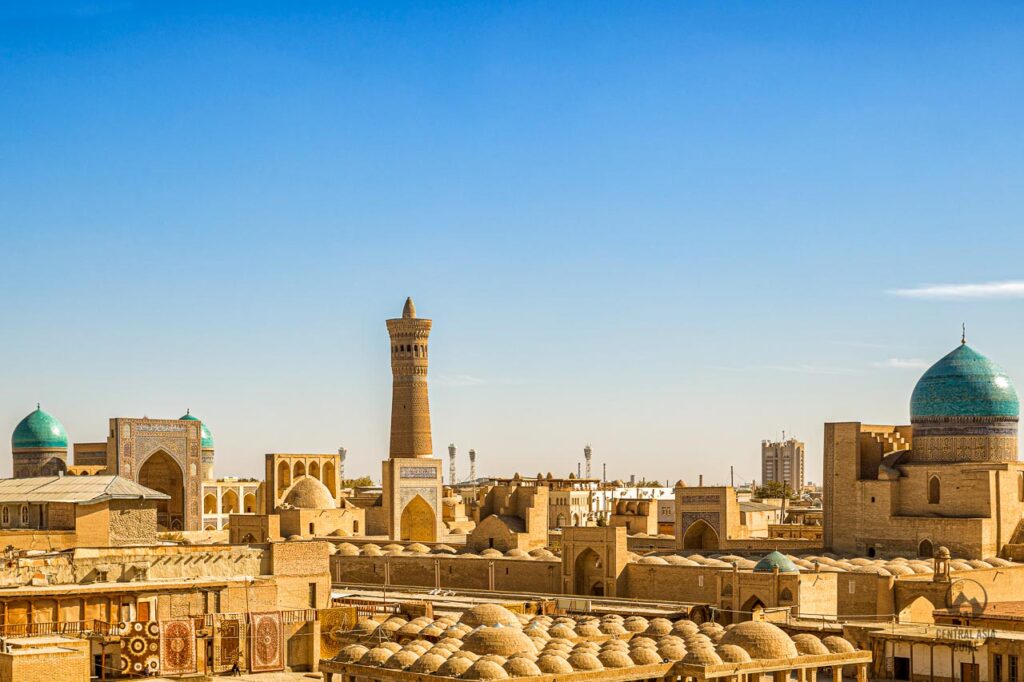
Four Stan Tour through Central Asia
Discover the legendary Silk Road on this 18-day small-group tour through Kyrgyzstan, Kazakhstan, Tajikistan and…
- Culture
- Multi-country
- +2
Starts in Bishkek Next departure 03/04/2027
22 days
Featured
The Best of the Five Stan Tour
Embark on a 22-day journey through all five countries of Central Asia, beginning in Bishkek and ending in Ashgabat. In…
- Culture
- Multi-country
- +2
Starts in Bishkek Next departure 30/10/2026
15 days
Sale
Five Stans of Central Asia Tour
Start on an extraordinary adventure across the heart of Central Asia with our Five Stan Tour, exploring the unique…
- Culture
- Hiking
- +3
Starts in Ashgabat Next departure 22/12/2026
Tour updated