Southern Kyrgyzstan and Uzbekistan tour
Accommodation, guides, transport included.
Tell us when you would like to travel and how many people you are. We will reply with availability and the current price for your dates.
Tour start date:
Southern Kyrgyzstan and Uzbekistan tour Highlights
A 9-day tour from Osh through southern Kyrgyzstan and Uzbekistan’s Fergana Valley, with a two-day horse trek in Sary-Chelek. It begins in Osh, the “southern capital” of Kyrgyzstan, with the sacred Sulaiman-Too mountain and its museum, and then crosses into the Uzbek part of the Fergana Valley. There you see how silk is made in Margilan, visit the pottery workshops of Rishtan and the Khudayar Khan Palace in Kokand, and explore the ruins of Ahsikent near Namangan, an ancient city destroyed by an earthquake in 1620, where archaeological excavations continue.
Back in Kyrgyzstan you stop for a picnic at the Papan Reservoir and the Laglan Canyons, see the medieval minaret and Karakhanid mausoleums of Uzgen and walk through the walnut forests of Arslanbob to its waterfalls. The two-day horseback journey through the Sary-Chelek Nature Reserve leads past mountain lakes, fir forests and alpine pastures, with panoramic views, fresh air and the peace of untouched nature. Along the way you stay in guesthouses and a yurt camp and enjoy a variety of traditional dishes from both countries.
Difficulty: Moderate Two days on horseback in the Sary-Chelek reserve (about 17 km to Kara-Suu Lake at 1,800 m, then over a pass at 2,446 m), one night in a yurt camp, long drives of 210–335 km a day and two border crossings between Kyrgyzstan and Uzbekistan. Suitable for all ages, but not for people with cardiovascular conditions.
Tour Itinerary
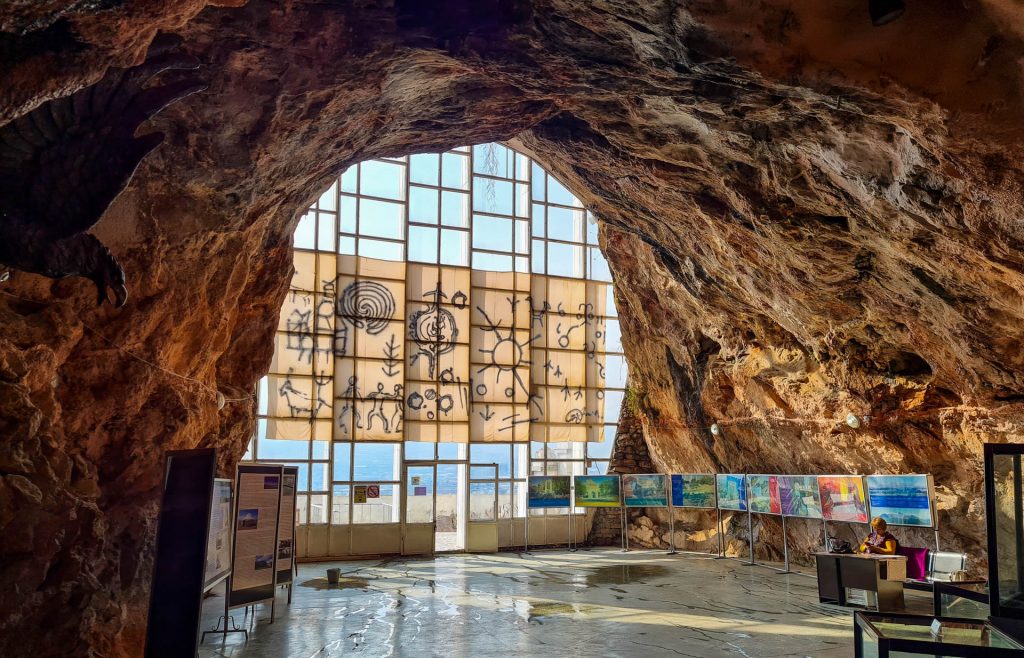
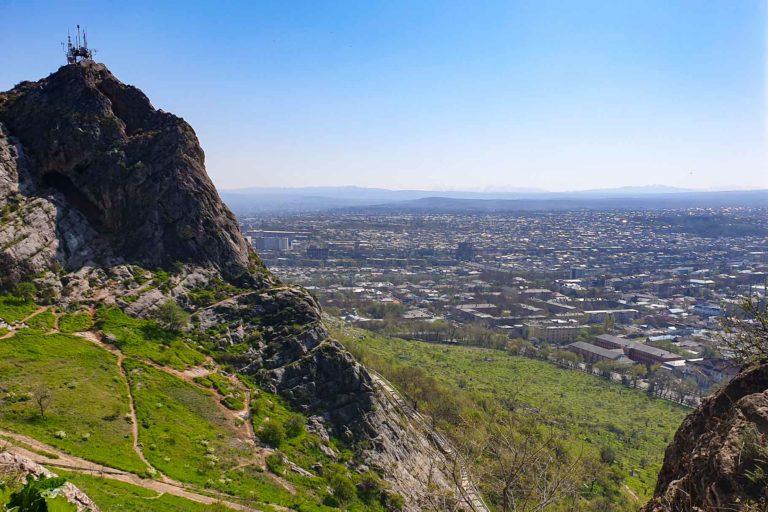
Welcome to the ancient city of Osh, known as the “southern capital” of Kyrgyzstan. After your arrival and the transfer to the hotel, take a short rest. The tour starts with a visit to Sulaiman-Too, the sacred mountain above the city with breathtaking views over the valley, and to the Sulaiman-Too Museum with its unique collection of historical artifacts. In the evening return to the hotel to rest before the adventure ahead.
Osh, Sulaiman Too
Overnight: Osh (Hotel)
Meals: Lunch
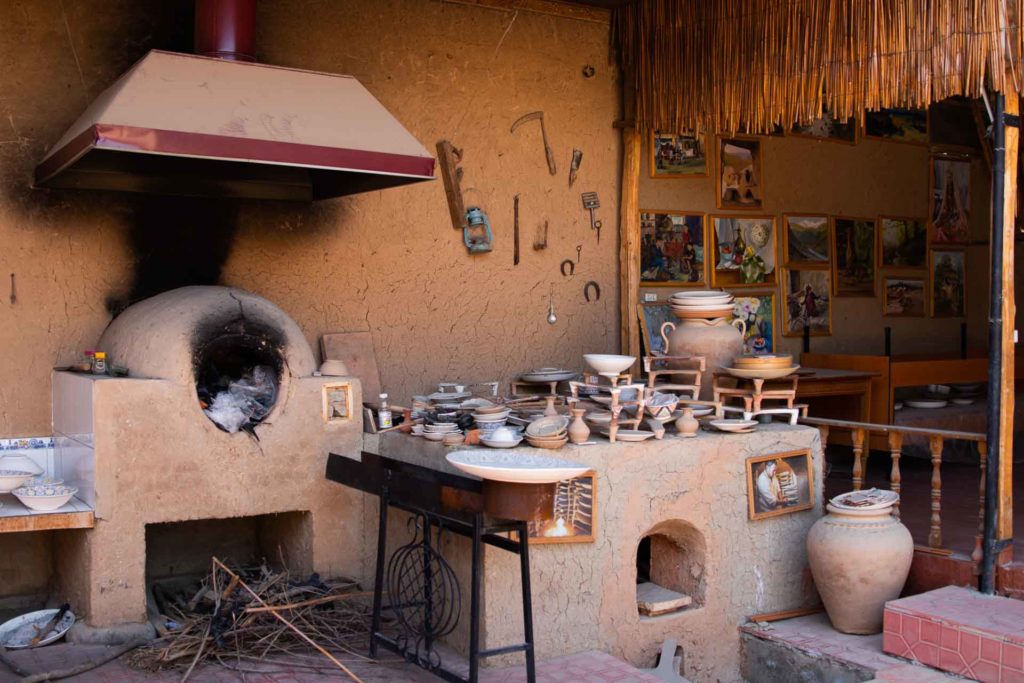
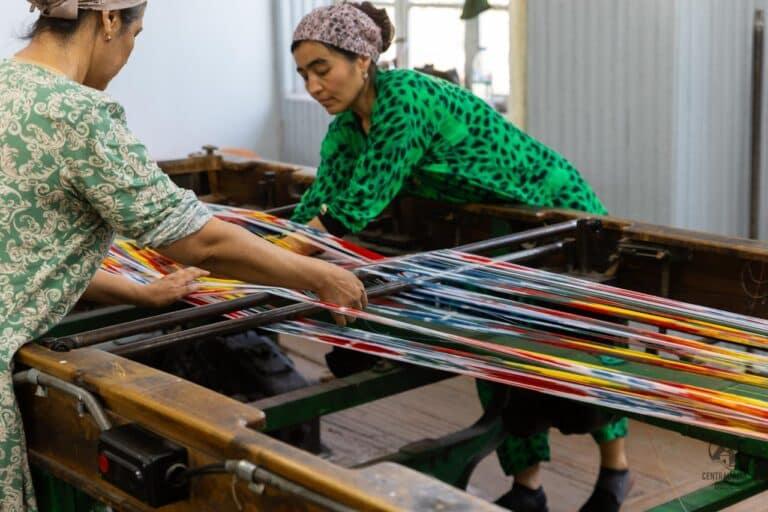
After breakfast cross the border into Uzbekistan and drive to Margilan, famous for its exquisite silk. At the Margilan silk factory you learn how silk is made, with a guided tour, a master class and a visit to the showroom. Next, visit the “Koron” ceramics workshop and showroom in Rishtan. After lunch continue to the ancient city of Kokand for a tour of the Urda (the palace of Khudayar Khan), the Jami Mosque, the Dahmai Shahon mausoleum and the local halva production center. Evening at leisure at the hotel.
Dostuk / Dustlik border control, Margilan, Rishton, Kokand, Khudayar Khan Palace
- Osh → Kokand (210 km)
Overnight: Kokand (Hotel)
Meals: Breakfast, Lunch
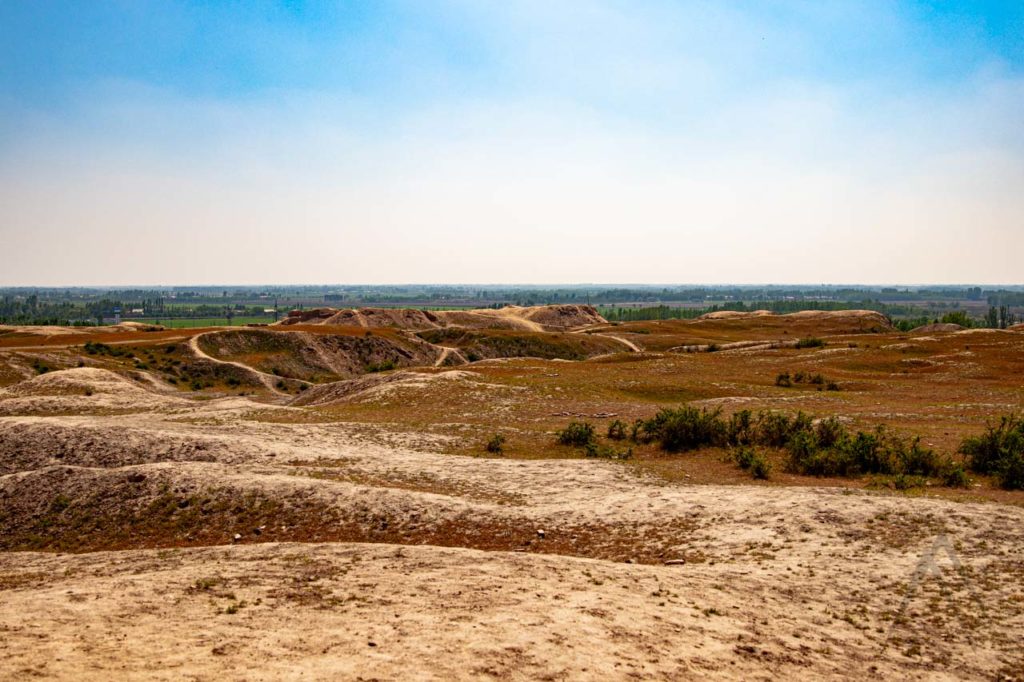
After breakfast travel to Ahsikent and visit the New Ahsikent Museum Complex, where a large mosque is under construction. The open-air museum displays ancient artifacts from the city, which was destroyed by an earthquake in 1620 and is now an active archaeological site. After lunch continue to Namangan for the night at the hotel.
Ahsikent, Namangan
- Kokand → Namangan (115 km)
Overnight: Namangan (Hotel)
Meals: Breakfast, Lunch
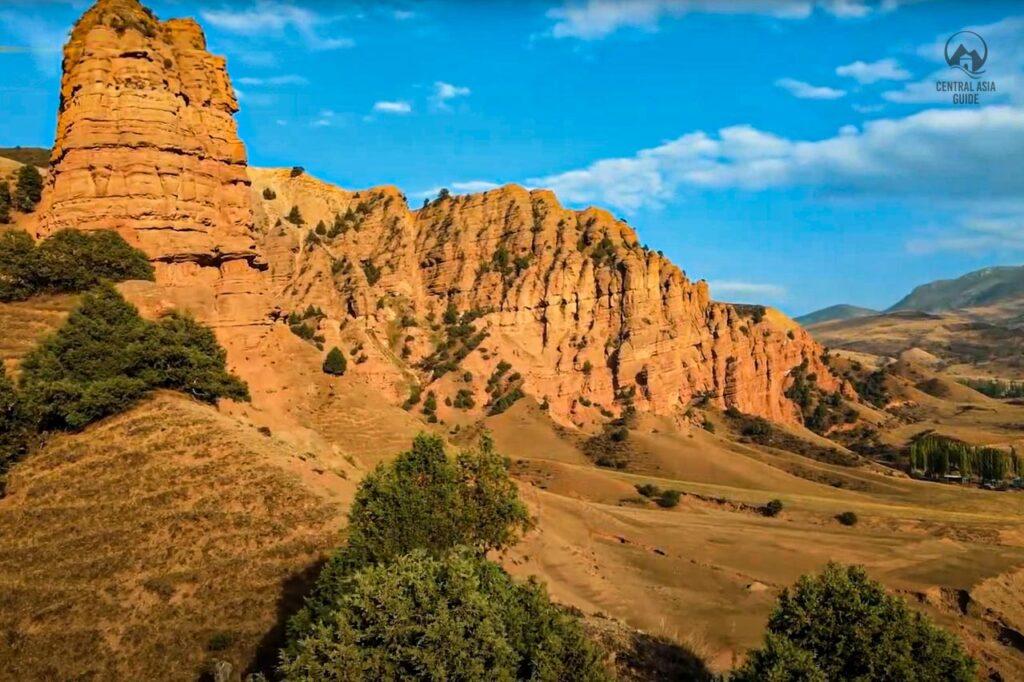
A full day: after an early departure, cross the border back into Kyrgyzstan and head for Osh. On the way stop at the Papan Reservoir and the Laglan Canyons for a picnic. Return to Osh in the evening and stay overnight at the hotel.
Dostuk / Dustlik border control, Papan Reservoir, Laglan Canyon, Osh
- Namangan → Osh (150 km)
Overnight: Osh (Hotel)
Meals: Breakfast, Lunch
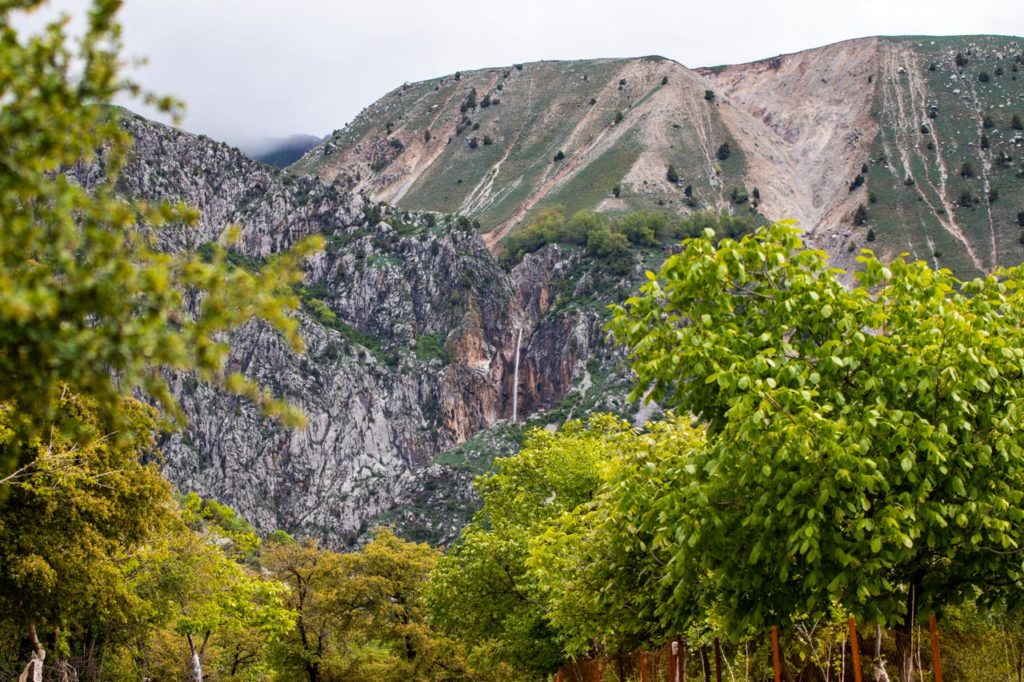
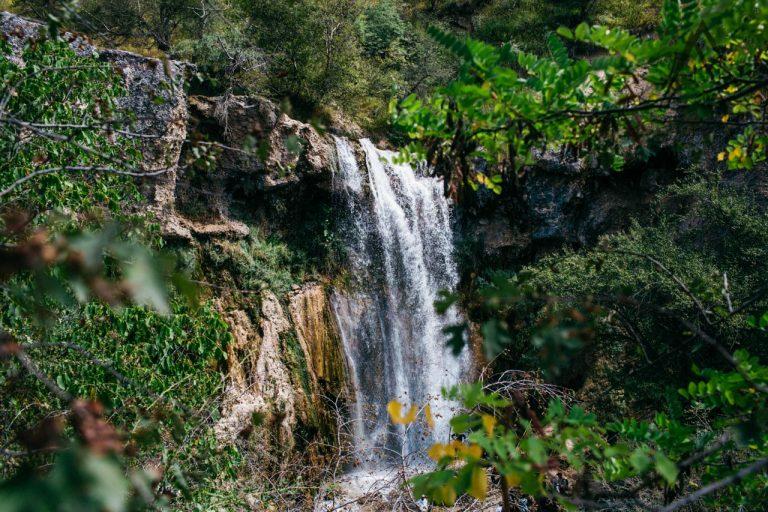
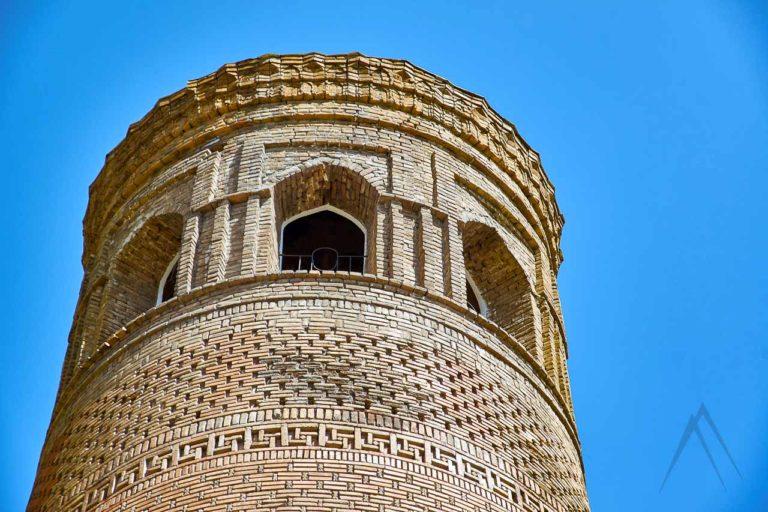
After breakfast drive to the ancient town of Uzgen to see its historic complex, famous for the medieval mausoleums and the minaret from the Karakhanid era. Continue to the village of Arslanbob, famous for its walnut forests (about 4.5 hours of driving in total). Take a walk through the walnut groves to the big waterfall, breathing in the scent of the ancient trees. Dinner and overnight at a guesthouse surrounded by lush greenery.
Uzgen, Arslanbob, Arslanbob Big Waterfall
- Osh → Arslanbob (220 km)
Overnight: Arslanbob (Guesthouse)
Meals: Breakfast, Lunch, Dinner
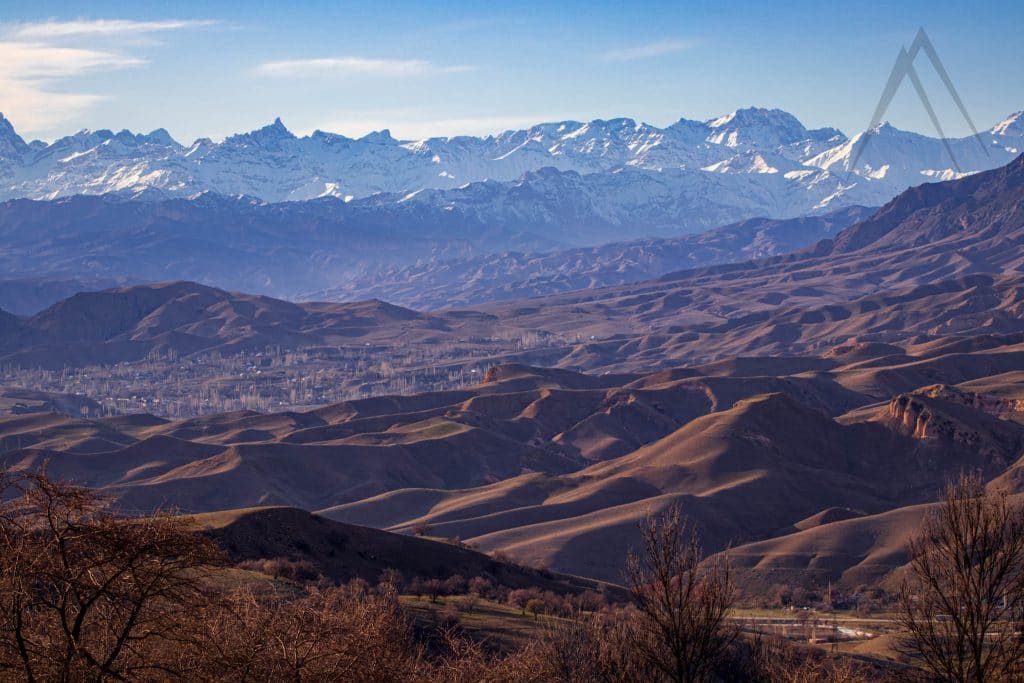
Begin the day with a morning walk to the small waterfall of Arslanbob, one of the most loved natural sights of the region. Then transfer to a quiet village in the Kara-Suu valley at the edge of the Sary-Chelek reserve, known for its warm hospitality. Dinner and overnight at a guesthouse.
Arslanbob Small Waterfall, Kara-Suu village (Sary-Chelek)
- Arslanbob → Kara-Suu village (Sary-Chelek) (230 km)
Overnight: Kara-Suu village (Sary-Chelek) (Guesthouse)
Meals: Breakfast, Lunch, Dinner
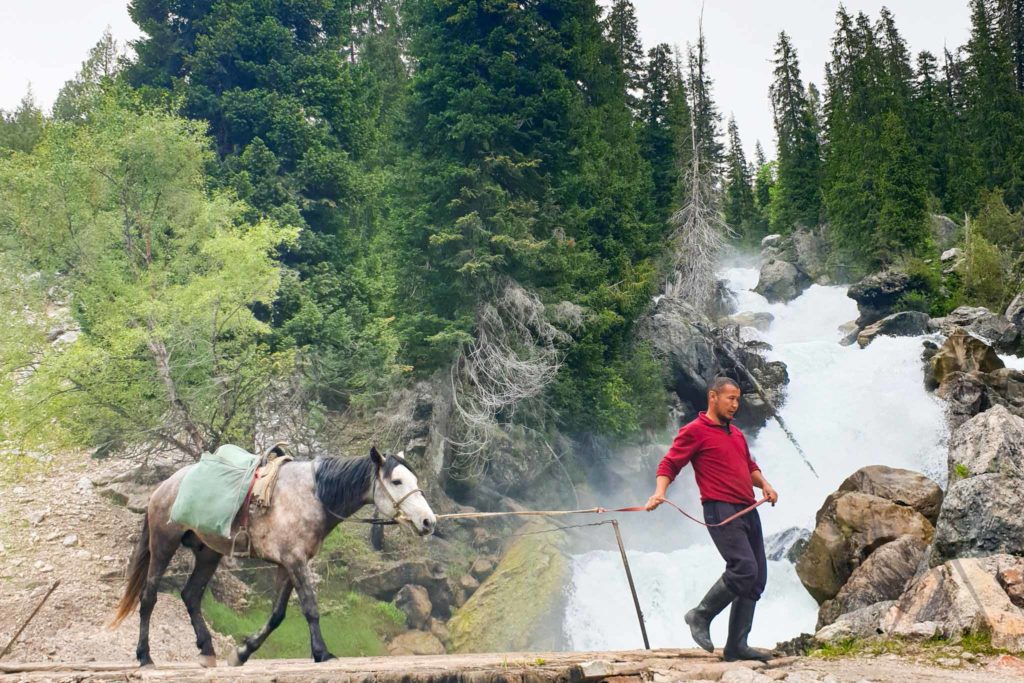
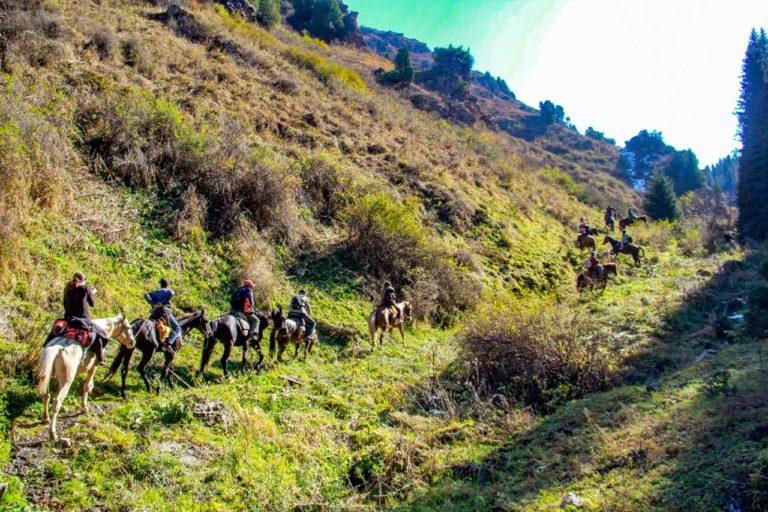
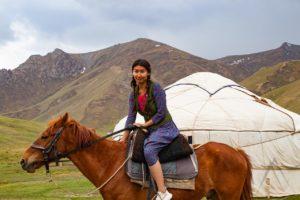
After breakfast get ready for the two-day horse trek. Choose your horse and ride north into the Kara-Suu Gorge, crossing a mountain river on a wooden bridge. The narrow gorge opens into a scenic fir forest, the trail passes beneath a waterfall and then climbs over a pass to Kara-Suu Lake (1,800 m; 17 km, about 4 hours). Enjoy lunch and relax on a mountain pasture. Dinner by the fire and overnight in the yurt camp.
Kara-Suu Lake (Sary-Chelek)
- Kara-Suu village (Sary-Chelek) → Kara-Suu Lake (Sary-Chelek) (17 km)
Overnight: Kara-Suu Lake (Sary-Chelek) (Yurt camp)
Meals: Breakfast, Lunch, Dinner
Continue the trek over a pass at 2,446 m and stop at Iri-Kol Lake to rest and explore. Relax by the lake, soak up the quiet and enjoy lunch before descending to the village of Arkyt at the gate of the Sary-Chelek reserve (about 20 km of riding today). Dinner and overnight at a guesthouse to recharge after the trek.
Iri-Kol Lake, Arkit
- Kara-Suu Lake (Sary-Chelek) → Iri-Kol Lake (10 km)
- Iri-Kol Lake → Arkit (10 km)
Overnight: Arkit (Guesthouse)
Meals: Breakfast, Lunch, Dinner
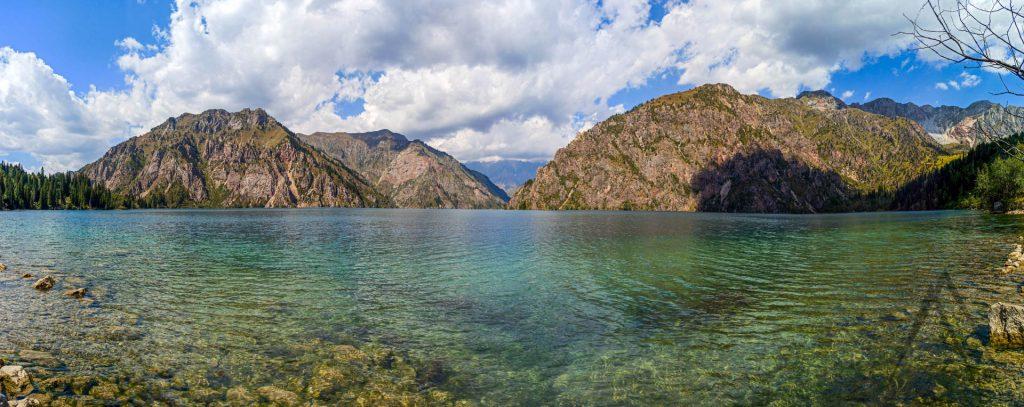
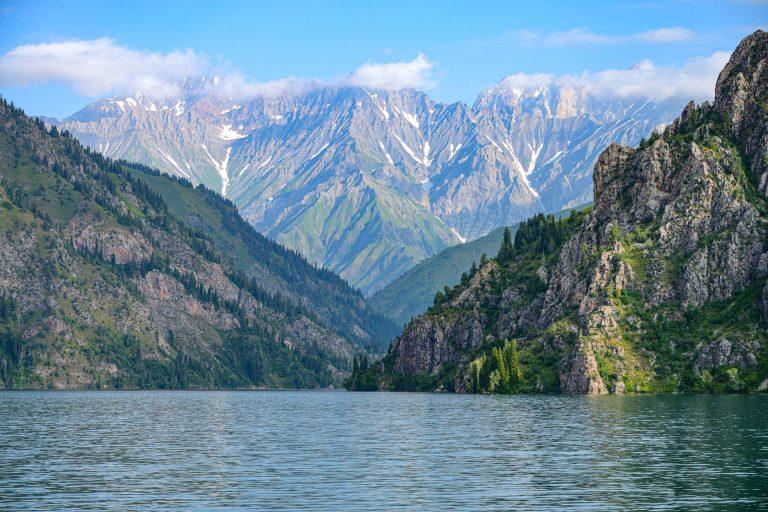
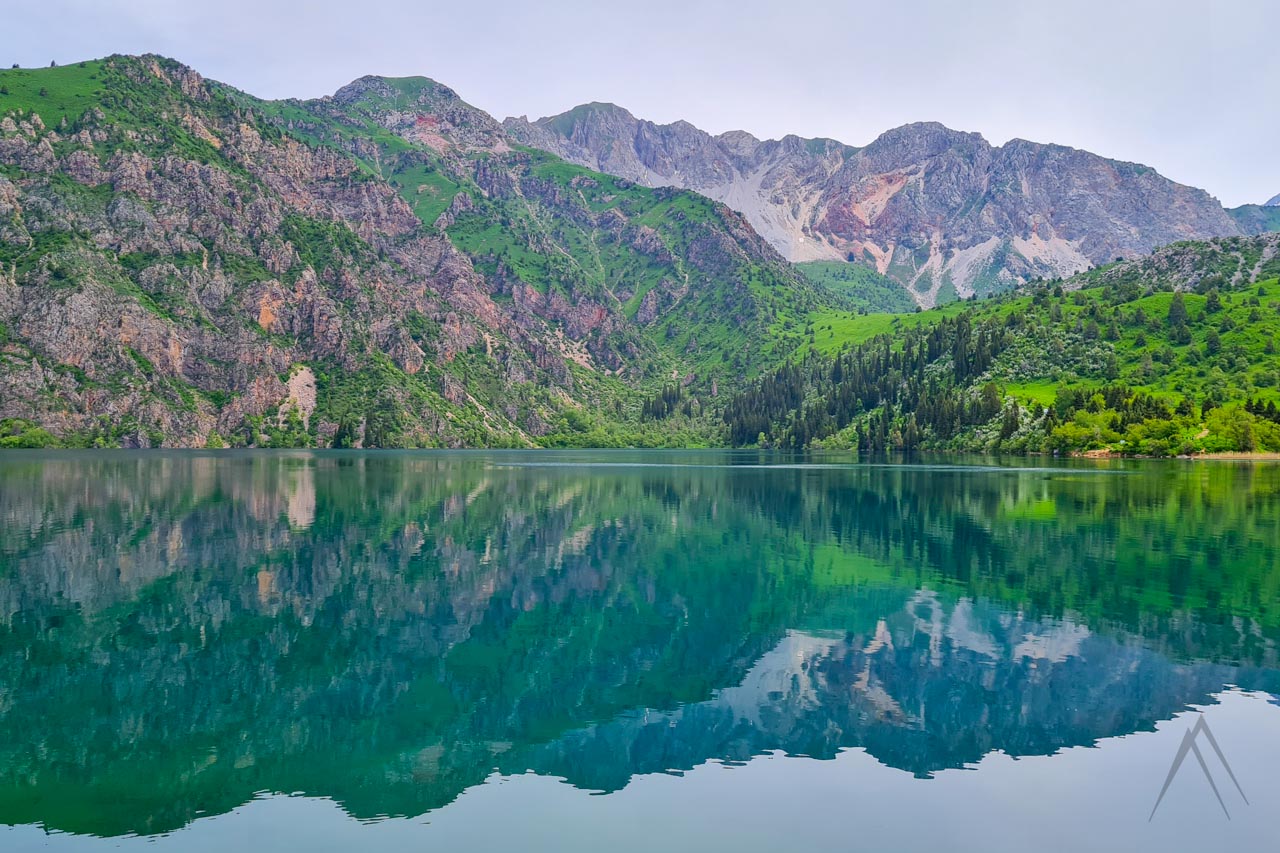
In the morning visit Sary-Chelek, the largest high-altitude lake of the reserve, for a picnic before the drive back to Osh (about 5 hours). The tour ends on arrival in Osh, with time for a final evening in the city.
Sary Chelek, Osh
- Arkit → Sary Chelek (20 km)
- Sary Chelek → Osh (335 km)
Meals: Breakfast, Lunch
Share this tour privately
Travelling alone or as a couple? Join other travellers who want to take this tour privately, or post your own request. The private price per person drops as the group grows.
No open requests for this tour yet. Post the first one and we'll show it here and on the group requests page.
What's included
Included
- ✓English-, German- or Russian-speaking guide
- ✓Transfers according to the itinerary
- ✓Meals as listed in the itinerary
- ✓Accommodation as listed in the itinerary (8 nights: hotels, guesthouses and one night in a yurt camp)
- ✓Two-day horse trek in the Sary-Chelek reserve with horses
- ✓1 liter of drinking water per person per day
- ✓Entrance tickets to museums and sights in the itinerary
Not included
- –Flights
- –Medical insurance and expenses
- –Early hotel check-in on the arrival day
- –Alcoholic drinks
- –Personal expenses
- –Any changes to the itinerary
Nargiza is the office manager of Central Asia Guide and mostly responsible for multi country "Stan" tours.
Where you'll stay
-
Night 1
Osh
Hotel in Osh or similar
-
Night 2
Kokand
Hotel in Kokand or similar
-
Night 3
Namangan
Hotel in Namangan or similar
-
Night 4
Osh
Hotel in Osh or similar
-
Night 5
Arslanbob
Guesthouse in Arslanbob or similar
-
Night 6
Kara-Suu village (Sary-Chelek)
Guesthouse in Kara-Suu village or similar
-
Night 7
Kara-Suu Lake (Sary-Chelek)
Yurt camp at Kara-Suu Lake or similar
-
Night 8
Arkit
Guesthouse in Arkyt or similar
What to bring
- Comfortable shoes
- A personal first aid kit
- Sunscreen and sunglasses
- A hat or other headwear
- A water bottle
Kyrgyzstan travel information
Practical essentials for each country on this tour. Open a topic to read more.
Visa policy
Find your country from the list and check possible visa requirements for Kyrgyzstan and Uzbekistan before booking.
The official currency is the Kyrgyz som (KGS). Bishkek has plenty of ATMs, but outside the larger towns and the northern shore of Issyk-Kul cash is how almost everything is paid.
ATMs and cards
Some ATMs in Bishkek dispense US dollars as well as som. Beyond the capital, ATMs are found in the few largest towns but mostly not in smaller ones, except on the northern shore of Issyk-Kul. Mastercard works in all ATMs, but Visa is still the more widely accepted card. Demirbank's red ATMs have lately been the best option for foreign cards, with moderate fees.
Exchanging money
Exchange offices in the major cities change US dollars, euros and roubles into som. Notes must be clean, fresh and without any signs of wear. Exchange offices prefer larger notes from 50 USD and 50 EUR, and sometimes give a better rate for them.
Paying by card
Cards are accepted in major hotels, restaurants, large supermarkets and some museums in Bishkek and Osh, and occasionally even in taxis. Elsewhere, apart from the northern shore of Issyk-Kul, paying by card is not practical.
Kyrgyzstan is generally safe for travellers and tourism is growing fast, but the usual precautions matter.
Documents
Always carry your passport or a notarised copy. Without proper identification you can be detained by the police.
In towns
- Robberies, some of them violent, and thefts happen especially in crowded places such as the bazaars. Take care after dark.
- Sexual harassment has been reported on public transport. Avoid walking or travelling alone, especially at night.
- Book taxis in advance from established services.
- Stay away from crowds and demonstrations.
- Watch where you step: some streets have large holes and pavements are often uneven.
Laws and customs
- Respect local traditions, customs, laws and religious practices.
- Possessing or using narcotics is strictly prohibited.
- Do not photograph anything related to the armed forces or security services.
- Same-sex relationships are legal but not widely discussed or publicly recognised.
Border areas
Smuggling makes the southern border zones with Uzbekistan and Tajikistan unstable and best avoided.
Kyrgyzstan is visa-free for travellers from many countries. Others can apply for an electronic visa or through an embassy.
Visas
For a tourist visa, most passport holders need an invitation letter from a tourism company. Kyrgyzstan has had an electronic visa system since 1 September 2017.
Border regions
Visiting border regions requires a special permit.
The best times to visit Kyrgyzstan's lower areas are May–June and September. In the high mountains, July and August are best.
Lower areas: May–June and September
In late spring and early autumn the valleys, Issyk-Kul's shores and the towns are green or golden, days are pleasant rather than hot and there are fewer visitors.
High mountains: July and August
This is when the high pastures, yurt camps and mountain passes are open, and trekking and horse-riding routes that are under snow the rest of the year can be reached. Days in the valleys can reach about 30°C, and nights at altitude can still be close to freezing. Summer is also the time of festivals celebrating Kyrgyz traditions.
Winter
Winters in the highlands are long and close the high passes, but it is still a captivating season. Hiking, horse riding and skiing are all possible, and yurt stays are available too.
Healthcare in Kyrgyzstan is basic and medical facilities are scarce, so comprehensive medical and travel insurance is essential.
Medicines
If you rely on regular medication, bring enough for the whole trip: it can be hard or expensive to find locally.
Insurance
Arrange comprehensive medical and travel insurance before you arrive. A serious accident or illness may mean emergency air evacuation to a neighbouring country.
Food and water
Treat tap water and other local water as contaminated and boil it before drinking; bottled water is the safest choice throughout your stay. Be careful with unpasteurised dairy and other animal products.
Vaccinations
Vaccinations against polio and tuberculosis are recommended before entering the country, and others may also be advisable. Ask your doctor or travel clinic.
The local currency is the Uzbek sum. Uzbekistan is still mostly a cash economy, but money is easy to exchange and ATMs are common in the larger cities.
Exchanging money
Banks exchange US dollars, euros, British pounds and Japanese yen. There are exchange offices in major cities such as Bukhara and Khiva and at Tashkent airport; elsewhere you need a bank, which often gives a better rate anyway. Your notes must be in pristine condition. Sum is hard to exchange outside Uzbekistan, but you can change it back to US dollars at a local bank.
Cards and ATMs
Cards are accepted in upscale hotels and restaurants in Tashkent and the main tourist cities, with Visa more widely recognised than Mastercard and a standard 3% commission. ATMs dispense sum and are easy to find in the larger cities; many also offer US dollars.
Uzbekistan is generally a safe destination, with little religious extremism and few crimes against foreigners.
Documents
Always carry your passport: it is a legal requirement, and police carry out routine checks.
Getting around
- Use licensed taxis. Local taxi apps are the easiest way to get a ride at local prices, and Yandex works very well in Tashkent and Samarkand. If you take a taxi on the street or at the airport, agree the price first.
- Many roads outside Tashkent, especially in the Tian Shan and Fan mountains, are in poor condition. Driving standards are generally low, and rural roads are often unlit, so night driving is riskier.
- On night trains, keep valuables safe, do not leave belongings unattended and lock the compartment door from the inside.
- Watch your belongings as you would anywhere, and avoid demonstrations and large gatherings.
Laws and customs
- Possessing narcotics is strictly illegal.
- Same-sex relationships are illegal and still socially condemned. Avoid public displays of affection.
- Drones are in practice banned. Permits can be applied for but are very rarely granted.
Photography
Be discreet near government buildings such as the Palace of Forums in Tashkent, and sometimes at local markets that see few tourists. Restrictions have eased, but check before photographing near airports, border checkpoints, military sites, bridges and police stations.
Earthquakes
Uzbekistan is prone to earthquakes, mostly tremors, though stronger ones occasionally occur.
Entering Uzbekistan is straightforward when your documents are in order. Citizens of many countries can visit visa-free, and for many others a visa is easy to get without an invitation.
Registration
Registration rules are stricter than elsewhere in Central Asia: by law you must be registered within 3 days of arrival. Hotels usually do this for you, but register yourself if you stay longer than 3 days in, for example, a rented apartment. Border officers check the registrations when you leave and may ask for the paper slips, so keep them until you exit the country.
Customs
Exporting handcrafted items older than 50 years is prohibited. At land borders, customs officers may check your phone and photos for explicit or confidential material, though this has become very rare.
The best times to visit Uzbekistan are spring (March to May) and autumn (September to November), between the summer heat and the winter cold.
Summer
At the height of summer the land dries out, especially in the countryside, and temperatures rise well above 30°C, often up to 40°C.
Winter
From November to March it can get cold, sometimes below zero, but the skies are mostly clear and bright. Snow is occasional and usually melts within a day or two.
Medical services in Uzbekistan have improved in recent years but are still limited, so good travel insurance that includes evacuation is essential.
Food and water
To avoid traveller's diarrhoea, drink only bottled, filtered or boiled water, and do not use tap water for brushing your teeth or for ice. Choose meat and fish that are thoroughly cooked and served hot.
Medical care
Uzbekistan has a state healthcare system and a small private sector. Larger clinics serve the cities and regional hospitals the countryside. Hospitals usually ask for payment in cash up front, even if you are insured, and serious cases may need evacuation home. Contact your insurer straight away if you need urgent care, and check before you leave what your insurance covers in Uzbekistan.
Medicines
Pharmacies are private, and the range of medicines can be limited. Prescriptions generally require a doctor's consultation. If you travel with medication, check the rules with the embassy, a consulate or Uzbekistan's Ministry of Health.
Similar tours
More multi-country tours in Kyrgyzstan and Uzbekistan.
18 days
Sale
Four Stan Tour through Central Asia
Discover the legendary Silk Road on this 18-day small-group tour through Kyrgyzstan, Kazakhstan, Tajikistan and…
- Culture
- Multi-country
- +2
Starts in Bishkek Next departure 03/04/2027
15 days
Sale
Five Stans of Central Asia Tour
Start on an extraordinary adventure across the heart of Central Asia with our Five Stan Tour, exploring the unique…
- Culture
- Hiking
- +3
Starts in Ashgabat Next departure 22/12/2026
22 days
Featured
The Best of the Five Stan Tour
Embark on a 22-day journey through all five countries of Central Asia, beginning in Bishkek and ending in Ashgabat. In…
- Culture
- Multi-country
- +2
Starts in Bishkek Next departure 30/10/2026
Tour updated