
Kyrgyzstan-Uzbekistan tour


Accommodation, guides, transport, 2 flights and 3 train journeys included.
Kyrgyzstan-Uzbekistan tour Highlights
This 15-day tour combines the mountain lakes and nomad life of Kyrgyzstan with the great Silk Road cities of Uzbekistan. After a tour of the lively Kyrgyz capital Bishkek you visit the 11th-century Burana Tower, drive along the north shore of Issyk-Kul to Karakol and continue past the red cliffs of Jeti-Oguz and an eagle hunting demonstration in Bokonbaevo to Kochkor, known for its felt carpets.
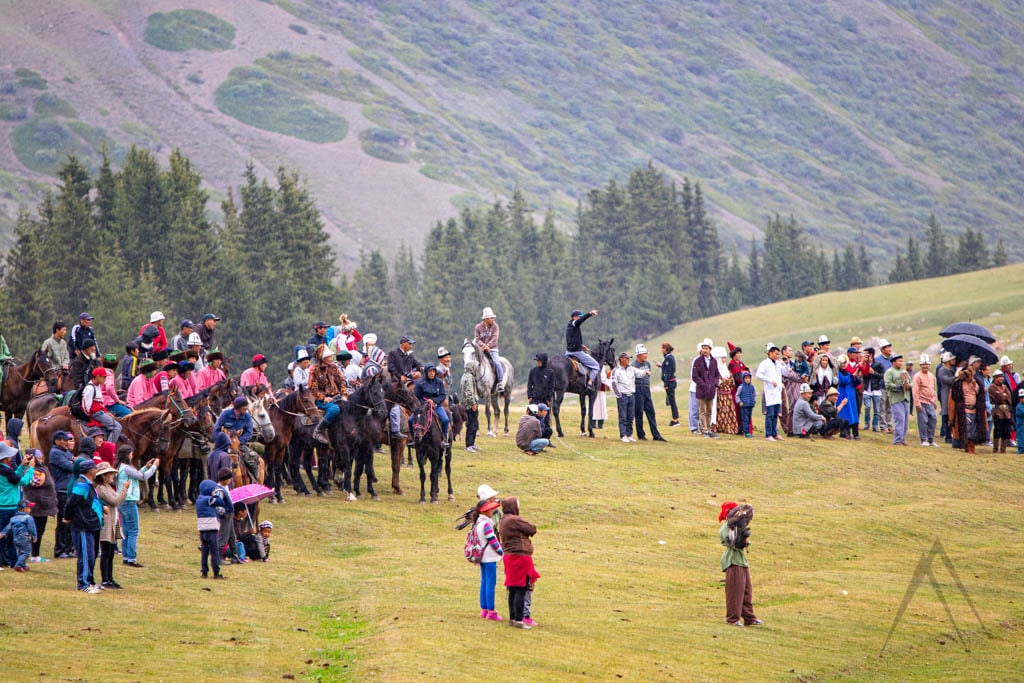
At Song-Kol Lake (3,016 m) you spend a night in a traditional yurt camp, meet friendly Kyrgyz herders and enjoy their hospitality with fresh airan and kymys. The road back to Bishkek crosses the Suusamyr Valley and the Too-Ashuu Pass, and a short flight takes you to Osh and its sacred Sulaiman-Too mountain.
Crossing into Uzbekistan, the Fergana Valley shows you the silk workshops of Margilan, the ceramic masters of Rishtan and the khans’ palace in Kokand. From Tashkent trains take you to Samarkand and Bukhara, and a long drive across the Kyzyl-Kum Desert brings you to Khiva, a walled old town like an open-air museum, before a short flight back to Tashkent – a perfect mix of breathtaking landscapes, authentic encounters and timeless cultural treasures.
Difficulty: Easy Mostly sightseeing and city walks at an easy pace. One night in a yurt camp at Song-Kol Lake (3,016 m, 4 people per yurt), the Too-Ashuu Pass (3,586 m) by road, and long driving days of 405 km (Bishkek–Karakol), 320 km (Song-Kol–Bishkek) and 460 km (Bukhara–Khiva across the desert).

Tour Itinerary
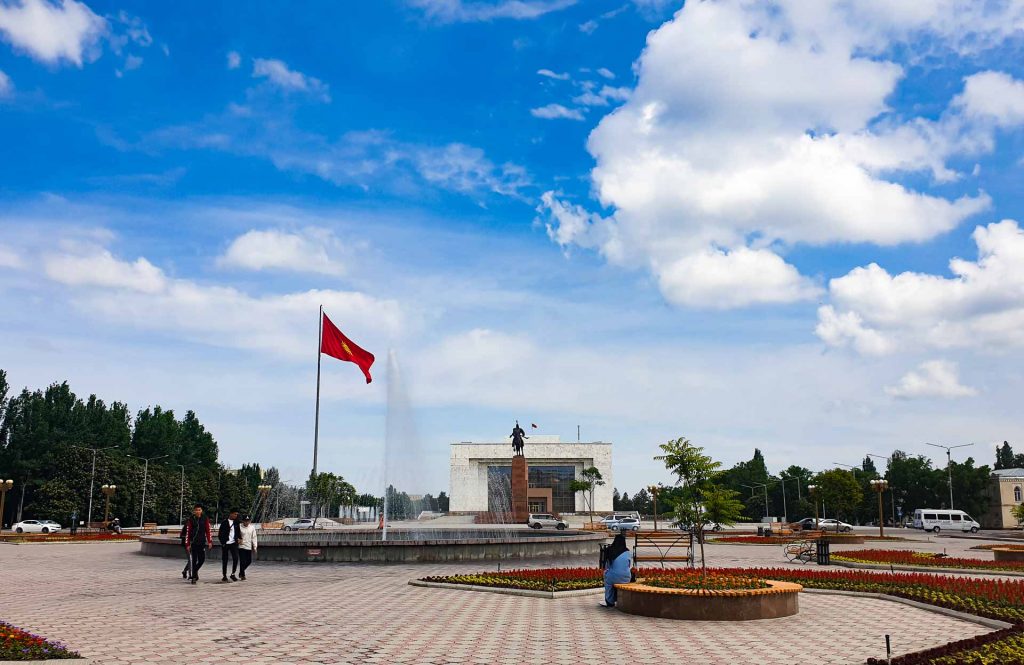
Arrive early in Bishkek, the welcoming capital of Kyrgyzstan. Your driver meets you at the airport and takes you to the hotel for a rest and breakfast (early check-in is included). Later in the morning set off on a guided sightseeing tour of Bishkek. The city, framed by the snowy Tian Shan mountains, combines Soviet heritage with modern Kyrgyz culture. See the Manas Monument, the central Ala-Too Square with its Guard of Honor and the Independence Monument. Walking past the main government buildings and the Old Square, you pause by one of the last Lenin statues still standing in Central Asia. The tour ends at Victory Square, dedicated to World War II. Overnight at the hotel.
Bishkek, Ala Too Square, Bishkek Victory Square
- Manas International Airport → Bishkek (30 km)
Overnight: Bishkek (Hotel)
Meals: Breakfast
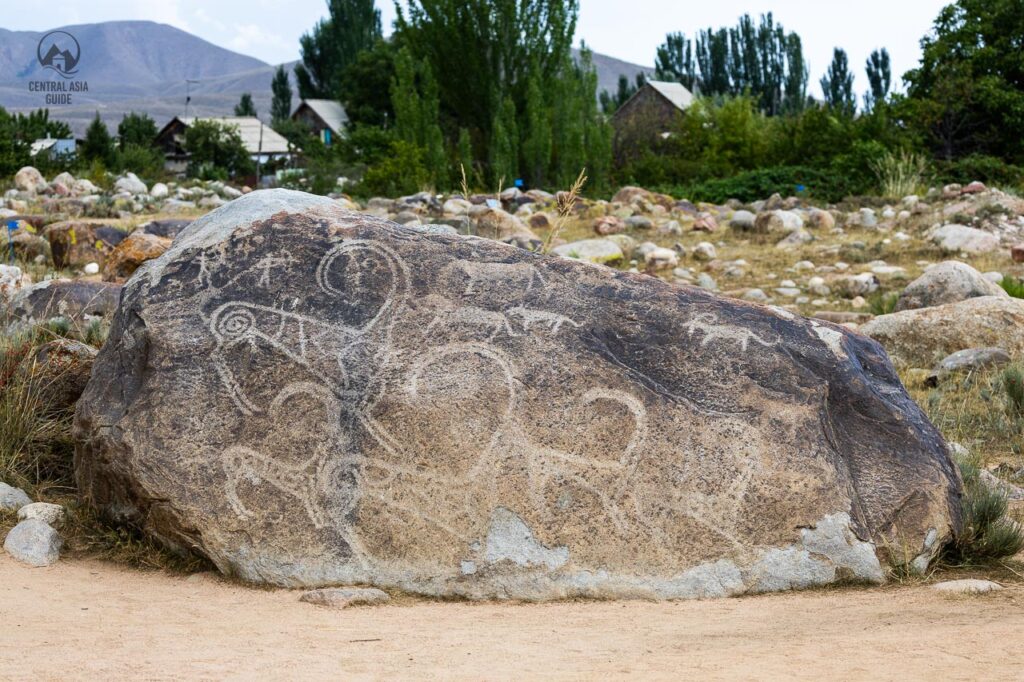
After breakfast drive east towards Karakol, at the foothills of the Tian Shan mountains (405 km). On the way stop at the Burana Tower, an 11th-century minaret that survives from the ancient city of Balasagun, and wander among the mysterious balbals (stone warrior statues). Continue along the scenic north shore of Issyk-Kul, the “Pearl of Kyrgyzstan”, and visit the Cholpon-Ata petroglyphs, a vast open-air gallery of ancient rock carvings. Arrive in Karakol, check in at the hotel and rest.
Burana Tower, Cholpon Ata petroglyphs museum, Karakol
- Bishkek → Karakol (405 km)
Overnight: Karakol (Hotel)
Meals: Breakfast
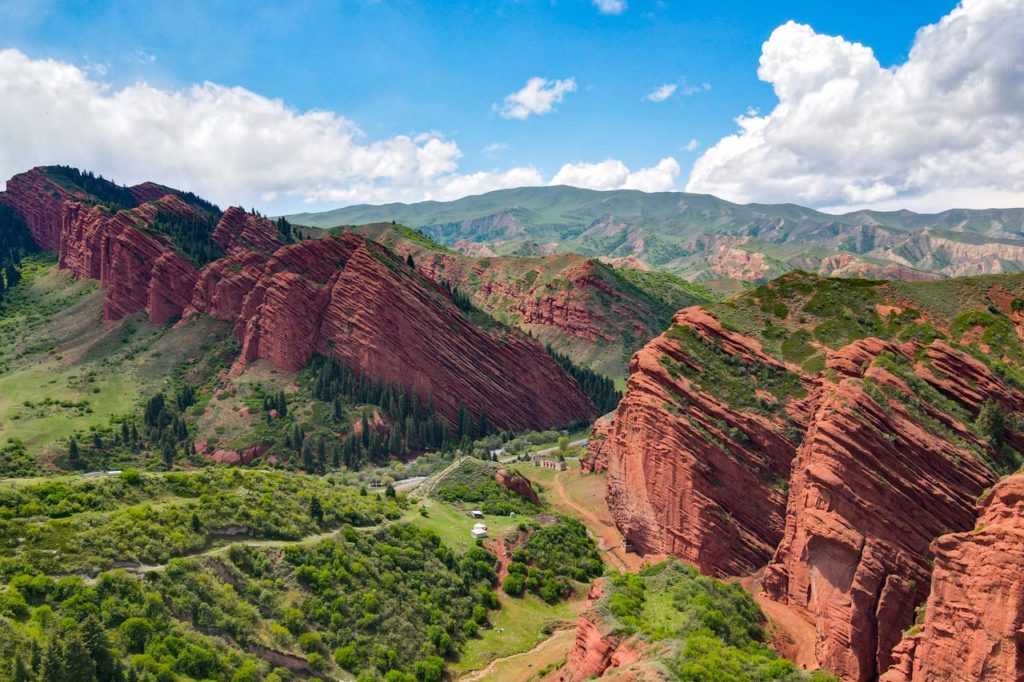
In the morning take a tour of Karakol. Visit the colorful Dungan Mosque, built entirely without nails, and the wooden Russian Orthodox Holy Trinity Cathedral, and stop at the museum of Nikolai Przhevalsky, the Russian explorer who charted much of Central Asia. Later drive into the mountains to the famous Jeti-Oguz Gorge (“Seven Bulls”), named after its striking red sandstone cliffs. From the panoramic viewpoint take in sweeping views of spruce forests, alpine meadows and mountain rivers. The next stop is Bokonbaevo village, where local eagle hunters keep the ancient tradition of hunting with birds of prey alive. Watch a demonstration with a majestic golden eagle before continuing to Kochkor village, known for its felt handicrafts and warm hospitality (250 km in total today). Dinner and overnight in Kochkor.
Karakol Dungan Mosque, Karakol Orthodox cathedral, Przhevalsky Museum, Jeti Oguz, Bokonbaevo, Kochkor
- Karakol → Kochkor (250 km)
Overnight: Kochkor (Hotel)
Meals: Breakfast, Dinner
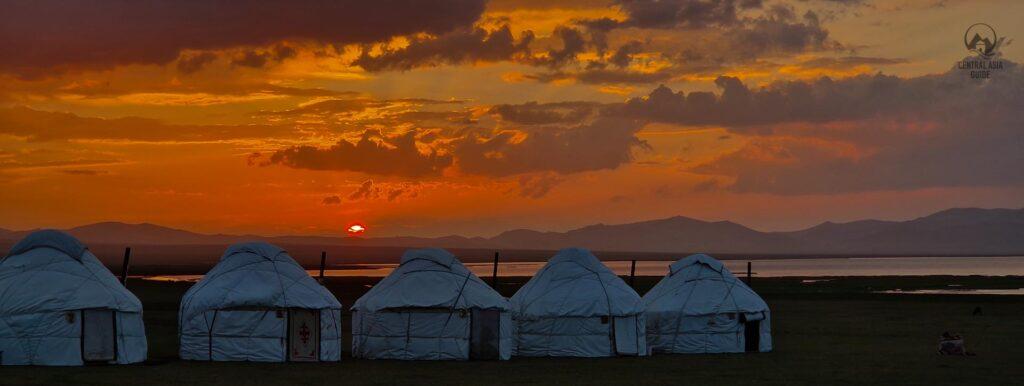
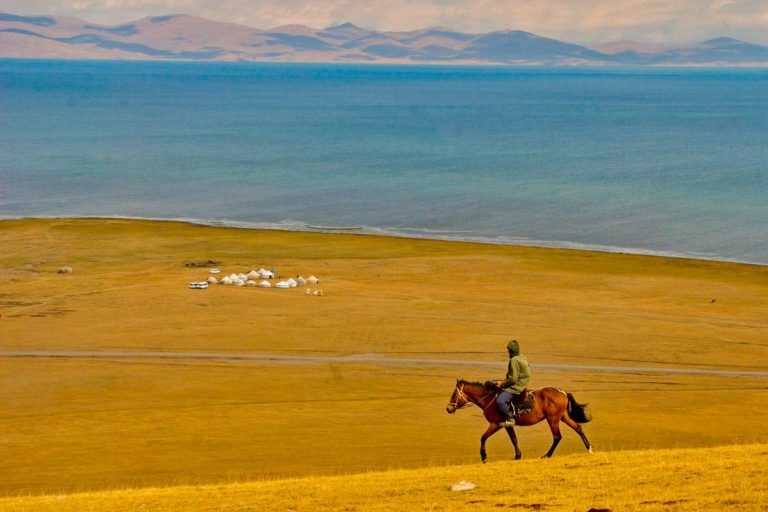
After breakfast visit a local handicraft workshop in Kochkor for a felt-making master class. Skilled artisans show you how traditional shyrdaks (Kyrgyz felt carpets) are made with age-old techniques passed down through generations; you take part in the process and learn the symbolism behind the colorful patterns. Then leave Kochkor and head into the mountains to the legendary Song-Kol Lake (130 km), a high-altitude jewel at 3,016 m above sea level. Surrounded by lush pastures and snowy peaks, the lake is a summer grazing ground for nomads and their herds. On arrival settle into the yurt camp for an authentic glimpse of Kyrgyz nomadic life. The afternoon is free: try optional horse riding, enjoy a peaceful hike or simply meet the local shepherds and their herds. Dinner and overnight in yurts beneath a sky full of stars.
Kochkor, Song Kul
- Kochkor → Song Kul (130 km)
Overnight: Song Kul (Yurt camp)
Meals: Breakfast, Dinner
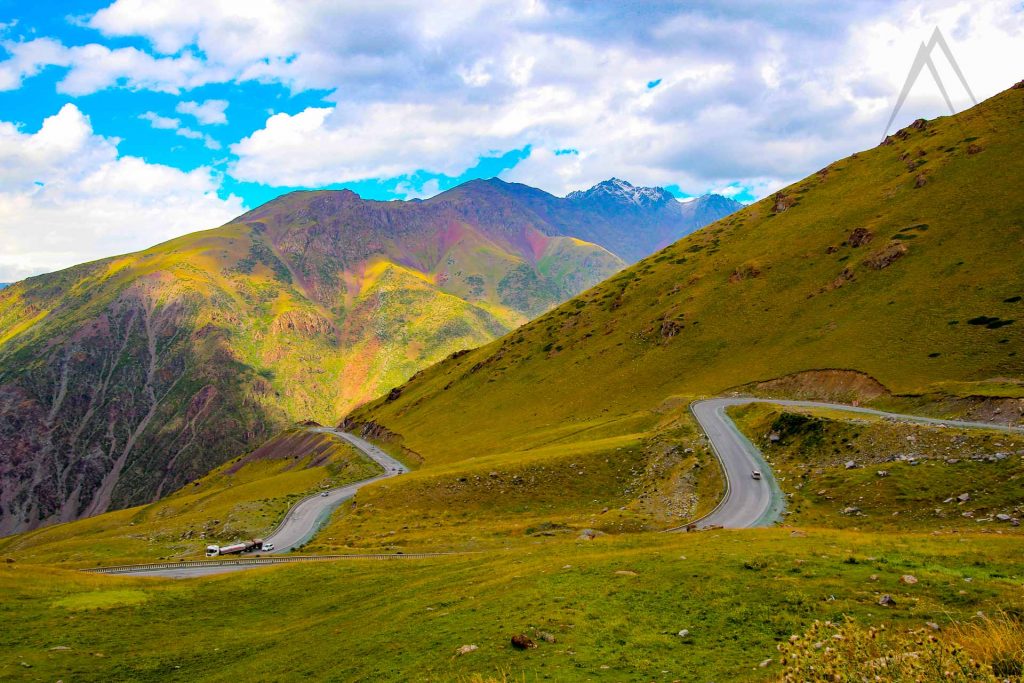
Wake up to the crisp mountain air and enjoy a short walk along the lakeshore before breakfast. Then set off over the dramatic Kara-Keche Pass and follow the winding Kekemeren River through impressive scenery. The journey continues to the remote village of Kyzyl-Oi, untouched by mass tourism, where the traditional Kyrgyz way of life is preserved. From there drive across the scenic Suusamyr Valley and over the breathtaking Too-Ashuu Pass (3,586 m), one of the most spectacular mountain roads in Kyrgyzstan. Arrive in Bishkek in the evening (320 km in total) and stay overnight at the hotel.
Kara-Keche Pass, Kekemeren River Valley, Kyzyl-Oi, Suusamyr Valley, Too-Ashuu Pass, Bishkek
- Song Kul → Bishkek (320 km)
Overnight: Bishkek (Hotel)
Meals: Breakfast
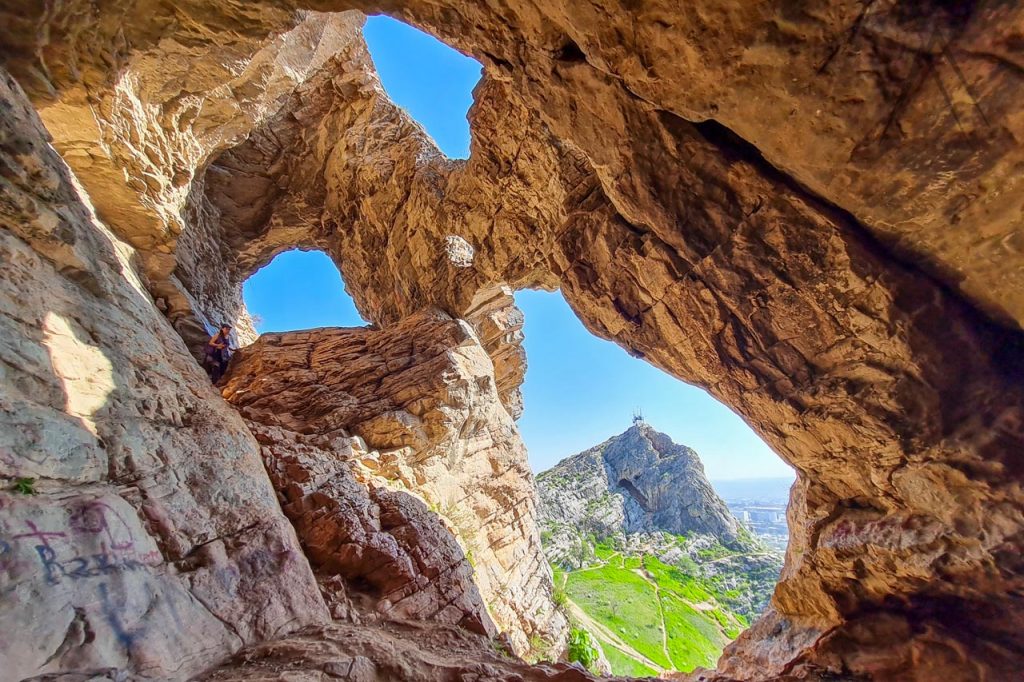
After breakfast transfer to the airport for the short flight to Osh, the southern capital of Kyrgyzstan. On arrival dive straight into the vibrant atmosphere of the Central Bazaar and Central Square, where the spirit of the Silk Road is still alive. After lunch explore the sacred Sulaiman-Too mountain, one of the most important Islamic pilgrimage sites in Central Asia, and visit the small historical museum inside its main cave. Climbing to the top, you find Babur’s Mosque, built by the founder of the Mughal dynasty, and a panoramic view of Osh spread out below. Transfer to the hotel and rest.
Jayma Bazaar (Osh), Sulaiman Too, Osh
- Bishkek → Osh (300 km)
Overnight: Osh (Hotel)
Meals: Breakfast
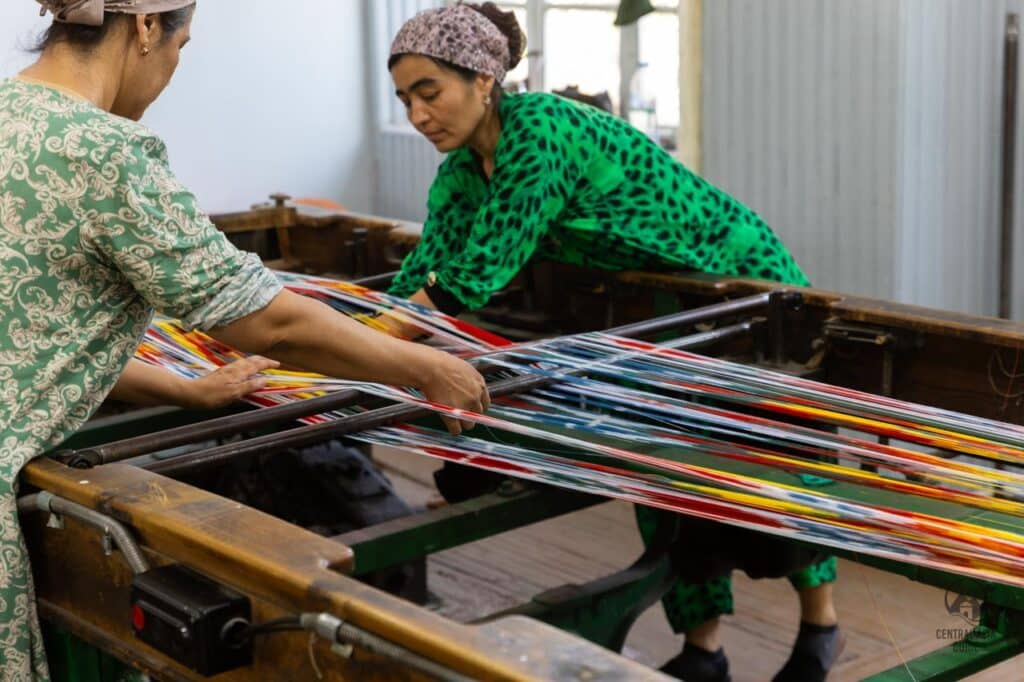
After breakfast drive to the Dostuk / Dustlik border crossing, where you leave Kyrgyzstan and enter Uzbekistan. On the Uzbek side your local team meets you and you continue to Margilan, the legendary silk-making center of the Silk Road. Visit the Margilan silk factory, where the traditional khan-atlas fabric is still woven and dyed by hand with methods preserved for centuries. Walking through the workshops, you see every stage of this delicate craft. Later transfer to Fergana, the cultural and economic hub of the fertile Fergana Valley (130 km in total today). Check in at the hotel and rest.
Dostuk / Dustlik border control, Margilan, Fergana
- Osh → Fergana (130 km)
Overnight: Fergana (Hotel)
Meals: Breakfast
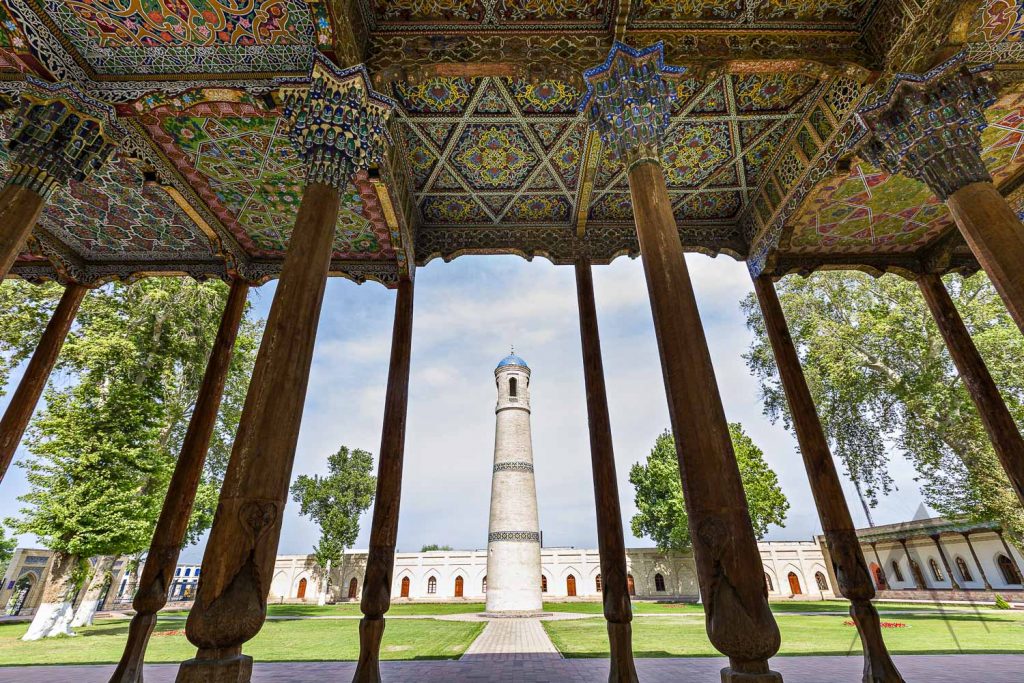
In the morning drive to Rishtan, a town famous for its unique blue-and-green ceramics. For over 800 years master potters here have passed their skills down from generation to generation. In the home workshop of a family of potters you see how the clay is prepared, painted and fired – watching the craftsmen at work is an unforgettable experience. Continue to Kokand, once the capital of the powerful Kokand Khanate (90 km from Fergana). Sightseeing includes the elegant Palace of Khudayar Khan, the Mausoleum of Modari Khan and the Juma Mosque, which reflect the grandeur of the khans, and a stroll through the Mehrigiyo botanical garden with rare plants and fragrant lavender fields. In the evening transfer to the railway station and board the train to Tashkent (17:33–21:45, economy class). On arrival transfer to the hotel and rest.
Rishton, Kokand, Khudayar Khan Palace, Tashkent
- Fergana → Kokand (90 km)
- Kokand → Tashkent (290 km)
Overnight: Tashkent (Hotel)
Meals: Breakfast
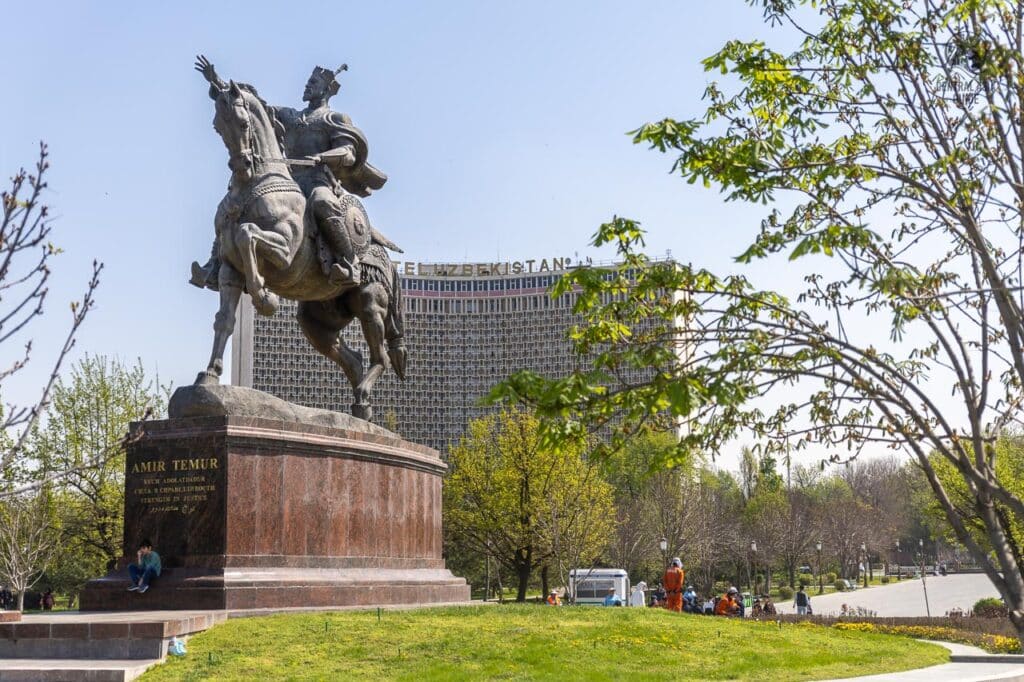
Today explore the lively capital of Uzbekistan, where ancient traditions blend with modern life. The guided city tour begins at Khast-Imam Square, home to historic mosques and the famous Barak-Khan Madrasah. You also visit the Kaffal Shashi Mausoleum and the Kukeldash Madrasah, one of the city’s oldest places of learning. After lunch discover the beautiful Museum of Applied Arts, followed by a stroll through Independence Square and Amir Timur Square, the heart of modern Tashkent. Overnight at the hotel.
Hazrati Imam complex, Kukeldash Madrasah, Tashkent Museums, Tashkent Independence Square, Amir Temur Square
Overnight: Tashkent (Hotel)
Meals: Breakfast
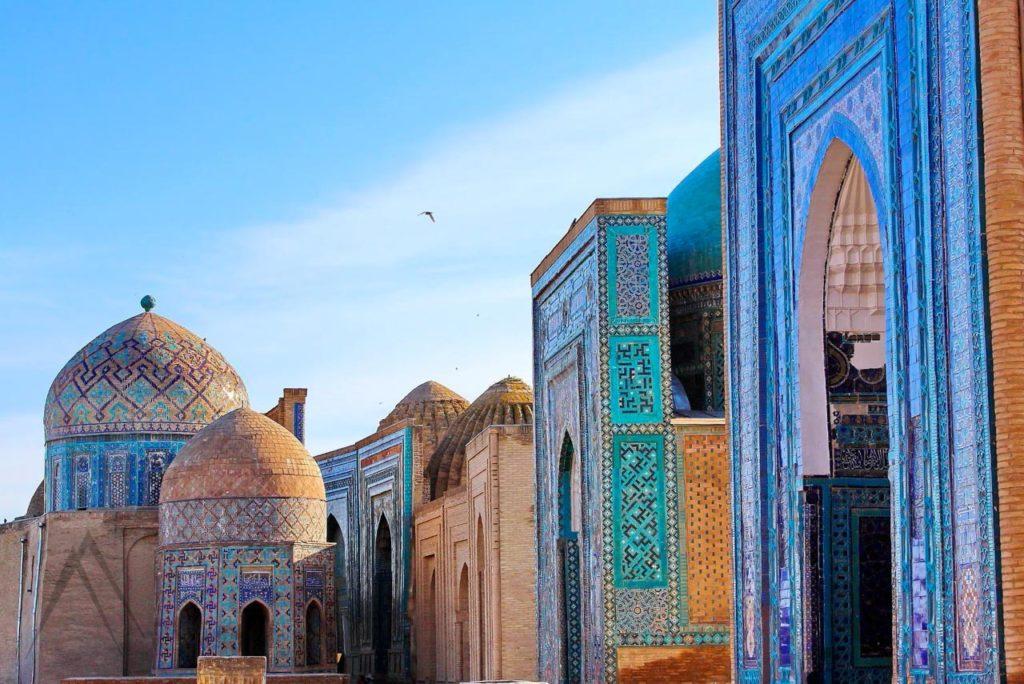
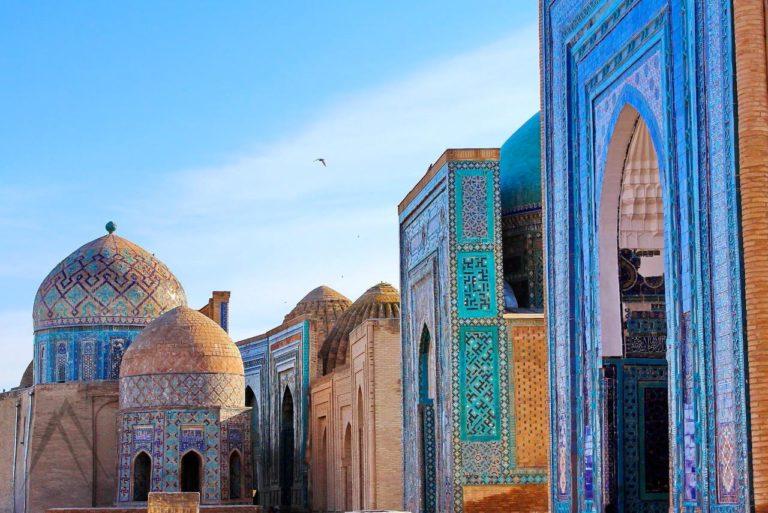
After breakfast take the morning train to Samarkand, one of the most legendary cities of the Silk Road, and start the guided tour on arrival. Begin with the Gur-e Amir Mausoleum, the majestic tomb of Tamerlane, and see the nearby Rukhobod Mausoleum from the outside. Then step into the heart of the city – the iconic Registan Square with its three grand madrasahs: Ulugbek, Sher-Dor and Tilla-Kori. After lunch continue to the elegant Bibi-Khanym Mosque, once one of the largest in the Islamic world, stroll through the sacred Shah-i-Zinda necropolis and finish the day at the Ulugbek Observatory, a marvel of medieval science. Overnight in Samarkand.
Gur-e Amir Mausoleum, Rukhobod Mausoleum, Registan, Bibi-Khanym Mosque and Mausoleum, Shah i Zinda, Ulugbek Observatory
- Tashkent → Samarkand (310 km)
Overnight: Samarkand (Hotel)
Meals: Breakfast
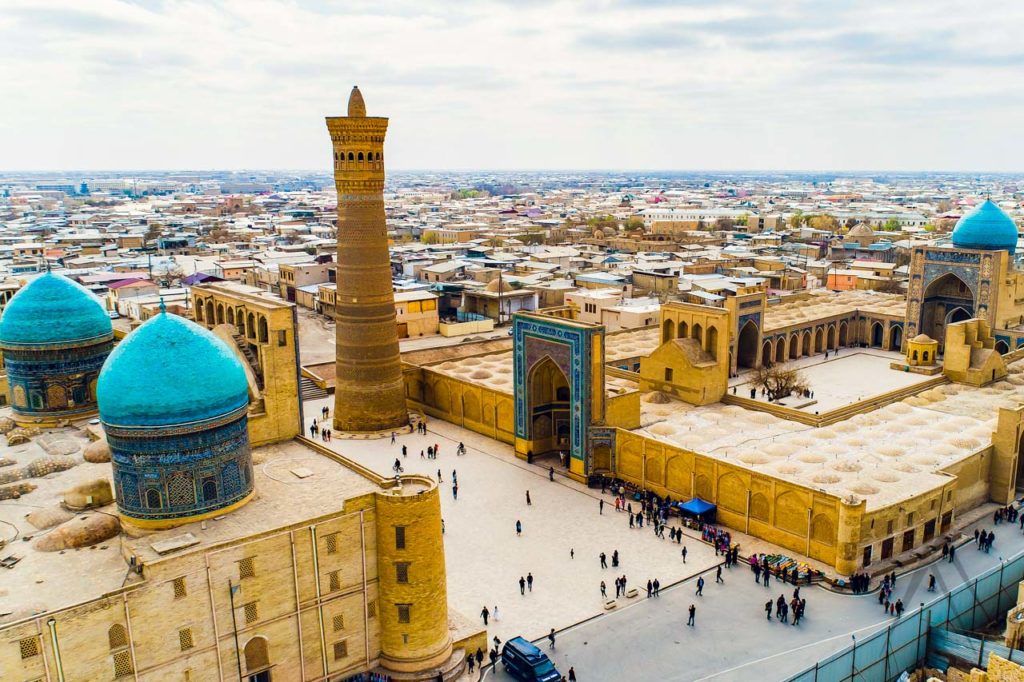
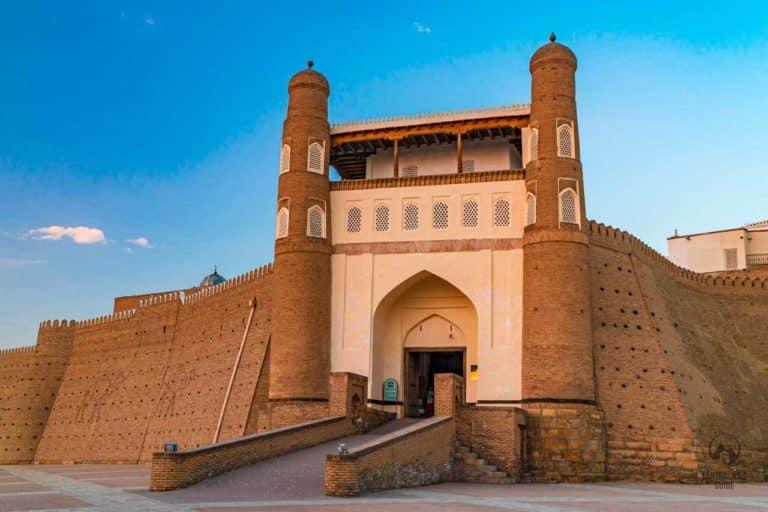
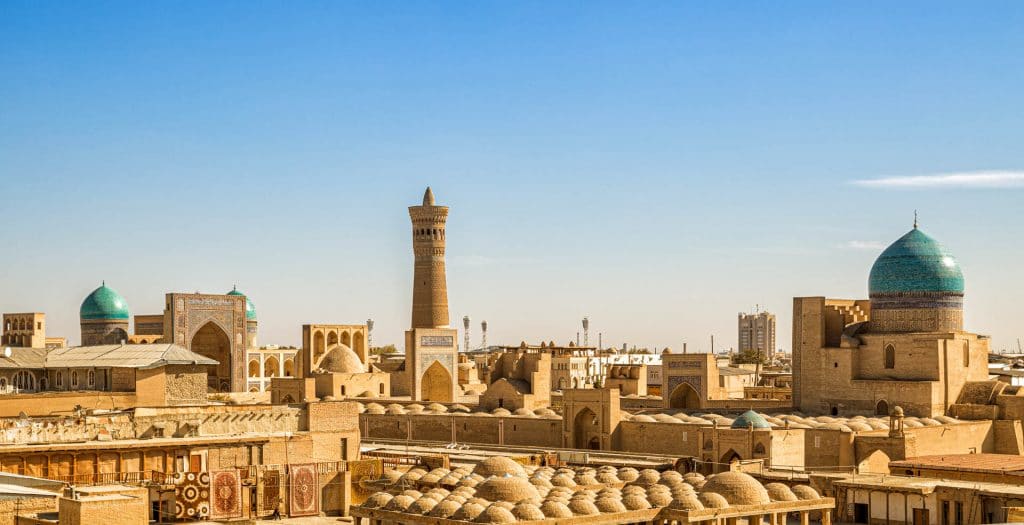
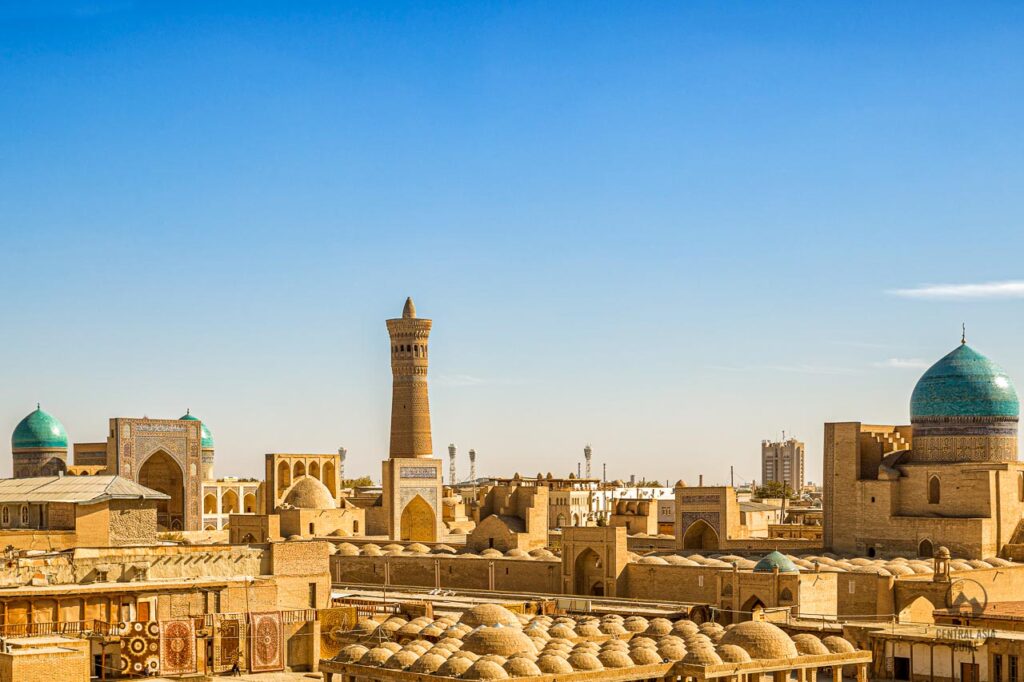
In the morning take a short train ride to Bukhara, a city often described as a living museum, and start sightseeing on arrival. Visit the Ismail Samani Mausoleum, a masterpiece of early Islamic architecture, and the unusual Chashma-Ayub Mausoleum (“Spring of Job”). Then see the graceful Bolo-Hauz Mosque, the mighty Ark citadel and the towering Kalyan Minaret in the Poi-Kalyan complex, along with the Ulugbek Madrasah. After lunch continue to the lively Lyabi-Hauz ensemble, surrounded by historic madrasahs such as Kukeldash and Nadir Divan-Begi, and wander through the domed trading arcades, where silk, spices and handicrafts have been sold for centuries. Overnight in Bukhara.
Samanids Mausoleum, Chashma-Ayub Mausoleum, Bolo Hauz Complex, Ark of Bukhara, Poi Kalyan, Ulugbeg Madrasah Bukhara, Lyabi-Hauz Ensemble, Trading Domes of Bukhara
- Samarkand → Bukhara (270 km)
Overnight: Bukhara (Hotel)
Meals: Breakfast
Today explore the outskirts of Bukhara. After breakfast drive a few kilometers into the countryside to the Sitorai Mokhi-Khosa Palace, the summer residence of the last Emir of Bukhara – a blend of oriental splendor and European elegance. Continue to the sacred Bahauddin Naqshband memorial complex, a pilgrimage site dedicated to the founder of the Naqshbandi Sufi order, and finally stop at the Chor-Bakr necropolis, the atmospheric “city of the dead” with its courtyards and domes (about 50 km of driving in total). Return to the city in the afternoon, with free time to rest or stroll through Bukhara’s charming streets. Overnight at the hotel.
Sitori-i Mokhi Khosa palace, Bakhauddin Naqshband Mausoleum, Chor-Bakr Necropolis
- Bukhara → Sitori-i Mokhi Khosa palace (6 km)
- Sitori-i Mokhi Khosa palace → Bakhauddin Naqshband Mausoleum (12 km)
- Bakhauddin Naqshband Mausoleum → Chor-Bakr Necropolis (24 km)
- Chor-Bakr Necropolis → Bukhara (9 km)
Overnight: Bukhara (Hotel)
Meals: Breakfast
After breakfast set off on a long but scenic journey of 460 km across the Kyzyl-Kum Desert and along the mighty Amu Darya River. The vast landscape of golden sands and rippling dunes gives a real sense of the endurance of the Silk Road caravans. After a lunch stop on the way, continue to Khiva, a perfectly preserved medieval city that feels like an open-air museum. On arrival enjoy free time to wander its narrow streets, visit traditional workshops and browse the local souvenir shops. Overnight in Khiva.
Kyzylkum Desert, Khiva
- Bukhara → Khiva (460 km)
Overnight: Khiva (Hotel)
Meals: Breakfast
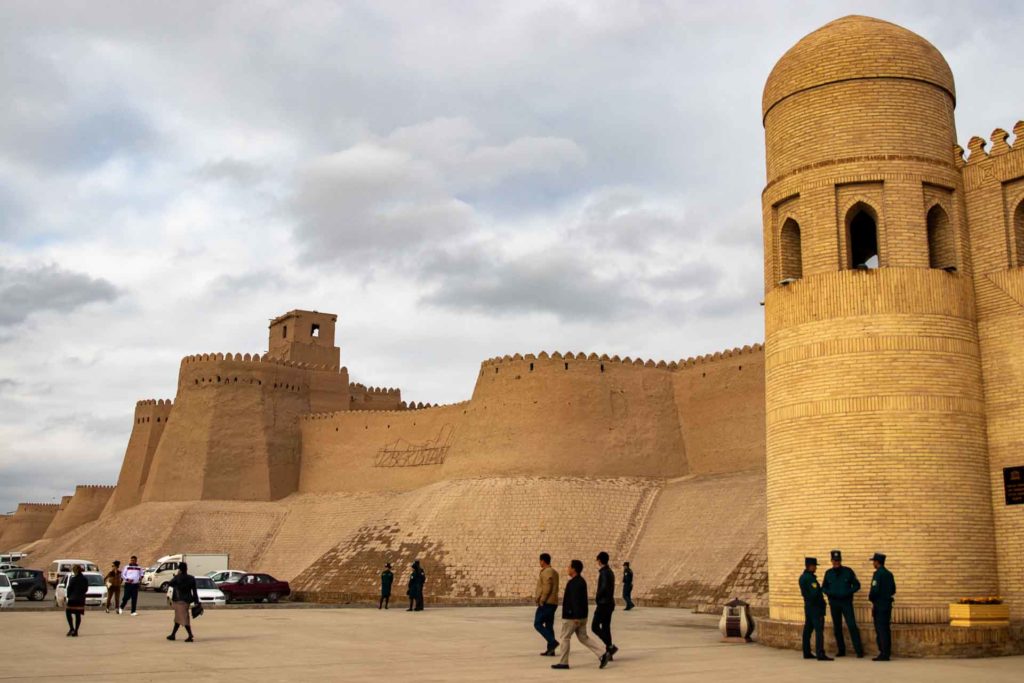
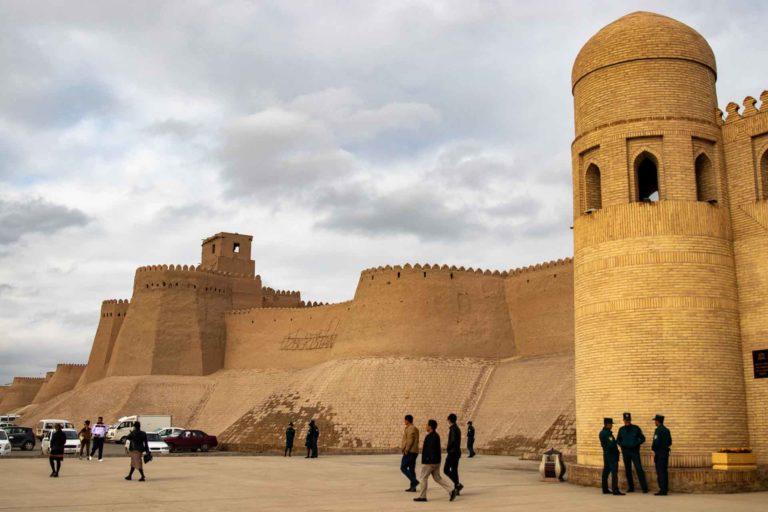
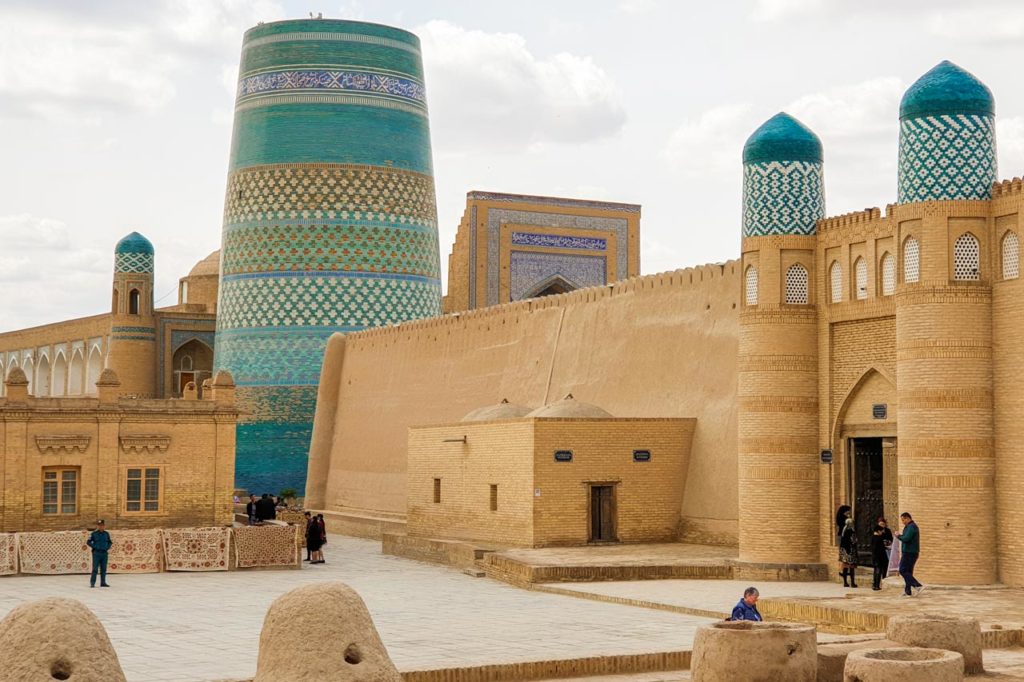
After breakfast explore Ichan-Kala, the walled inner city of Khiva and a UNESCO World Heritage Site. Its mudbrick walls, minarets and madrasahs make it one of the most atmospheric places in Central Asia. Highlights include the Pakhlavan Mahmud Mausoleum, the Kunya-Ark fortress and the tall Islam Khoja Minaret. After lunch visit the ornate Tash-Khauli Palace, the Juma Mosque with its 200 carved wooden columns, the Muhammad Amin Khan Madrasah and the Avesta Museum. In the evening transfer to Urgench (30 km) for the flight to Tashkent (flight ticket not included, about 100 USD). On arrival transfer to the hotel, check in and rest.
Kunya-ark fortress, Pakhlavan Makhmoud Mausoleum, Islam Khoja Minaret, Tach Khaouli Palace, Juma mosque, Mohammed Amin Khan Madrassah
- Khiva → Urgench (30 km)
- Urgench → Tashkent (720 km)
Overnight: Tashkent (Hotel)
Meals: Breakfast
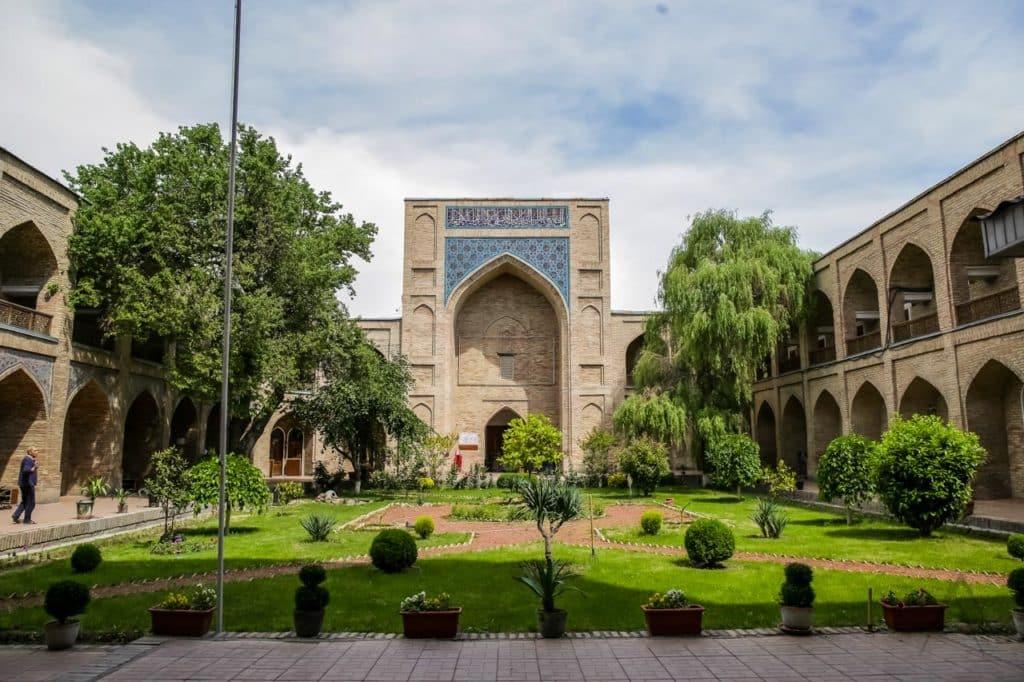
Early morning transfer to the airport for your international flight. Depending on the flight time, breakfast or a lunch box is provided.
Meals: Breakfast
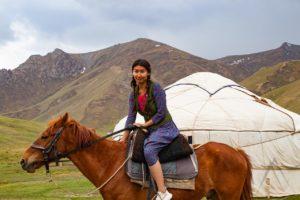
Nargiza is the office manager of Central Asia Guide and mostly responsible for multi country "Stan" tours.
Where you'll stay
-
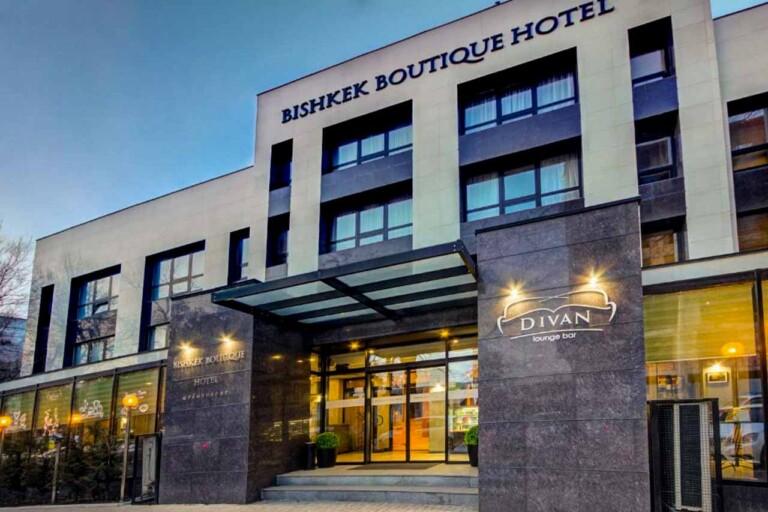 Night 1
Bishkek
Bishkek Boutique Hotel or Solutel Hotel or similar
-
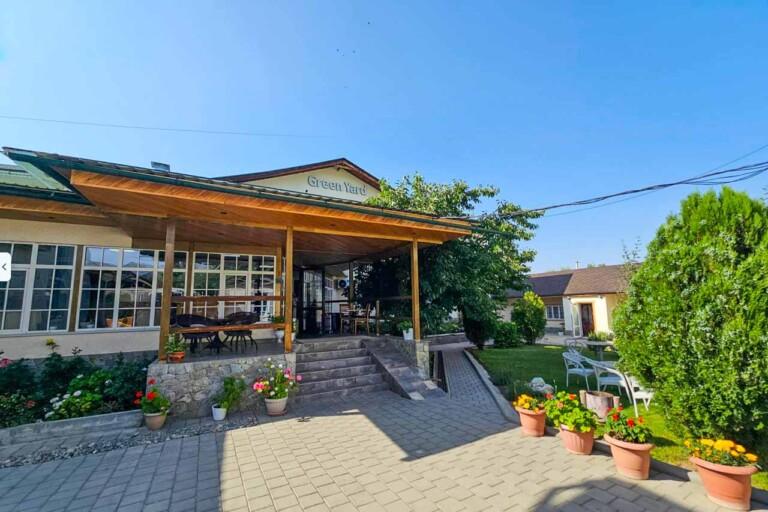 Night 2
Karakol
Green Yard Hotel or Karagat Hotel or similar
-
Night 3
Kochkor
Nomad Lodge Hotel or Bagysh Hotel or similar
-
Night 4
Song Kul
Yurt camp at Song Kol or similar
-
Night 5
Bishkek
Bishkek Boutique Hotel or Solutel Hotel or similar
-
Night 6
Osh
Sunrise Hotel or Classic Hotel or similar
-
Night 7
Fergana
Asia Fergana Hotel or similar
-
 Nights 8–9
Tashkent
Human Hotel or Inspira-S Hotel or similar
-
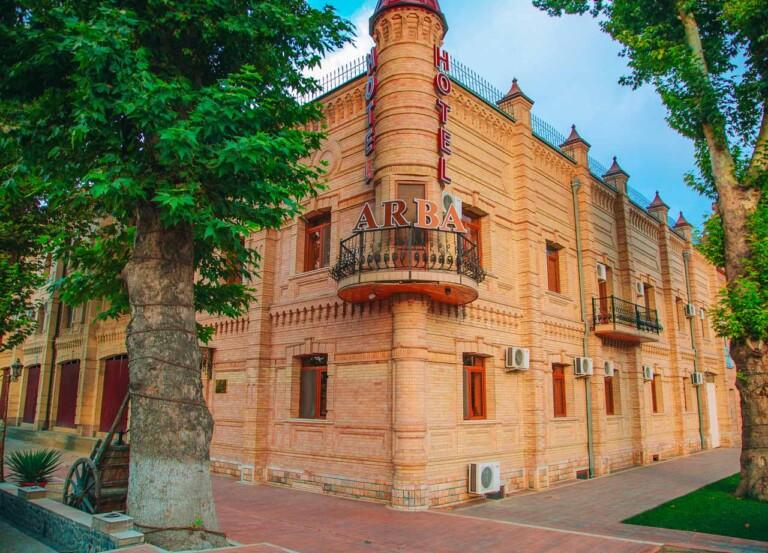 Night 10
Samarkand
Arba Hotel or Continental Hotel or similar
-
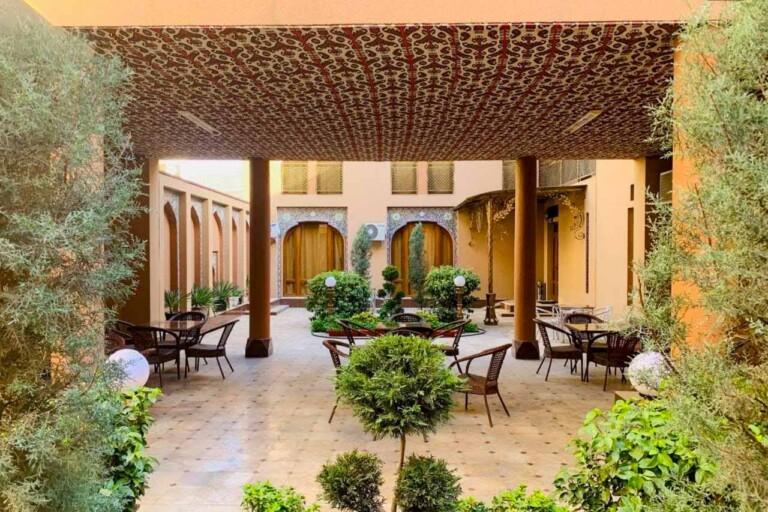 Nights 11–12
Bukhara
Rangrez Hotel or Paradise Plaza Hotel or similar
-
Night 13
Khiva
Khiva Residence Hotel or Asia Khiva Hotel or similar
-
Night 14
Tashkent
Human Hotel or Inspira-S Hotel or similar
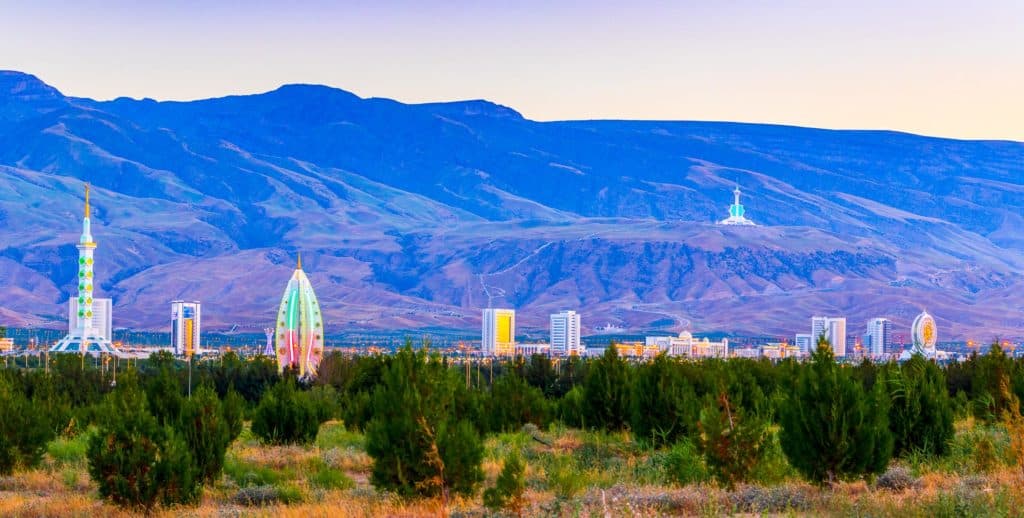


Five Stans of Central Asia Tour
Start on an extraordinary adventure across the heart of Central Asia with our Five Stan Tour, exploring the unique…
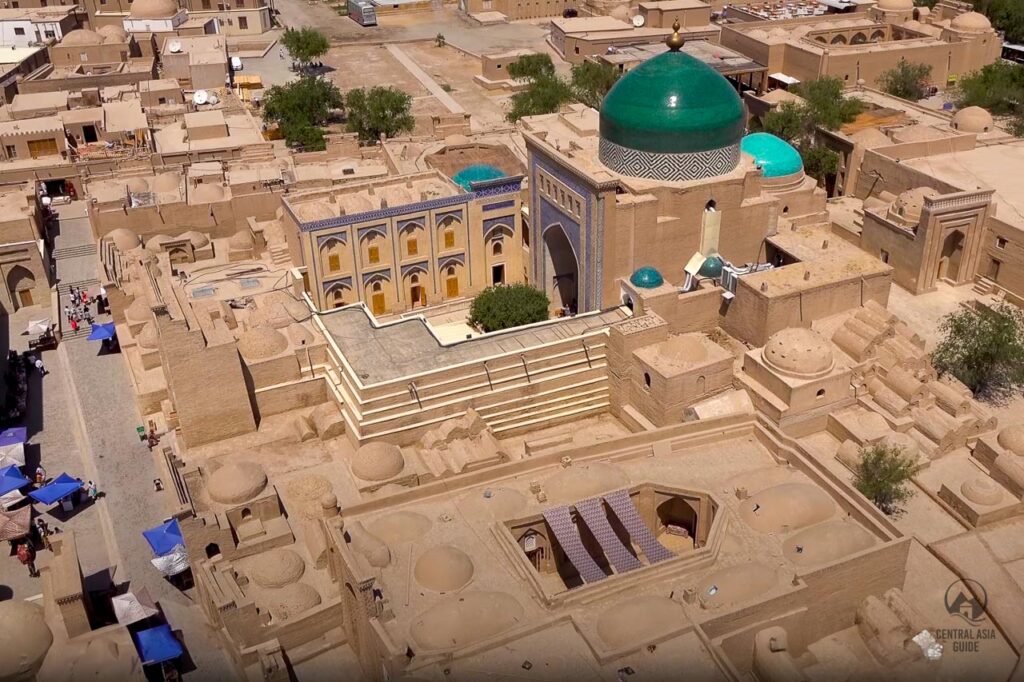
Four Stan Tour through Central Asia
Discover the legendary Silk Road on this 18-day small-group tour through Kyrgyzstan, Kazakhstan, Tajikistan and…
The Best of the Five Stan Tour
Embark on a 22-day journey through all five countries of Central Asia, beginning in Bishkek and ending in Ashgabat. In…